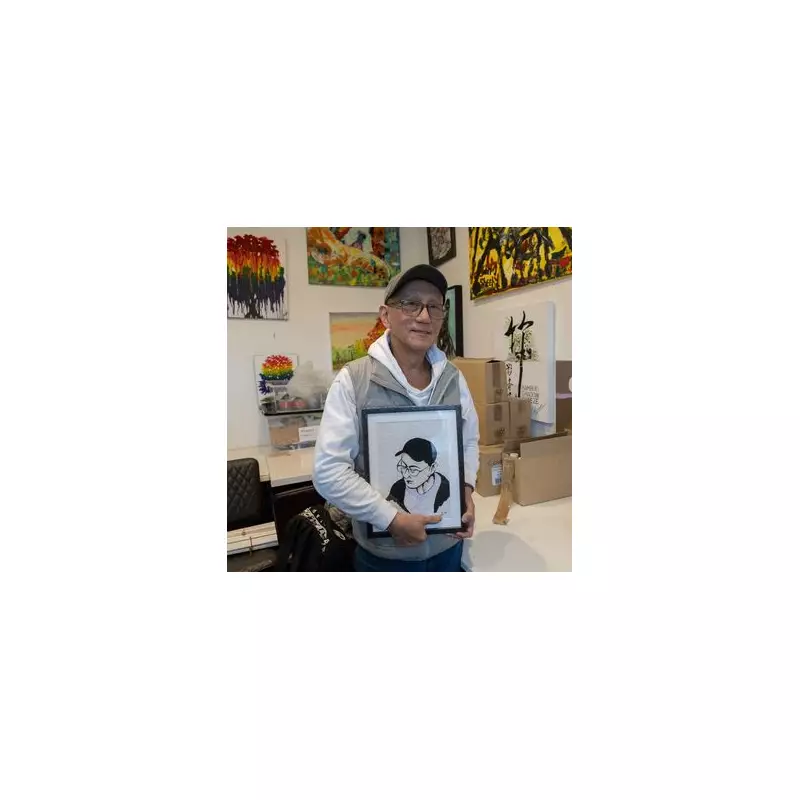
An artist who began painting as a hobby while experiencing homelessness now earns enough from his work to pay his rent, thanks to a pioneering London social enterprise.
From Hobby to Hope: Art as a Lifeline
For Guan Chow, the vibrant colours on his canvas became a crucial source of light during a period of profound darkness. After losing his job and later his home following the 2008 financial crash, Mr Chow turned to painting to help manage his severe mental health struggles.
"The colours make me happy," he explained. "When you are down you really need to look for something for comfort. The colours really brightened up my mood." What started as a personal therapeutic practice would, years later, transform into a sustainable income.

The Birth of HomeLess Made
The turning point came during the 2020 Covid lockdown. Michael Angus, Director of the long-established Barons Court Project charity in Hammersmith and Fulham, noticed the quality of work being produced by Mr Chow and another guest, Lui Saatchi.
He proposed turning their art into cards to sell, with the charity covering all marketing and production costs and splitting the proceeds 50/50 with the artists. "Guan and Lui looked at me and said 'our art isn't good enough'," Mr Angus recalled. "I said 'I would buy that design as a card'. And then they said 'We are not good enough'. And I said 'yes, you are'."
From that moment of encouragement, HomeLess Made was born. The enterprise now supports six artists who have experienced homelessness or mental health difficulties, selling their work on cards, clothing, and tote bags. To date, it has sold approximately 75,000 cards, with orders arriving from as far away as Singapore and British Columbia.
A Crisis of Capacity and a Fundraiser for the Future
The Barons Court Project itself, operating for nearly 40 years, has become a critical lifeline in the borough. It records around 800 to 900 individual guests each year, accounting for some 14,000 visits from people seeking a hot meal, a shower, laundry facilities, or to join activities like art classes.
Mr Angus said the service recently reached a crisis point due to soaring demand, primarily driven by relationship breakdowns and individuals being "priced out of accommodation" by rising rents. To accommodate more guests and allow HomeLess Made to grow, the charity plans a significant remodel of its site.
The key proposal is to convert the building's loft into a bespoke art studio, freeing up space downstairs for an expanded lounge and library. To fund this £359,348 transformation, the charity launched a SpaceHive fundraiser in November. At the time of writing, it has raised almost £167,000, with the campaign needing to hit its target by the end of March. Hammersmith and Fulham Council is providing substantial match-funding.
More Than Just an Income
For Guan Chow, who now has his own rented accommodation, the impact of HomeLess Made extends far beyond the £35,000 to £40,000 in annual sales it generates collectively for the artists.
"It has given me a lot of confidence," he said. "Bless Michael, Michael always believes in us. We don't believe in ourselves. With Michael's guidance it proved to us that we can do it. We need to start to believe in ourselves."
Mr Angus highlights the broader social value, noting the project has sparked conversations between the public and people experiencing homelessness. "We will come across people who will say 'I've never met a homeless person. I've never talked to one'," he said. For the artists of HomeLess Made, their work is now a powerful bridge, a source of income, and, most importantly, a restored belief in their own abilities.