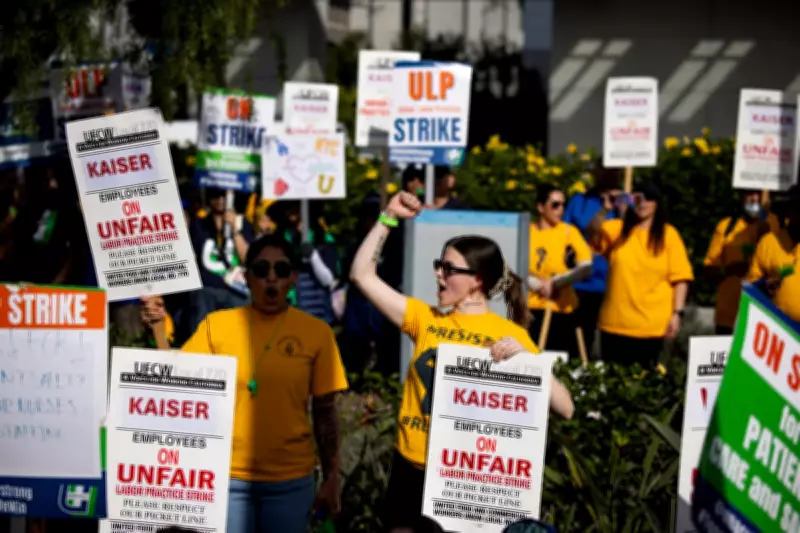
Kaiser Therapists Strike Over AI Screening Fears, Claim System Delays Critical Care
In a dramatic one-day strike, approximately 2,400 mental health professionals employed by Kaiser Permanente in northern California protested changes to the healthcare giant's patient screening processes. Led by the National Union of Health Care Workers (NUHW), the strikers raised alarms that Kaiser's new system, involving clerical staff and potential AI tools, is delaying care for high-risk patients and putting lives at risk.
"Thank God They're Still Alive": Therapists Report Dangerous Delays
Ilana Marcucci-Morris, a licensed clinical social worker at Kaiser's psychiatry outpatient clinic in Oakland, California, expressed grave concerns about the patients she now sees. She stated that since January 2024, when Kaiser introduced a new screening process, she increasingly assesses individuals with severe mental health issues who should have been sent to the emergency room weeks earlier. For those who do make it to appointments, her reaction is often, "Thank God they're still alive."
Marcucci-Morris explained that licensed professionals used to be the first point of contact for behavioral health patients. The new system, however, employs clerical workers who are not licensed practitioners. These staff ask scripted "yes" or "no" questions to assess patient severity and urgency. Additionally, Kaiser rolled out e-visits, online questionnaires patients complete before scheduling with a licensed professional.

Five licensed Kaiser therapists corroborated these issues, reporting that high-risk cases now wait longer for care, while lower-risk patients are sometimes fast-tracked, clogging an already strained system. Since January 2025, therapists have documented over 70 examples of negative care outcomes linked to the screening system, according to an administrative complaint filed by NUHW with the California Department of Managed Health Care.
Kaiser's Defense and AI Integration Concerns
Kaiser Permanente pushed back against the strikers' claims in an emailed statement, asserting that it delivers "timely, high-quality care to meet members' needs." The company denied that AI or clerical staff conduct assessments, make clinical determinations, or perform triage. Kaiser emphasized that clerical staff are trained to escalate cases to clinical staff immediately, such as transferring to a crisis therapist.
The statement also noted, "We believe AI can be helpful when it supports clinicians – by reducing administrative work or improving efficiency – but it does not replace clinical judgment or human assessment." Kaiser claimed it is growing its workforce, not shrinking it, though NUHW representatives argue the number of triage therapists has decreased significantly.
Union Complaints and Worker Anxieties
Wednesday's strike was fueled by NUHW's complaint alleging Kaiser's new screening system is illegal. A similar complaint was filed in southern California in 2025. An internal survey of Kaiser's mental health workers in northern California, obtained by the Guardian, revealed that more than one-third of employees reported AI or technologies being rolled out that could negatively affect work or patient care. Almost half expressed discomfort with AI tools in clinical practice.
Kristi Reimer, a licensed psychologist who previously did mental health triage at Kaiser's Walnut Creek facility, left her position pre-emptively, citing "the writing on the wall" regarding changes to the assessment system. Harimandir Khalsa, a triage worker at the same facility, noted her team of nine staff has been reduced by two-thirds over two years, raising fears about job security and the quality of care.
Why Licensed Therapists Matter in Triage
The NUHW stresses that a patient's initial contact when seeking mental help is critical, determining whether they see a licensed clinician and the type of appointments they receive. The union's southern California complaint alleges that clerical staff ask patients about suicidal and homicidal thoughts, input data into a software tool, and use an algorithm to generate scores and scheduling suggestions, which the union claims violates state law. Kaiser denies this constitutes triage.

Therapists like Carolyn Staehle, who works on a crisis team in Pleasanton, California, reported that since the new system, she has encountered more patients with dangerous delusions and serious suicidal thoughts who needed immediate ambulance calls. Conversely, her team now receives lower-risk patients who "gum up" the system, slowing care for those in desperate need.
Kaiser has faced prior scrutiny, agreeing to a $200 million settlement with California in 2023 over mental health service delays and a $31 million settlement with the U.S. Department of Labor last month for similar allegations. Despite Kaiser's claims of faster appointment times, workers like Staehle argue the care quality has diminished, with fundamental triage tasks now taking longer and risking patient safety.
For now, Kaiser employees are focused on ratifying a new contract and securing commitments that licensed social workers will not be replaced by AI, emphasizing that human work must stay with human beings to ensure empathetic and effective mental health care.