North London Father's 'World's Worst Cough' Revealed as Life-Threatening Sepsis
A father from North London who believed he was suffering from an exceptionally severe chesty cough discovered he was actually battling deadly sepsis, a condition that nearly claimed his life. David Ross, a 37-year-old commercial director, was traveling back to London from a work trip in India in March last year when he began experiencing relentless coughing episodes during his flight.
From Routine Flight to Medical Emergency
David initially dismissed his symptoms as a particularly nasty cold, even as his condition worsened over subsequent days. "I just had a glass of water and went to bed early," he recalled of his initial response. However, the situation escalated dramatically when he started coughing up blood and passing blood in his urine, prompting immediate medical attention.
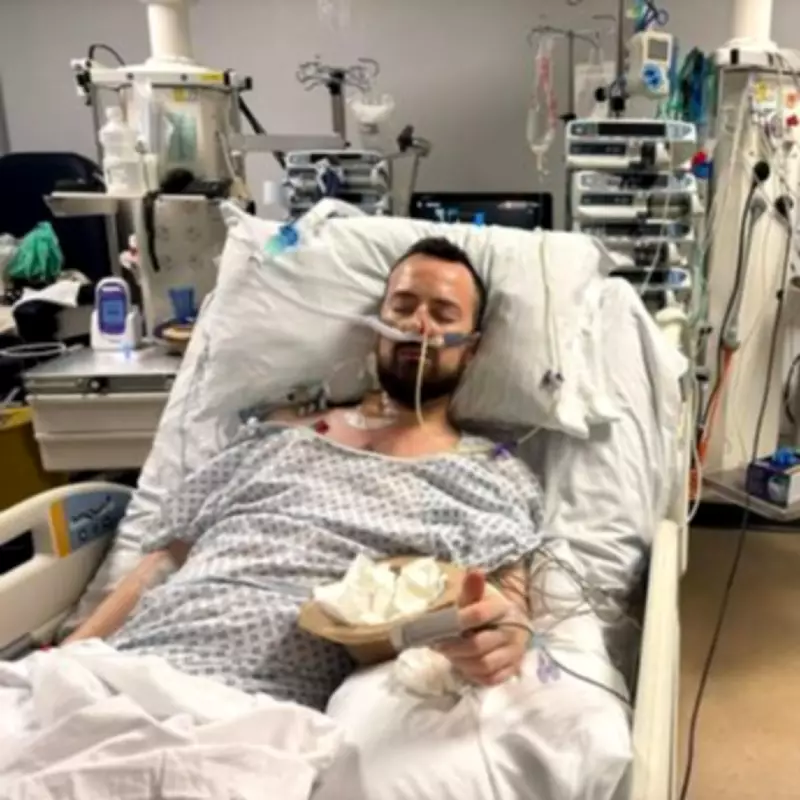
Upon examination at the Whittington Hospital near his North London home, doctors diagnosed David with septic shock triggered by pneumonia in both lungs. Medical staff delivered the grave news that he had zero chance of survival unless he was immediately sedated and connected to a ventilator. His partner, who was 36 weeks pregnant at the time, was informed there was a 50 percent chance David would not survive the night.

Against All Odds: A Remarkable Recovery
Despite being given merely a 20 percent chance of survival overall, David defied expectations. After three days on a ventilator in intensive care, he regained consciousness, though his lungs were operating at just 20 percent capacity. His recovery required an extended hospital stay before he was finally well enough to return home.
In an extraordinary turn of events, just a week and a half after being discharged, David returned to the same hospital for the birth of his son, Ari. Medical staff were astonished to see him alive and walking. "Sergio didn't even recognise me," David said of one nurse. "He was absolutely shocked. He said: 'I thought you were going to die. I never thought I would see you again, let alone that you would walk back in a week and a half later.'"
Transforming Trauma into Triumph
As part of his rehabilitation, David took up running to rebuild his strength. Now, twelve months after his brush with death, he's preparing to tackle the London Marathon at the end of April to raise funds for Whittington Health Charity, the official charity of the hospital that saved his life.
"I want to give something beyond a box of chocolates," David explained. "They saved my life and I want to show them that I'm appreciative of what they did for me. I was really lucky with the quality of care I got. You hear terrible stories about the NHS and, obviously, there are issues, but the care I got was outstanding."
David emphasizes that his marathon effort serves a dual purpose: to express gratitude to the medical professionals who saved him and to demonstrate to his now 11-month-old son that adversity can be transformed into positive action. "It's crucial for me to show Ari that you can transform bad stuff into good stuff," he said.
Inspiring the Medical Community
Selina Douglas, Chief Executive of Whittington Health NHS Trust, hailed David's journey as "deeply inspiring." She stated: "David's story is a powerful reminder of the incredible endurance and resilience within our community. Seeing patients not only recover but go on to achieve something as extraordinary as running a marathon is deeply inspiring. We are immensely proud of David and grateful that he has chosen to give back in this way."
David's fundraising efforts will support Whittington Health Charity in enhancing patient care, improving hospital environments, and supporting staff wellbeing across the Trust. His remarkable story serves as both a cautionary tale about recognizing serious medical symptoms and a testament to human resilience and the life-saving work of NHS professionals.