The Rise of Looksmaxxing: How Insecure Young Men Are Redefining Beauty Standards
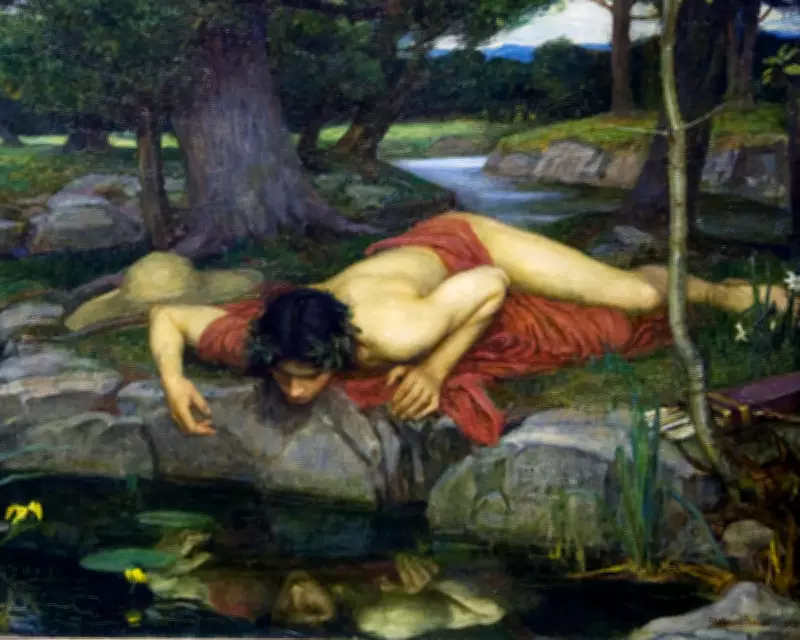
The story of Narcissus, who famously gazed at his own reflection in John William Waterhouse’s 1903 painting Echo and Narcissus, serves as a poignant metaphor for a modern phenomenon. Today, a growing number of young men are grappling with intense insecurities about their appearance, leading to the rise of trends like "looksmaxxing." This movement, often marketed through influencers such as Clavicular, reframes physical self-improvement as a mathematical problem to be solved with extreme measures, from measurements and ratios to syringes and even hammers.
The Emotional Struggle Behind the Trend
At its core, looksmaxxing reflects a private struggle that many young men face but find difficult to articulate. Actor Barry Keoghan’s recent admission that he sometimes "doesn’t want to go outside" due to online abuse about his appearance underscores this vulnerability. For men, expressing insecurity or dissatisfaction with one’s physical traits can be challenging, especially during adolescence when bodily changes are unpredictable and often accompanied by shame.
As an adult, Keoghan’s openness is striking, but it highlights how much harder it is for teenagers or boys to voice these feelings. Many grow up with silent critiques of their thinning hair, narrow shoulders, or other perceived flaws, internalizing a language of bodily dissatisfaction. Over time, maturity can bring acceptance, but the journey is fraught with emotional difficulty.

Looksmaxxing as a Problematic Solution
Looksmaxxing, however, threatens to stunt this emotional growth by turning appearance into a site of competition and ridicule. Influencers like Clavicular, whose real name is Braden Peters, promote severe methods, such as injecting high doses of testosterone to the point of infertility, all in pursuit of an undefined "ascension." This approach pulls beauty into a quasi-Olympic arena of masculine rivalry, where men battle over muscularity and facial symmetry, often driven by a desire to impress other men rather than attract women.
Critics argue that this trend speaks to a homoeroticism within the manosphere, but the issue runs deeper. Adolescence can be bruising for boys, as puberty yields varied outcomes—some gain height and athleticism, while others contend with acne or weight struggles. In environments like boys’ schools, this stress often leads to mutual criticism and policing, deflecting from personal insecurities.
The Role of Technology and Social Media
Technological advancements have exacerbated this crisis, as emotional adaptation lags behind capability. In the past, a 14-year-old feeling ugly might have turned to academics, sports, or subcultures for solace. Now, algorithms instruct teenagers on how to "solve" their appearance problems, offering an array of tools and strategies at their fingertips. This access amplifies the casual cruelty of adult opinions on male appearance, from short men jokes to mocking of hairlines and weak chins.
While it’s unclear how many boys are actually picking up hammers or syringes, the extremity of looksmaxxing acts as a mirror, revealing long-unheard anxieties. It underscores a need for broader conversations about how young men feel about themselves and their looks.
Moving Forward: A Call for Awareness
Ultimately, looksmaxxing highlights a societal failure to address male insecurities in a healthy way. It is incumbent on all of us to engage with the young boys and men in our lives, fostering dialogues about self-acceptance and emotional well-being. By acknowledging these vulnerabilities, we can help steer them away from harmful trends and toward a more compassionate understanding of beauty and identity.