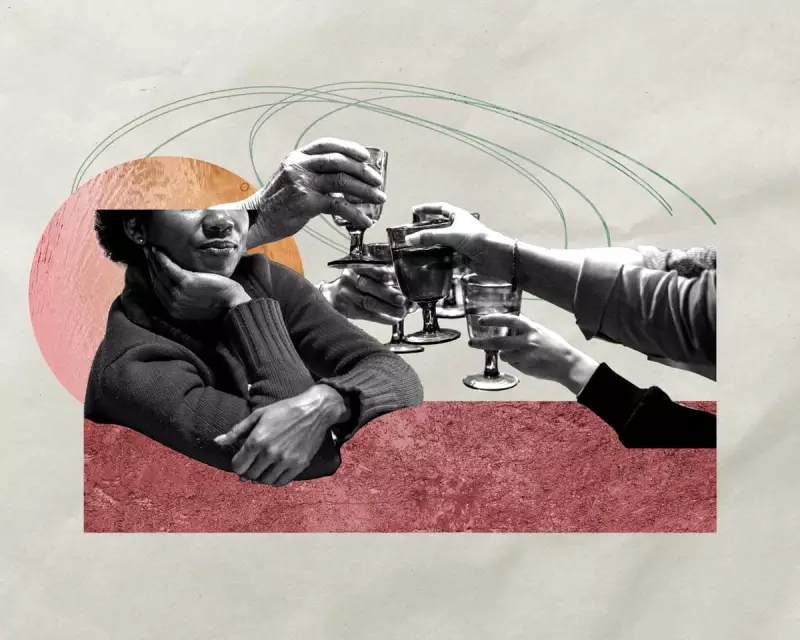
In the quiet aftermath of Christmas, a profound personal shift is unfolding for writer Nadine Levy. Just over a year ago, her mother died, an event that occurred shortly after the birth of her second child and a month before the festive season. This loss, marking the passing of the last generation above her, has fundamentally reordered her experience of life and the holidays.
The Process of 'Growing Down'
Levy describes the last year as a time of unravelling, marked by hospital visits, deep grief, and the heavy weight of suffering pressing on her postpartum body. She references the late psychologist James Hillman, who called such a season the process of 'growing down'. This is not about regression, but about sinking deep into the roots of one's existence and relaxing into the life one is actually given, rather than the one imagined.
For Levy, this 'growing down' has led to a significant softening. The once-urgent frenzy of holiday preparation – racing for last-minute gifts and party treats – has lost its compulsion. She still partakes, but now as a 'dawdle', with a newfound perspective that asks, "Who cares about lunch! To hell with gifts." This shift is not a rejection of past joy, as she looks back fondly on magical childhood department store visits with her retail-worker mother, but a conscious move away from needing to curate the holidays into a perfect "event".

Shifting from Construction to Reception
Levy's central revelation is that her centre of gravity has shifted. The holidays are no longer something she feels she must construct, but rather something she can learn to receive. She finds herself open to what greets her through the senses and memory: the taste of Turkish coffee made in her mother's kitchen, the quiet of an early morning street, her children's squeals of delight at a Christmas elf.
This approach is guided by Buddhist teachings on the 'middle way', which cautions against extremes. It is a path of balance, inviting one to avoid both the overindulgence of December and the punitive denial often found in New Year's resolutions. As Buddhist teacher Jack Kornfield explains, it is a path "of balance and care, where the heart’s natural awareness and practical compassion can grow."
Holding Difficulty with Tender Awareness
Levy is careful not to romanticise this period, acknowledging that for many, the time after Christmas can be stressful, painful, or overshadowed by financial strain and exhaustion. She emphasises that the choice to pause is not available to everyone. However, she suggests that a receptive awareness can hold what is difficult alongside what is sublime.
Citing Thich Nhat Hanh, she notes that the most precious gift we can offer is our presence. Sometimes, it takes difficulty, held with tenderness, to finally notice the small, continual gifts life offers. She reflects that life may not be one grand present, but a series of ordinary, beautiful, and ephemeral moments.
Levy concludes by summoning the spirit of Derek Walcott's poem 'Love after Love', which speaks of greeting yourself at your own door. In these suspended, in-between days, her wish is simple: to sit and feast on one's life, embracing its unexpected splendour with a tender and open heart.