

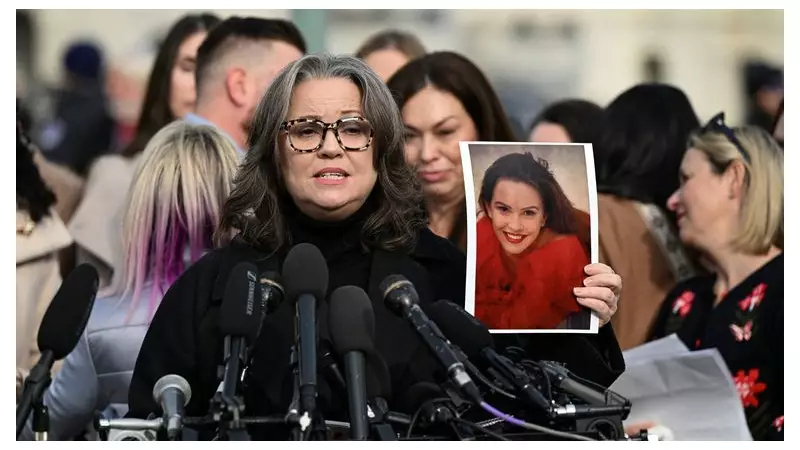
In a powerful and emotional interview, the earliest publicly known survivor of Jeffrey Epstein's abuse has accused the US Department of Justice of breaking the law in its handling of newly released files related to the convicted sex offender.
'Wilful blindness' around Epstein
Speaking to Sky News, Jess Michaels described a culture of 'wilful blindness and blatant disregard' for the young women and children who were frequently in Epstein's orbit. Michaels, a professional dancer aged 22 in 1991, was introduced to the financier by a roommate. After an initial interview at his Madison Avenue office, she says he raped her during a second meeting at his penthouse.
She told presenter Barbara Serra that the sheer volume of people who ignored the obvious signs of abuse was 'horrific'. The trauma led her to leave New York just three months later, suffering from severe anxiety and insomnia. 'I could pull a pair of size zero jeans down off of my hips because I was really struggling to even eat properly,' she recounted, noting a friend remembered she 'just slept all the time.'

Justice Department 'broke the law'
Michaels' interview comes days after the release of thousands of documents connected to the Epstein case. However, the release has sparked controversy, with only a fraction of files made public, many heavily censored with redactions, and some disappearing after being uploaded online.
When asked about this latest disclosure, Michaels was unequivocal. She pointed to the Epstein Transparency Act, signed by former President Donald Trump in November, which mandated the Department of Justice release all files by 19 December 2025. 'The US Department of Justice has broken the law,' she stated. 'Blatantly so.'
She expressed profound frustration, arguing the DoJ's actions proved why survivors needed an Act of Congress to force transparency in the first place. 'And that didn't even get us justice,' she added, calling the limited release the 'exact same treatment we have received across five administrations.'
FBI tip-line disregard and missing statements
Michaels also detailed her own difficult experience with law enforcement. After Epstein's 2019 arrest, she called an FBI tip-line set up for information on his crimes. She says she was initially disregarded, and when an officer finally called back, she was met with scepticism. 'Well, we have to call everyone back, but it was 30 years ago. What do you expect us to do about it now?' she recalled being told.
In the newly released database, she has been unable to find any record of her call or the statement she provided. This, she says, is 'extremely frustrating' and evidences the negligence survivors have long alleged. Furthermore, despite being told her account would be used in the 2021 sex trafficking trial of Epstein's associate Ghislaine Maxwell, she 'never heard a word.'
The Department of Justice, via US Deputy Attorney General Todd Blanche, has stated that redactions are only applied where legally required to protect victims, and that the review of documents is ongoing.
Jeffrey Epstein was arrested in 2019 on federal charges of sex trafficking minors. He died by suicide in a Manhattan jail cell while awaiting trial. His death prevented a full public accounting of his crimes and the network that enabled them, a gap the recent file release was intended, but has so far failed, to fill.






