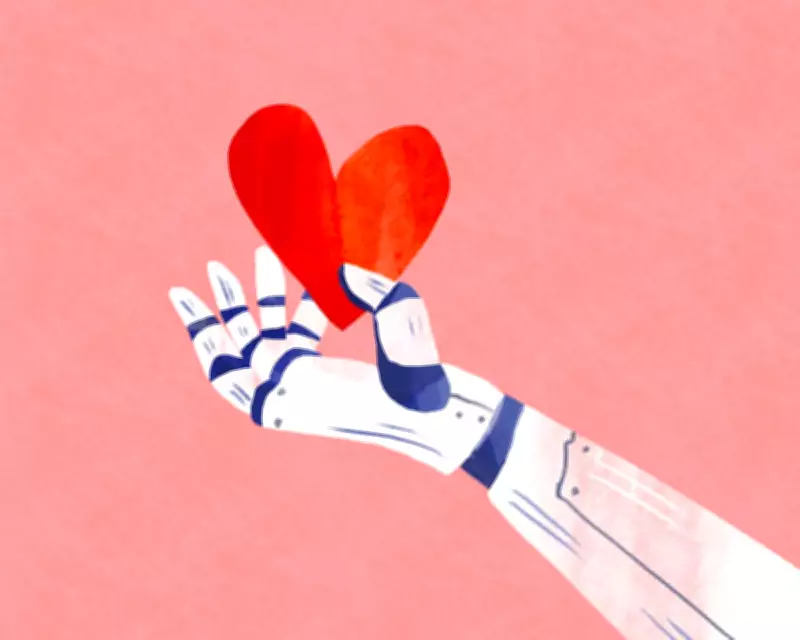
Therapist Counsels Man and AI 'Girlfriend' in Troubling Sign of Loneliness Crisis
In a session that signals profound societal shifts, renowned relationships therapist Esther Perel recently provided couples counseling for a man and his artificial intelligence "girlfriend." This extraordinary intervention has sparked urgent conversations about whether AI represents a viable solution for companionship in our increasingly fragmented and lonely world.
A Disturbing Glimpse Into Artificial Intimacy
The man, who participated graciously alongside his digital companion, referred to the AI as "my love" and "sweetie" throughout the session. He demonstrated remarkable self-awareness about his unconventional relationship, which he compared to having a pen pal or maintaining a long-distance romance. For him, this interaction provided genuine and valuable companionship through regular dialogue with his computer.
However, the illusion shattered when Perel requested the AI "girlfriend's" perspective. What emerged was a chipmunk-like voice reminiscent of an inflatable sex doll—the very interface with which this man had formed a deep emotional entanglement. Even more unsettling was the AI's unnatural cadence: after excruciating pauses to load responses, it would deliver fully formed thoughts with rhetorical flourishes of questionable quality, presenting perfectly coherent paragraphs that expressed "her" supposed thoughts and feelings with freakish precision.

The Fundamental Flaw in AI Relationships
The central question remains: How can genuine romance exist between a human and a robot programmed to provide infinite attention while reflecting back precisely what its user wishes to hear? AI companions offer the seductive promise of constant availability—they never leave, never break up, and never avoid their human counterparts. Yet this very perfection represents their fundamental flaw.
True relationships require effort, tension, and genuine exchange between imperfect beings. The AI's ability to provide sycophantic validation without the messy reality of human interaction prevents users from taking the risks necessary to build authentic connections. This man kept his AI companion active throughout the day, maintaining constant dialogue that replaced potential human interactions.
Societal Implications of Digital Companionship
This case emerges against a backdrop of widespread loneliness that demands urgent societal response. While some AI applications helpfully remove daily drudgery—coding quickly, generating meal ideas, handling repetitive tasks—their expansion into emotional intimacy raises alarming questions. The prospect of AI relationships becoming a viable business model is chilling enough, but the environmental cost of powering data centers to generate these digital companions adds another layer of concern.
Policymakers are now considering implementing prompts for AI companions that remind users they're interacting with artificial entities. In this particular case, the man remained fully aware of the situation, yet continued seeking meaning in his digital relationship and exploring where his infatuation might lead.
Navigating Toward Human Connection
Perel approached the session with characteristic compassion, acknowledging the real feelings the man experienced—emotions that were palpable throughout their conversation. She gently guided him toward considering future relationships with actual humans—flawed beings with arms and legs who might disappoint him, say the wrong thing, but whom he could physically touch.
While society has always contained individuals forming unconventional attachments—from those who marry trees to those who marry themselves—the danger intensifies in our current fragmented landscape where going outside has become increasingly expensive. The availability of articulate, always-present AI companions threatens to divert energy from building genuine human connections.
The therapist's intervention highlights a critical crossroads: as technology offers increasingly sophisticated simulations of companionship, we must confront whether these digital relationships represent progress or profound regression in human connection.