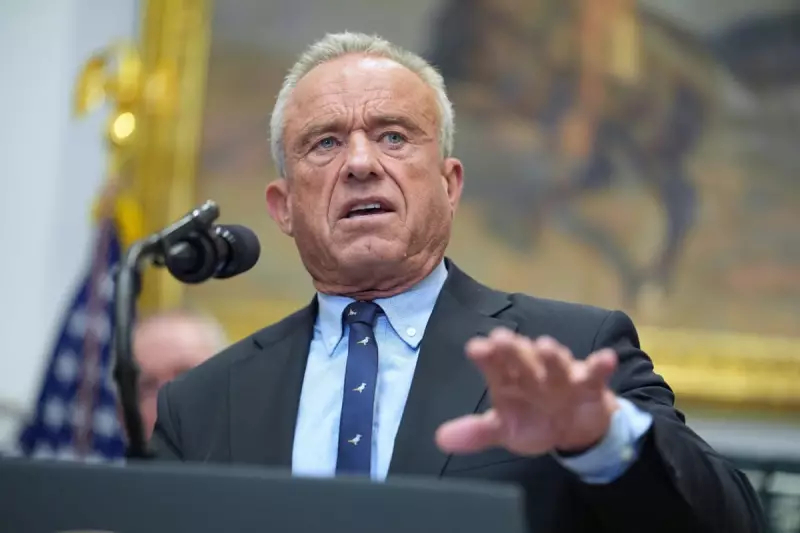
Public health authorities in Canada have issued a stark warning: key American health and science institutions can no longer be relied upon for accurate information, particularly concerning vital childhood vaccinations. This alarming declaration follows a series of controversial decisions by the US Health Secretary, Robert F Kennedy Jr, which experts fear are fuelling dangerous misinformation and eroding public trust north of the border.
Controversial US Moves Undermine Global Health Leadership
The crisis of confidence stems directly from actions taken under Kennedy's leadership. In a significant move last December, a panel he appointed voted to remove a long-standing recommendation from the US Centers for Disease Control and Prevention (CDC) that all newborns receive a vaccination against hepatitis B. Furthermore, in November, the CDC updated its official website at Kennedy's instruction to state that "studies have not ruled out the possibility that infant vaccines cause autism" – a claim top scientists globally have condemned as blatantly false.
Immunologist Professor Dawn Bowdish of McMaster University in Ontario expressed deep concern, stating she cannot imagine a world where this misinformation does not seep into the Canadian public consciousness and sow doubt. "The agency’s move toward misinformation and away from public health leadership makes it more difficult to combat distrust in vaccinations in Canada," Bowdish explained.

A Perfect Storm Fuelling Canada's Measles Crisis
These warnings arrive in the wake of a disastrous year for measles in Canada. The country lost its hard-won measles elimination status in November 2023 after reporting more than 5,000 cases nationwide, with Ontario becoming a major hotspot. Physicians point to a confluence of factors driving the spread:
- A drop in childhood vaccination rates.
- Limited access to family doctors.
- A surge in misinformation following the coronavirus pandemic.
Compounding the issue, Meta's ban on news sharing in Canada has severely impeded the dissemination of reliable public health messaging, according to experts. Data reveals a worrying trend: a 2021 national survey showed 2.1% of two-year-olds had received no vaccinations, up from 1.7% in 2019.
Homegrown Distrust and the Search for Solutions
While US actions are a major concern, some analysts argue Canada must also confront domestic causes for vaccine hesitancy. Health economist Professor Michel Grignon of McMaster University contends that eroded social safety nets and the divisive pandemic have shattered social cohesion and sown deep government distrust. "We are the source of our own problem, and our vaccine hesitancy has not much to do with the US. It has to do with us," he stated, pointing to the 2022 trucker protests as a manifestation of this collapse in trust.
Nevertheless, the influence of US-based misinformation is quantifiable. A December poll by Leger Healthcare found that 17% of Canadians who lack confidence in vaccines cite US government websites as their information source. In response, Canadian Health Minister Marjorie Michel has been unequivocal, telling the Canadian Press, "I cannot trust them as a reliable partner, no."
Looking forward, Dr. Kumanan Wilson of the University of Ottawa suggests Canada must forge new international alliances and take a leadership role in global health surveillance to counter the declining reliability of US institutions. "If we build this system, it’s not only going to be great for Canada. We can provide really valuable information to the world," he asserted. The challenge now is to rebuild public trust in science both domestically and internationally, amidst a turbulent information landscape.