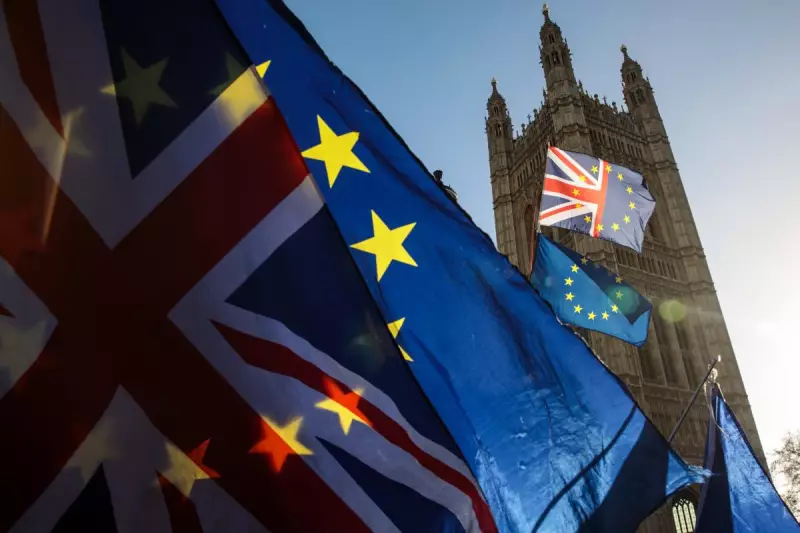
Westminster is bracing for a resurgence of heated Brexit debates as the government prepares to introduce legislation to ratify its post-Brexit "reset" agreement with the European Union. The forthcoming bill, expected within weeks, will force MPs to confront deep-seated divisions over the UK's future relationship with the bloc.
The Bill and Its Contentious Clauses
The legislation will seek parliamentary approval for a trade deal first announced in May 2025, alongside specific agreements covering areas like the Erasmus student exchange programme. A central and controversial element is the UK's alignment with EU Sanitary and Phytosanitary (SPS) rules. This move, designed to lower costs for British food exporters, is projected to add £5.1bn to the UK economy over several years. However, it comes with a significant concession: the European Court of Justice will regain jurisdiction over some legal matters previously under British judges' purview.
Nick Thomas-Symonds, the Minister for UK Relations with the EU and a close ally of Prime Minister Keir Starmer, has expressed hope that the comprehensive deal will be fully implemented by 2027. The government's stated aim is to forge closer trade links with the world's largest economic bloc to stimulate UK growth.

Political Battle Lines Are Drawn
The bill is set to face immediate and staunch opposition. The Conservative Party and Nigel Farage's Reform UK have already voiced fierce criticism of the SPS agreement. Shadow Business Secretary Andrew Griffith warned it would lead to "much deeper entanglement" with Europe, while Farage has vowed to "undo" the legislation. The government will also face pressure from its own side, with figures like Health Secretary Wes Streeting known to favour closer alignment, including potentially with the EU customs union—a position the Liberal Democrats are expected to exploit.
Meanwhile, in Brussels, EU parliamentarians are concurrently debating the terms of the same deal, highlighting its bilateral significance.
Broader Implications and Unfinished Business
Beyond trade, the bill will detail alignment on emissions trading markets and is understood to provide a framework to finalise other aspects of last year's reset statement that remain incomplete. These include ongoing negotiations on defence cooperation and a potential youth mobility scheme. The rekindling of the Brexit debate places the Labour government under intense scrutiny, with YouGov polls indicating public unease over foreign judicial influence, despite widespread dissatisfaction with the post-Brexit status quo.
A Cabinet Office spokesperson defended the reset, stating: "The UK-EU reset is improving our diplomatic, economic and security cooperation and will be worth £9bn to the UK economy by 2040. We will legislate to deliver on this, and further details of the bill will be announced in due course." As the bill arrives in Parliament, the stage is set for a new chapter in the long-running Brexit saga, testing the government's resilience and the UK's political cohesion once more.