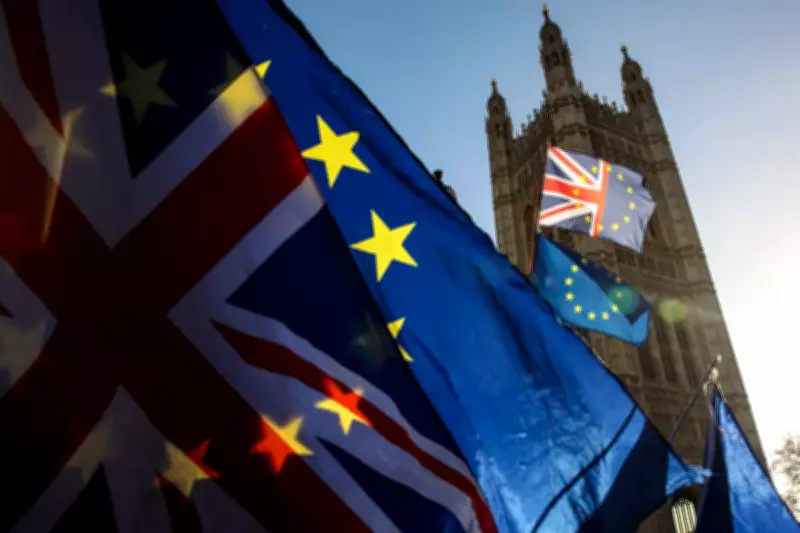
UK Food Industry Scrambles as Government Pushes EU Standards Realignment
The British food production sector finds itself in a frantic race against time as the government accelerates efforts to realign with European Union food standards. This strategic shift aims to dismantle the cumbersome border checks and bureaucratic paperwork that have severely complicated exports to the EU since Brexit. Farmers and manufacturers across the United Kingdom are now mobilizing rapidly to comply with incoming legislative changes, navigating a complex regulatory landscape that promises both challenges and opportunities.
A Reset in UK-EU Relations
Addressing the pressing issue, Defra Secretary Emma Reynolds emphasized the government's commitment to transforming its relationship with the European bloc. "We are resetting our relationship with the EU, our closest and largest trading partner, to make trade easier and cheaper, and deliver tangible benefits for British businesses," Reynolds stated. This initiative forms a crucial component of broader renegotiations spearheaded by Prime Minister Keir Starmer and Chancellor Rachel Reeves, who have consistently advocated for closer alignment with European neighbors.
While the EU maintains an international reputation for stringent food safety legislation, the reality of comparative standards is more nuanced than commonly perceived. Contrary to the implications of ominous 'Not for EU' labels on packaging, the United Kingdom does not universally lag behind. In several critical areas, particularly animal welfare regulations, British standards actually exceed those mandated by the European Union. However, recent months have exposed significant vulnerabilities within domestic supply chains.

Alarms Sound on Animal Welfare Standards
The first quarter of this year witnessed alarming revelations concerning animal welfare practices among some of Britain's most prominent food and beverage brands. In January, retail giant Tesco suspended its sourcing of Scottish salmon from a fish farm on the Isle of Skye. This decisive action followed the emergence of disturbing footage showing employees irresponsibly dumping diseased fish into a sea loch. The incident raised serious questions about oversight and ethical practices in aquaculture.
Further concerns emerged in February when eight major restaurant chains, including industry leaders KFC, Nando's, and Popeyes, publicly abandoned their pledge to cease using fast-growing chicken breeds, often colloquially termed 'franken-chickens'. This reversal highlighted the persistent tension between commercial pressures and ethical farming commitments, casting a shadow over the sector's welfare credentials.
The Complex Web of Post-Brexit Regulations
The regulatory environment has grown increasingly labyrinthine following the UK's departure from the European Union. Both entities have pursued independent international trade agreements, introducing a patchwork of divergent standards that now require careful harmonization. The United Kingdom solidified a free trade agreement with Australia in 2021 and, more recently, acceded to the Comprehensive and Progressive Agreement for Trans-Pacific Partnership (CPTPP) in 2024, joining eleven other nations.
Ongoing negotiations for a trade pact with Gulf states, initiated in 2022, have sparked considerable controversy. British farmers voice deep anxiety about being undercut by chicken importers operating under lower animal welfare standards. Simultaneously, human rights and environmental organizations express grave concerns regarding inadequate legal protections for migrant workers and fragile ecosystems in the Gulf region. Official government statistics reveal a stark 22 percent decline in the value of UK food and agricultural exports to the EU since 2018, with only modest gains achieved in alternative markets.
Chancellor Reeves Champions Closer Alignment
Chancellor Rachel Reeves has emerged as a vocal proponent for strengthened ties with Europe. In her recent Mais Lecture, she articulated a clear vision for the future. "No partnership is more important than that between the UK and our European neighbors," Reeves asserted, firmly stating that "closer alignment is the right course for Britain." Central to this strategy is the streamlining of agri-food trade, a move deemed essential for economic recovery and growth.

The anticipated EU Sanitary and Phytosanitary (SPS) agreement represents the cornerstone of this realignment. It seeks to reestablish a unified framework of standards governing food production in both the UK and the EU. This agreement is projected to take effect by mid-2027, presenting an exceptionally tight timeline for adaptation. Nevertheless, many businesses that have suffered significant losses in EU export revenue welcome the prospect of swift regulatory change.
Manufacturers Race Against the Clock
The impending SPS agreement will impose substantial demands on the entire UK food and drink manufacturing sector. Products with higher sanitary risks, such as meat and dairy, currently undergo rigorous inspection and require export health certificates for EU entry. This red tape is a primary driver behind the realignment push. However, the deal's implications extend far beyond these specific product categories.
Balwinder Dhoot, Director of Industry Growth and Sustainability at the Food and Drink Federation (FDF), provides crucial insight. "The 'SPS agreement' will impact all UK food and drink manufacturers – even if they don't trade with the EU or produce 'SPS products', such as meat and dairy," Dhoot explains. He clarifies the agreement's unique nature: "This is because the SPS agreement isn't like a traditional trade deal. In order to remove the additional checks and certifications that UK businesses have faced since our exit from the EU in 2021 we will have to realign our domestic food law with the EU's food laws."
The ripple effects of this realignment will be felt across the UK's international agri-food trade network. A recent milestone saw the first shipment of Northern Irish beef reach the United States, inaugurating a new trade deal featuring a reciprocal 13,000-tonne quota. While this agreement successfully removed tariff barriers, it did not address welfare standards, meaning US exporters must still comply with UK production norms. As those UK standards evolve to mirror EU regulations, this nascent transatlantic relationship will also require adaptation.
Brexit, as both its staunchest advocates and most vocal critics would acknowledge, was never a concluded event. Instead, it has morphed into a continuous, evolving dance of intricate negotiations, complex trade-offs, and sweeping regulatory rewrites. This process inevitably creates winners and losers within the agricultural and manufacturing sectors. As the 2027 deadline approaches, the UK food industry's scramble to adapt underscores the enduring and dynamic consequences of the nation's post-Brexit trajectory.