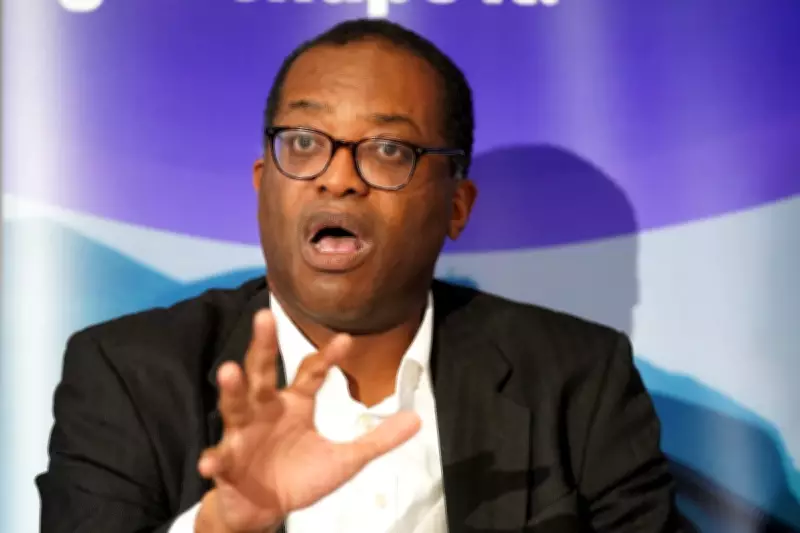
Former Chancellor Issues Stark Warning Over Energy Subsidy Costs
Former chancellor Kwasi Kwarteng has delivered a sobering warning that the current government risks being plunged into a severe financial crisis unless it prepares for another painful round of tax increases. The urgent need for additional revenue stems from covering sharp rises in energy subsidies, which have become necessary due to soaring oil and gas prices triggered by the ongoing war in Iran.
Market Turbulence Echoes 2022 Energy Shock
In an exclusive interview with City AM, Kwarteng drew direct comparisons between Monday's significant market turbulence and the similar energy shock that followed Russia's invasion of Ukraine in 2022. That previous crisis culminated in Kwarteng's controversial 'mini-budget,' a package featuring billions in energy subsidies alongside unfunded tax cuts that ultimately spooked bond markets and led to the collapse of Liz Truss's government.
"I think the spike then in terms of gas prices was much greater than today but there'll be similar pressures for the government in terms of helping people with bills," Kwarteng explained. "Any help will have to be scored by the OBR and could end up leading to tax rises in November."

The Inevitable Call for Subsidies and Fiscal Consequences
The former chancellor emphasized that public demand for energy bill assistance creates inevitable fiscal pressures. "The cry will always be for more subsidies," he noted, while predicting that Treasury officials would likely push back against unlimited support. "Any subsidy that you come up with, you'll have to pay in higher taxation towards the end of the year."
Kwarteng's warning comes as government borrowing costs have skyrocketed over the past week, with investors growing increasingly concerned that spiraling energy prices could trigger another surge in inflation. On Monday morning, the 10-year gilt yield jumped by as much as 14 basis points, reaching its highest level in several months.
Political Response and Market Expectations
Labour leaders Rachel Reeves and Keir Starmer have already indicated their readiness to intervene with support for households facing higher energy bills. Such an energy bailout could potentially run into billions of pounds if prices continue their upward trajectory.
"I've been here before," Kwarteng stated, reflecting on his own experience during the 2022 crisis. "The markets will be looking very closely at any energy intervention and they'll be expecting the government to pay for it through tax rises. If it doesn't then they could be at risk, as we were in 2022."
Kwarteng's Crypto Venture with Nigel Farage
Separately, Kwarteng has revealed that Reform UK leader Nigel Farage has become a significant investor in his cryptocurrency business, Stack BTC. Farage has invested £215,000 to acquire a 6.3 percent stake in the Aquis-listed company, which describes itself as focused on building a portfolio of cash-generative businesses alongside a Bitcoin treasury.
Kwarteng, who joined the firm's board in November and now serves as executive chairman, controls a 5.4 percent stake worth approximately £185,000 together with his wife Harriet. News of Farage's investment triggered a dramatic surge in Stack's share price, more than doubling to 12.5p and pushing the company's valuation well above the value of its crypto holdings.
Defending Political Investments and Crypto's Future
The former chancellor defended Farage's investment decision, noting that the Reform UK leader has adopted a more crypto-friendly position following a similar shift by former US president Donald Trump. "Politicians are under massive scrutiny which is quite right," Kwarteng acknowledged. "Twenty or thirty years ago people used to invest all the time, they were just seen as individuals who just happened to be MPs."

Kwarteng called upon financial regulators, including the Financial Conduct Authority, to actively engage with cryptocurrency companies to support the industry's growth within the United Kingdom. "This is a new financial technology that will take a bigger and bigger role in global financial architecture," he asserted. "We can either get on the train and get ahead of developments or we can be laggards, but this isn't going away."