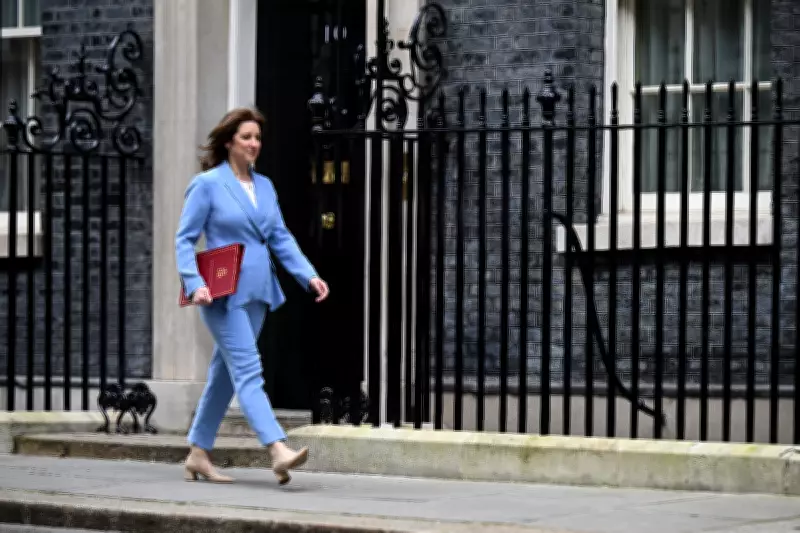
Spring Statement Sparks Controversy as Chancellor Defends Economic Record
Chancellor Rachel Reeves has been accused of being "in denial" about the state of the UK economy, following her Spring Statement to the House of Commons. Shadow chancellor Mel Stride led the criticism, asserting that Labour's economic agenda has damaged the jobs market and impacted entire sectors, despite Reeves' claims that her decisions are "starting to pay off."
Revised Forecasts Paint Grim Picture
Updated forecasts from the Office for Budget Responsibility (OBR) reveal a significant downgrade in growth expectations. The UK economy is now projected to grow at just 1.1 percent this year, down from a previous prediction of 1.4 percent. This slowdown comes as the tax burden reaches a post-war high under Labour's policies.
Unemployment is also set to rise, with the OBR forecasting a peak later this year from the current rate of 5.2 percent. While the watchdog predicts a fall to 4.1 percent by the end of the parliament, economists have dismissed this as "markedly optimistic." Fergus Jimenez-England, associate economist at the National Institute of Economic and Social Research, highlighted the unrealistic nature of these projections.

Middle East Conflict Clouds Economic Outlook
Analysts have raised urgent concerns about the escalating crisis in the Middle East, warning that an energy price spike could derail inflation's downward trajectory. Capital Economics cautioned that the conflict "has changed the outlook," with risks that higher energy prices will lead to increased UK inflation and interest rates, alongside lower real GDP growth than the OBR forecasts.
Economists at Mizuho went further, suggesting some OBR predictions risk becoming "obsolete" and "irrelevant" given the geopolitical tensions. These warnings come despite slight upward revisions to growth forecasts for 2027 and 2028, now at 1.6 percent, and faster-than-expected inflation reduction this year.
Borrowing and Headroom Under Scrutiny
Reeves revealed that government borrowing headroom has increased from £21.7 billion to £23.6 billion due to calculation changes. However, analysts warn this "could be swamped by events in the Middle East," with a real risk that borrowing will be higher and headroom lower by the time of the Budget.
The Chancellor maintained a bullish tone, insisting that "borrowing is down, living standards are up, and the economy is growing." Yet, hours before her statement, the cost of government borrowing rose as expectations for interest rate cuts this month dropped from 90 percent to 30 percent.
Calls for Fundamental Economic Reforms
Mitchell Palmer, economist at the Adam Smith Institute, argued that the priority must be to "raise the economy's growth potential" through accelerated planning reform, reduced employment costs, liberation of Britain's nuclear and gas sectors, and tax reforms to encourage work and investment.
Reeves concluded her speech with a stark warning: "Every pound that we have invested, every pound in the pockets of working people, every pound that we have secured in the forecast today, can be wiped out by a change of course." This statement underscores the fragile nature of the current economic recovery amid global uncertainties and domestic policy challenges.