

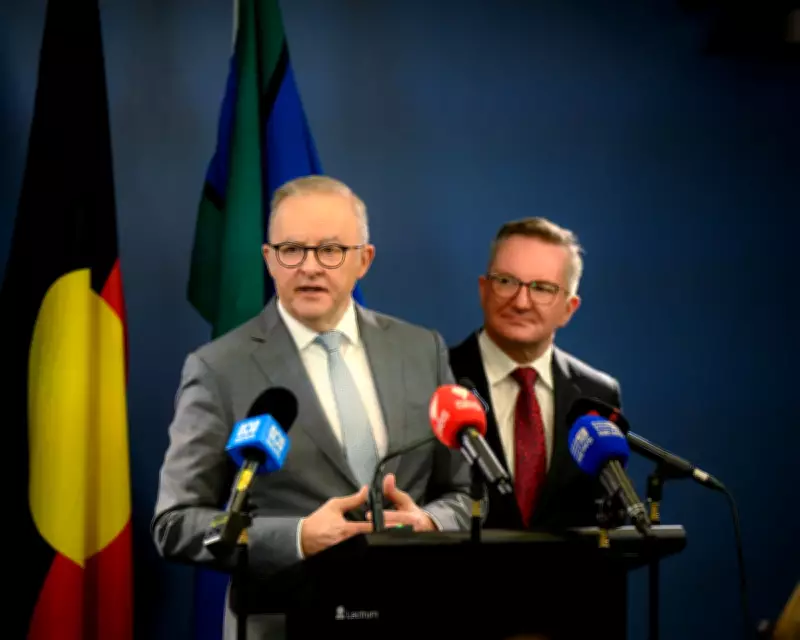
Australia Commits to Supporting Strait of Hormuz Reopening Amid Fuel Price Relief
Prime Minister Anthony Albanese, alongside Climate Change and Energy Minister Chris Bowen, addressed the media in Sydney on Saturday, confirming Australia's preparedness to provide assistance as the Strait of Hormuz reopens. This development follows Iran's declaration to open the key shipping route during a ceasefire with the United States and Israel, sparking a significant drop in global oil prices.
Global Oil Prices Plummet, Fuel Savings on the Horizon
Early Saturday, global oil prices fell by approximately 10% after Iran announced the Strait of Hormuz would be open for commercial vessels throughout the ceasefire period. Prime Minister Albanese, who was attending a meeting of 49 nations to discuss the route's opening, emphasized the critical importance of freedom of navigation for international trade. He stated, "We want to see this fragile arrangement confirmed... We want the strait of Hormuz to be fully reopened for all countries permanently." A further conference is scheduled in London next week to address ongoing concerns.
Australians can anticipate additional reductions in fuel expenses, though it may take up to a week for the decline in global oil prices to reflect at local petrol stations. Since April 1, fuel pump prices have already decreased by about 10 cents per litre, beyond government interventions such as the removal of GST and halving of the fuel excise. Energy Minister Chris Bowen reported that Australia now holds 46 days' worth of petrol reserves, an increase of 10 days since the onset of the global fuel crisis triggered by US and Israeli actions.

Market Dynamics and Refinery Incident Analysis
Australia's petrol and diesel benchmarks are tied to Singapore market prices, which are expected to align with global trends when trading resumes on Monday. NRMA spokesperson Peter Khoury noted, "Prices at the bowser have been falling steadily... The national average for unleaded has fallen 50c since 1 April, and diesel has dropped 37c in the past week, with further significant declines likely." He explained that independent retailers typically pass on cost savings to consumers more quickly than major chains.
In related news, a fire at the Viva fuel refinery in Geelong raised initial fears of supply disruptions, but Bowen assured that production has resumed at 80% capacity for diesel and jet fuel, and 60% for petrol. Khoury clarified that this incident is unlikely to affect retail prices, as they are determined globally. Nationwide, only 1.5% of fuel stations are experiencing diesel shortages, with even fewer lacking petrol.
The Australian Competition and Consumer Commission reported that average retail petrol prices have decreased by 41.6 cents per litre across major cities since March 31, attributing part of this to government measures saving about 32 cents per litre. Additionally, Foreign Minister Penny Wong and Trade Minister Don Farrell secured a supply agreement with Singapore for diesel, petrol, and LNG, bolstering Australia's energy security.






