

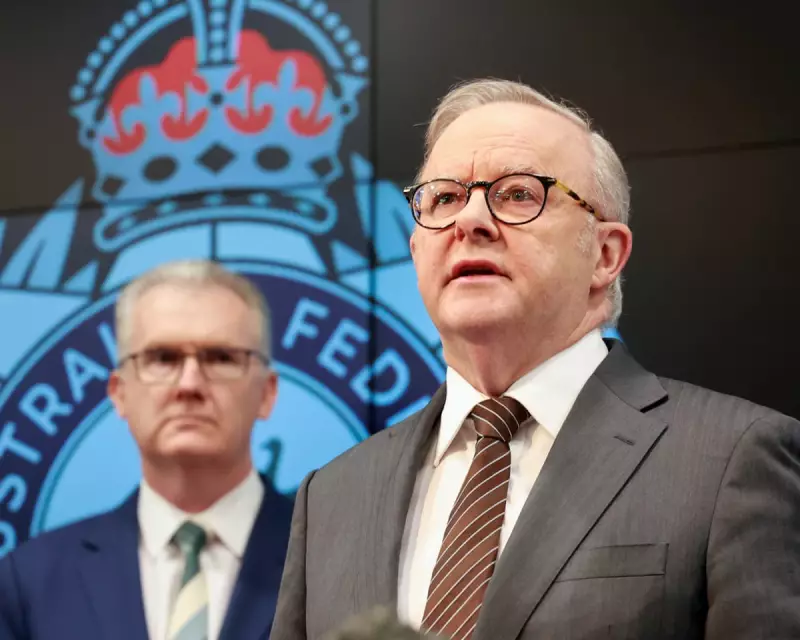
Prime Minister Anthony Albanese has tasked former spy chief Dennis Richardson with leading a swift, five-month review into the federal response to the devastating Bondi Beach terror attack, resisting calls for a broader royal commission. The 14 December massacre, which targeted a Hanukkah event, left 15 people dead and dozens injured.
The Scope of the Richardson Review
The central focus of the inquiry will be the actions and intelligence of federal security bodies in the period leading up to the attack. Dennis Richardson is mandated to investigate the Australian Security Intelligence Organisation (ASIO), the Australian Federal Police (AFP), and the Australian Secret Intelligence Service (ASIS), alongside the Home Affairs and Attorney-General's departments.
A key line of investigation will be ASIO's prior assessment of alleged gunman Naveed Akram. The agency monitored him for six months from October 2019 over alleged links to an Islamic State cell but ultimately concluded he was not a continuing threat. The review will also scrutinise the agencies' knowledge of the alleged perpetrators' reported trip to the Philippines in November and any alleged training conducted in Australia.

Furthermore, Richardson will assess information-sharing protocols between federal and state authorities. This allows him to examine what information was available to New South Wales police when they granted a firearms licence to Sajid Akram in 2023. The review will ask whether any legal or procedural frameworks hindered agencies from acting to prevent the atrocity.
The Antisemitism Question: In Context, But Not in Focus
While the formal terms of reference for the Richardson review do not explicitly mention antisemitism, both the Prime Minister and Home Affairs Minister Tony Burke have stated that the inquiry will naturally consider the context of rising anti-Jewish sentiment in Australia when examining the attack on the Hanukkah celebration.
"It is specifically in the wake of Bondi, there is no way of conducting that inquiry without dealing with antisemitism," Burke asserted. However, Guardian Australia confirms the review will not expand into a wider societal investigation of antisemitism, such as its prevalence on university campuses. This limitation is a primary point of contention for critics, including Opposition Leader Sussan Ley, who continues to demand a royal commission with "nothing off limits" to address the root causes of anti-Jewish hatred.
Powers, Process, and Expected Outcomes
The Richardson review operates with significant access within government but lacks the coercive powers of a royal commission. Richardson has been guaranteed full cooperation from federal agencies and access to all relevant material, including documents prepared for ministers and cabinet committees. However, he cannot subpoena external witnesses or documents, and all proceedings will be conducted behind closed doors, with a final report expected by the end of April.
Public access to the findings will likely be limited to a declassified version to protect sensitive intelligence. Former Home Affairs secretary Mike Pezzullo predicts the review will find that ASIO and the AFP "acquitted themselves very well," arguing that a deeper royal commission is still needed to explore the links between antisemitism after the 7 October 2023 Hamas attacks and the Bondi atrocity.
In contrast, Phil Kowalick of the Australian Institute of Professional Intelligence Officers supports the review's focused approach, believing any institutional failings will "become quite evident quickly." Meanwhile, ASIO Director-General Mike Burgess has initiated an internal review and expressed confidence the Richardson inquiry will confirm ASIO acted "appropriately, legally and proportionately."






