

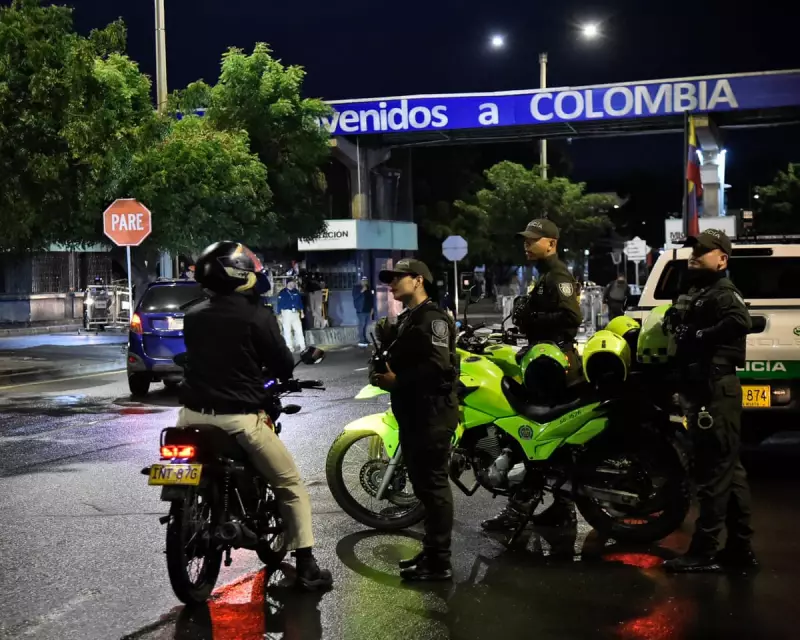
Colombia has deployed its armed forces to its border with Venezuela, citing fears of a potential massive influx of refugees fleeing in the wake of overnight US airstrikes on its neighbour. The decision followed a national security council meeting convened by President Gustavo Petro.
Condemnation and Call for UN Action
In a statement posted on social media platform X, President Petro strongly rejected what he termed US aggression against Venezuelan sovereignty. He announced that his government was calling for an emergency session of the United Nations Security Council to address the escalating crisis.
"The government of Colombia rejects the aggression against the sovereignty of Venezuela and of Latin America," Petro stated, framing the military action as a regional concern.

Regional Reactions and Unverified Claims
The situation remains highly volatile with conflicting reports. Former US President Donald Trump claimed that Venezuelan leader Nicolás Maduro and his wife, Cilia Flores, had been captured and flown out of the country. However, Venezuelan Vice-President Delcy Rodríguez stated the pair's whereabouts were unknown and demanded proof of life from Trump.
Explosions were reported in the Venezuelan capital, Caracas, in the early hours of Saturday, 3 January, with the government alleging attacks on both civilian and military sites.
International Response
The crisis has drawn a mixed international response:
- Guyana, which shares a border with Venezuela, expressed "grave concern" and said it was monitoring developments closely.
- Argentina's President Javier Milei, a Trump ally, celebrated the action with the statement: "Liberty advances! Long live liberty!"
- Cuba's President Miguel Díaz-Canel condemned the strikes and urged the international community to react.
- Spain offered to mediate, calling for de-escalation and respect for international law.
- Italy and Germany indicated they were closely watching the situation, with Germany activating a crisis team.
Analyst Perspective on Regime Change
Dr Christopher Sabatini, a senior fellow for Latin America at Chatham House, suggested the strikes were almost inevitable after failed efforts to oust Maduro over the past six months. He questioned whether targeted strikes alone would achieve regime change and highlighted the potential political and logistical challenges of sustained US military engagement, including likely congressional scrutiny under the War Powers Act.
As Colombian police and military personnel reinforce the border crossing at Cúcuta, the region braces for the humanitarian and political consequences of a dramatic escalation in tensions.






