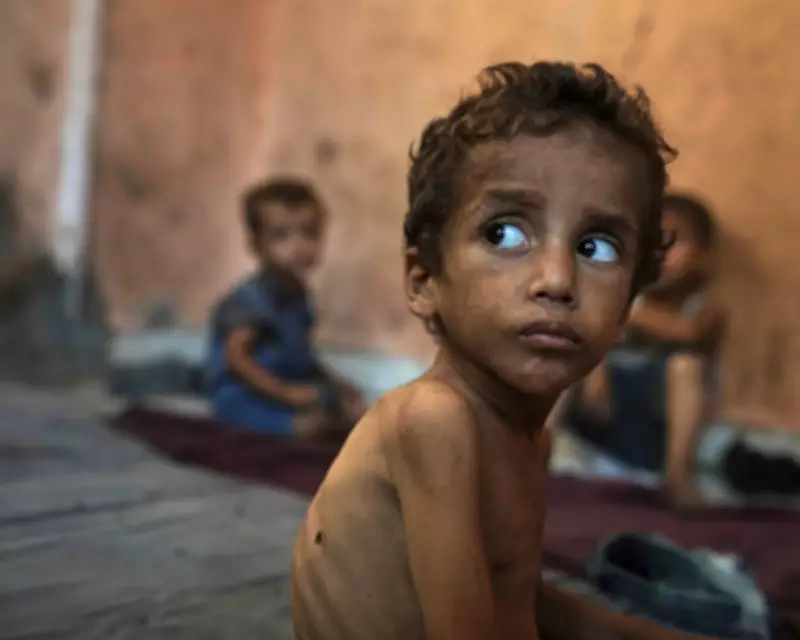
Gaza Confronts Imminent Hunger Catastrophe as Crossings Remain Sealed
The Gaza Strip faces a devastating new hunger crisis as Israel has closed all border crossings indefinitely following its military actions against Iran. This complete siege threatens to plunge approximately 2 million Palestinians into severe food insecurity, with humanitarian organizations warning that existing supplies will be exhausted within days.
Critical Food Supplies Dwindling Rapidly
With Israeli forces controlling approximately 60% of Gaza's territory after more than two years of conflict, nearly all food must be imported through border crossings. Humanitarian groups that feed much of the population report that supplies available when the latest conflict began will only last a few more days.
"If the borders stay closed, World Central Kitchen will run out of food this week," declared José Andrés, founder and chief of the prominent relief organization. "We are cooking 1 million hot meals every day. We need food deliveries every single day."

International food security experts estimate Gaza has only about one week's supply of fresh food remaining. Community bakeries serving the most vulnerable populations have flour for approximately 10 days of bread production, while aid parcels may last around two weeks.
Prices Skyrocket as Panic Buying Intensifies
As news of Israel's attack on Iran spread, Palestinians haunted by memories of previous famines raced to purchase remaining supplies, causing dramatic price increases. The cost of a 25-kilogram sack of flour has tripled from about 30 shekels last week to between 80 and 100 shekels. Other essential items including sugar, diapers, and cooking oil have doubled in price.
"The return of famine to Gaza is what we fear most, even more than the shelling," said Sobhi Al-Zaaneen, a 50-year-old father of seven originally from northern Gaza. Despite the soaring costs, he felt compelled to stock up on additional food supplies. "I'm now on my way to the market to buy what we need before prices increase further."
Vulnerable Populations Face Greatest Risk
Many Gaza residents lack the financial resources to stockpile food after losing homes and employment during the prolonged conflict. Um Mohammed Hijazi, a 49-year-old mother of five whose family home was destroyed, explained her precarious situation: "I don't have enough money to buy and store food before prices increase, as some others have done." The family has been displaced five times and relies on limited aid supplies that might sustain them for a few days if crossings remain closed.
Some traders have reportedly begun storing goods rather than selling them, anticipating further price increases as supplies diminish. Basic staples have become increasingly difficult to find compared to just one week ago.
Legal Obligations and Humanitarian Concerns
As the occupying power in Gaza, Israel bears legal responsibility under international humanitarian law to ensure sufficient food reaches civilians. Jan Egeland, head of the Norwegian Refugee Council, emphasized that this obligation persists despite the conflict with Iran: "Community kitchens are already closing, and prices for basic goods have started to rise. Even amid a widening regional war, international humanitarian law still requires Israel to facilitate relief for civilians under its control."
The Israeli authority controlling aid and commercial flows into Gaza, known as Cogat, stated that shipments were halted for security reasons during the conflict with Iran. A spokesperson explained: "Opening the crossings under fire puts lives at risk, both personnel on the Israeli side and on the Gazan side." While claiming adequate food exists in Gaza, Cogat declined to provide specific statistics, stating only that "existing stockpiles inside Gaza are expected to suffice for a while."
Systemic Vulnerabilities Exposed
Gaza's border with Egypt has remained closed to aid shipments since Israeli forces assumed control of the area in May 2024. Cogat did not respond to inquiries about why this crossing hasn't been opened for humanitarian relief.

Palestinians and international organizations have warned for months about shortages of essential goods despite ceasefire periods. United Nations-backed experts reported in December that nearly 80% of Gaza's population faced acute food insecurity.
Bahaa Al-Amawi, secretary of the Chamber of Industry and Commerce of North Gaza, highlighted systemic vulnerabilities: "Since the beginning of the ceasefire, there has been no strategic stockpile, and we are unable to establish one under the current conditions. This means that as soon as a closure is announced, it triggers a psychological crisis for many citizens due to their previous experience with famine, alongside a real commercial crisis caused by the absence of stock reserves."
Personal Stories of Survival and Fear
Alaa Abu Rakba, a 43-year-old father of four, has been supporting his family by selling meat from a small kiosk outside their tent after their home was destroyed. His business was effectively shut down overnight by the border closures, but he immediately purchased whatever basic supplies he could afford.
"We learned our lesson from the first time," he said, referring to previous hunger crises. "I would rather the war and shelling return than see the crossings closed, because I do not want to live through a famine again or find myself unable to provide food for my children for days."
The situation recalls Israel's total siege on Gaza last spring and subsequent extreme restrictions on food shipments that caused widespread famine during the summer of 2024. Hundreds of Palestinians were killed attempting to reach food distribution points operated by humanitarian organizations in Israeli-controlled areas during that period.