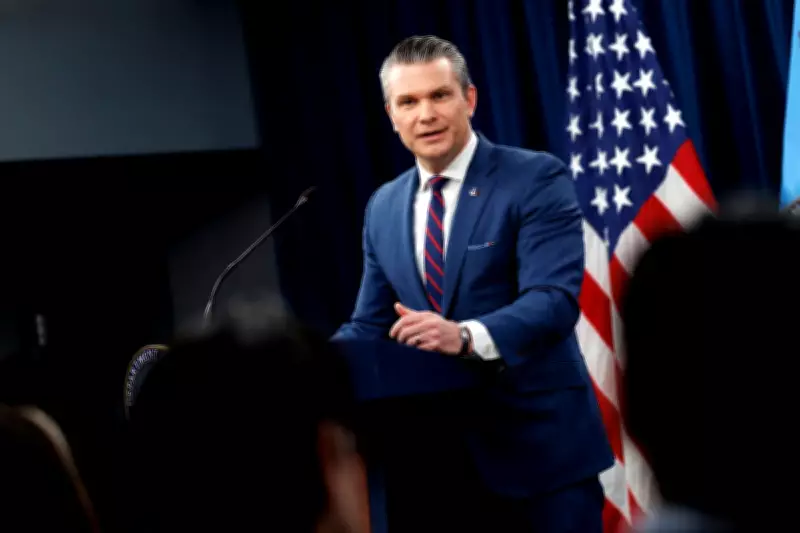
In a fiery press conference at the Pentagon on March 2, 2026, US Defense Secretary Pete Hegseth set a defiant tone for what he described as the Trump administration's politically incorrect war on Iran. The former Fox News host, now leading the Pentagon, dodged repeated questions about the objectives and timeline of the US-Israeli military operation, dubbed Operation Epic Fury, while reframing it as an act of resistance against traditional constraints.
Reframing the Conflict as a Maga-Era Breakthrough
Hegseth emphasized that this intervention marks a departure from past Middle East wars, which he labeled as "dumb" nation-building exercises. He asserted that Operation Epic Fury is being conducted "on our terms, with maximum authorities," explicitly distancing the US from allies who he claimed hesitate over the use of force. This rhetoric aligns with President Donald Trump's longstanding criticism of prolonged foreign engagements, despite the current operation potentially embroiling the US in a major regional conflict.
Lessons from Iraq and a Shift in Military Doctrine
The defense secretary, along with Vice President JD Vance, both veterans of the Iraq war, positioned the administration as having learned from previous mistakes. Hegseth argued that the real issue with past conflicts was an overemphasis on democratic transitions and restrictive rules of engagement. In contrast, he promised "no stupid rules of engagement, no nation building quagmire, no democracy-building exercise, no politically correct wars" in Iran, suggesting a more aggressive and less constrained approach.

However, Hegseth refused to rule out sending ground troops, leaving open the possibility of mission creep. This ambiguity comes amid escalating violence, including Israeli strikes in Lebanon, Iranian ballistic missile attacks, and the deaths of four US service members, raising fears of a broader regional war.
Confusion Over Timeline and Objectives
When pressed by NBC News about a potential four-week timeline mentioned by Trump, Hegseth dismissed the query as a "typical NBC sort of gotcha type question." He offered vague estimates, stating the operation could last two, four, or six weeks, and emphasized fighting to win without wasting time or lives. This lack of clarity mirrors Trump's own shifting rhetoric, which has oscillated between claims of a quick resolution and longer engagements, adding to observer confusion.
The press conference, the first by an administration official in over 48 hours since the conflict began, served more as mood music than a detailed briefing. Hegseth avoided straightforward answers on exit strategies, troop deployments, and success metrics, instead projecting an image of unwavering defiance. As the situation unfolds, the administration's anti-PC war narrative faces the harsh realities of military logistics and geopolitical fallout.