

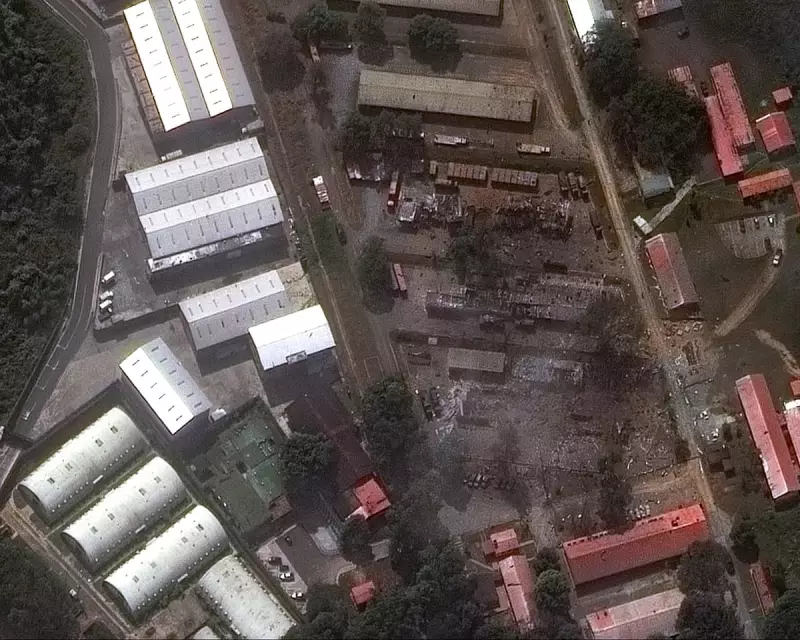
In a stunning display of military precision, United States forces captured Venezuelan President Nicolás Maduro and his wife, Cilia Flores, in a daring overnight raid on Saturday, 3 January. The operation, which lasted just two hours and twenty-eight minutes, culminated months of intricate planning and plunged the South American nation into profound uncertainty.
Months of Meticulous Surveillance
The mission, codenamed Operation Absolute Resolve, relied heavily on intelligence gathered by the CIA and other US agencies. From as early as August, operatives worked to establish Maduro's "pattern of life", meticulously tracking his movements, residences, and habits. This intelligence was critical as Maduro, aware of the growing US military presence in the Caribbean from September, had drastically tightened his security.
He ceased his well-publicised speeches and began rotating between six to eight different sleeping locations each night. The Venezuelan leader also depended increasingly on Cuban counterintelligence officers for his personal protection, deeming them more trustworthy than his own security detail. Despite these extensive precautions, US intelligence pinpointed his location on the evening of Friday, 2 January, at a compound within the Fuerte Tiuna military base in Caracas.

The Night of the Raid: Overwhelming Force
With final authorisation from President Donald Trump at 10.46pm Eastern Time, the assault began. The first objective was to establish total air dominance. US forces neutralised Venezuela's air defences, which included Russian-made S-300 and Buk missile systems and Su-30 fighter jets, through a combination of targeted strikes.
More than 150 US aircraft participated in the raid. Reports indicate the use of Tomahawk cruise missiles and AGM-88 Harm anti-radiation weapons to destroy air defence radar and communications centres. F-35 jets reportedly bombed Venezuelan fighters on the ground. Residents of Caracas reported widespread power outages following the initial explosions, which Trump later hinted may have involved cyber capabilities.
With the skies cleared, a team of elite Delta Force soldiers was dispatched in a fleet of modified Black Hawk and Chinook helicopters. Flying at just 100 feet above the water to avoid radar, they navigated the coastal mountains to reach the capital. Video evidence showed nine helicopters flying in formation over Caracas towards Fuerte Tiuna.
The Capture and Aftermath
The Delta Force team, which had trained on a replica of Maduro's compound built in the US, landed at the base at 2.01am. They breached the compound using blow torches and engaged in a firefight with Maduro's security team. Venezuela's defence minister later stated that a large part of the presidential guard was killed.
In his final moments, Maduro attempted to flee to a safe room but was "bum rushed" by US forces before he could secure the door, according to President Trump. He and Flores were swiftly apprehended. By 4.29am, the helicopters had returned to international airspace, depositing the captives on the USS Iwo Jima. Maduro was subsequently transported to the Metropolitan Detention Center in Brooklyn, New York.
While the military operation was executed flawlessly, its political consequences remain deeply uncertain. Analysts warn that removing the country's leader does not equate to controlling the nation. Matthew Savill of the Royal United Services Institute (RUSI) noted the operation was "impressive, but hardly 'decapitation'" of the Venezuelan state, highlighting the complex challenges that lie ahead for both Venezuela and the United States.






