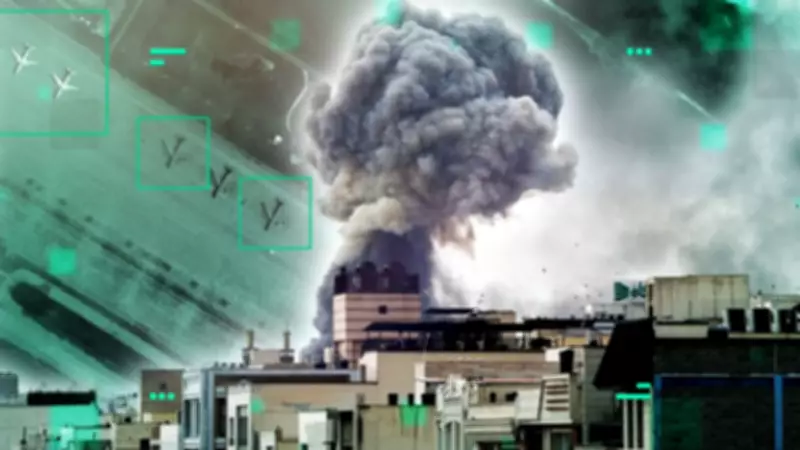
Mapping the Escalating Iran Conflict: Military Assets and Regional Strikes Analyzed
The United States has issued warnings of additional strikes against Iran following an operation that resulted in the death of its supreme leader, Ayatollah Ali Khamenei. With hostilities showing no signs of abating, a comprehensive mapping of assaults and military deployments reveals the intense dynamics of this regional conflict.
A Regional Conflict Unfolds
Operation Epic Fury commenced with a series of US strikes on Saturday morning, targeting Khamenei in his Tehran compound. Israel joined the offensive, executing aerial strikes that eliminated dozens of top Iranian military officials. In retaliation, Iran launched drones and missiles at multiple nations, including Israel, the UAE, Bahrain, Jordan, Oman, and Qatar. The conflict has already claimed the lives of three American service members in a strike on Kuwait, while an RAF base in Cyprus was hit by a drone attack.
Iran's Strike Capabilities and Range
Iran's drone assault on RAF Akrotiri in Cyprus showcased its operational reach. According to the International Institute for Strategic Studies, Iran's longest-range missile, the Sajjil, can travel up to 2,000 kilometers (1,240 miles), enabling strikes as far as Moscow or Athens. However, this range falls short of targeting the United Kingdom. The UK's base in Cyprus remains vulnerable not only to the Sajjil but also to Iran's Ghadr and Emad-1 missiles, highlighting strategic vulnerabilities in the region.

Fighter Jets and Airbases in Play
Both the United States and the United Kingdom maintain airbases across the Middle East and Europe, facilitating potential attacks on Iran. Recent weeks have seen a significant buildup of aircraft at these locations, including F-22 fighter jets, C-17 military transport planes, and KC-135 tankers deployed by the US. Diego Garcia, a joint US-UK military base, has experienced increased activity, with satellite imagery revealing at least 14 planes, such as F-16 fighter jets and P-8 Poseidon maritime spy planes. Despite its strategic importance, UK Prime Minister Sir Keir Starmer has denied permission for the base to be used in strikes against Tehran.
Naval Assets Deployed in Key Waters
Naval forces are heavily involved, with at least three US military ships reported in the Persian Gulf and twelve across the Middle East and Mediterranean. The aircraft carrier USS Abraham Lincoln was positioned under 200 kilometers (124 miles) from Iran's coast, capable of deploying F-35 Lightning II fighter jets. Meanwhile, the USS Gerald R Ford, the largest aircraft carrier in the US fleet, was spotted in the Mediterranean Sea, accompanied by destroyers with a combined capacity of over 6,000 personnel. On the Iranian side, six ships, including the drone-carrier warship Iris Shahid Bagheri, have been monitored near the Strait of Hormuz, capable of deploying approximately 60 drones and helicopters.
This conflict underscores the complex interplay of military assets and regional tensions, with ongoing strikes and counter-strikes shaping the geopolitical landscape. The deployment of advanced aircraft, missiles, and naval vessels indicates a prolonged engagement, as both sides leverage their capabilities in a high-stakes confrontation.