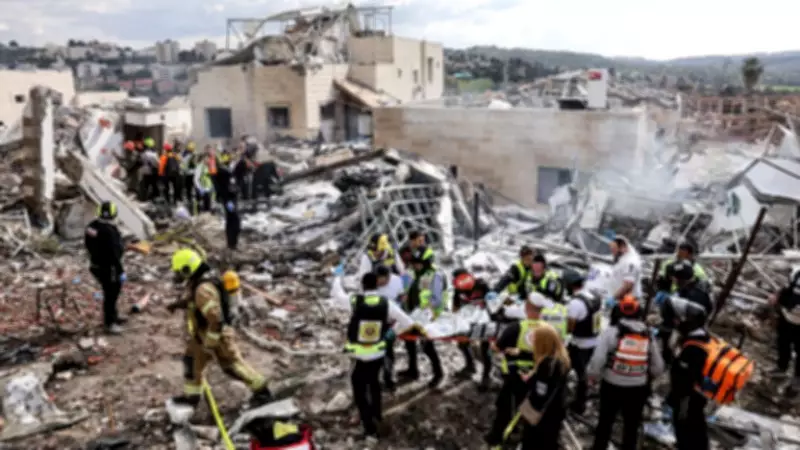
Iranian Missile Evades Israeli Defenses, Devastates Beit Shemesh
In a harrowing incident that has sent shockwaves across Israel, an Iranian missile successfully bypassed the nation's advanced air defense systems, striking the town of Beit Shemesh with catastrophic results. The attack, which occurred recently, transformed a civilian bomb shelter from a place of refuge into a scene of tragedy, resulting in multiple fatalities and widespread destruction.
A Sanctuary Turned Tomb
Eyewitness accounts and on-the-ground reports reveal a chilling narrative. Dozens of residents had heeded air raid sirens and mobile alerts, seeking safety in a local bomb shelter—a routine practice in Israel due to frequent conflicts, including a major war just eight months prior. However, this shelter, intended as a sanctuary, became a tomb in moments as the missile impacted directly.
The aftermath was one of chaos and horror. Emergency teams, including soldiers, rescue workers, and local volunteers, scrambled to clear rubble and search for survivors amidst the flattened buildings, including a destroyed synagogue. The scene underscored the brutal reality of modern warfare, where civilian areas are not immune to devastation.

Questions Over Air Defense Efficacy
Israeli military officials acknowledged the limitations of their defense systems in the wake of the strike. "Nothing can be one hundred percent effective," stated one official. "We cannot stop every single missile. We know that eventually one will get through." This admission highlights the persistent threat posed by missile attacks, despite Israel's investment in formidable aerial defenses like the Iron Dome and other technologies.
Lieutenant Colonel Yochay Manoff, a commander in Israel's National Rescue Unit, reflected on the scale of potential damage. "Just for reference, this is one missile that hit and affected so many buildings and so many lives," he noted, emphasizing the risk from the barrage of missiles launched by Iran in recent days.
Political and Emotional Fallout
The strike has ignited strong political reactions within Israel. Culture Minister Amichai Eliyahu, surveying the destruction, condemned the attack as an act of pure hatred. "What did these people here ever do to them?" he questioned, pointing to the civilian nature of the target. "This was done for no reason at all, except pure hatred for the sake of hatred." His comments underscore the deepening tensions between Israel and Iran, which have escalated in recent years despite no shared border.
Residents expressed disbelief and anger, noting that Beit Shemesh is a residential area with no military significance. "Why would this be a target? There is no excuse," said one local, echoing sentiments of frustration and grief.
Broader Implications for Regional Security
This incident serves as a stark reminder of the vulnerabilities in even the most advanced defense systems. While Israel has successfully intercepted numerous threats in past conflicts, the Beit Shemesh strike demonstrates that no technology is foolproof. It raises critical questions about future security strategies and the ongoing risk to civilian populations in conflict zones.
As cleanup efforts continue and investigations into the missile's evasion tactics proceed, the international community watches closely. The attack not only highlights the immediate human cost but also the complex geopolitical dynamics fueling regional instability.