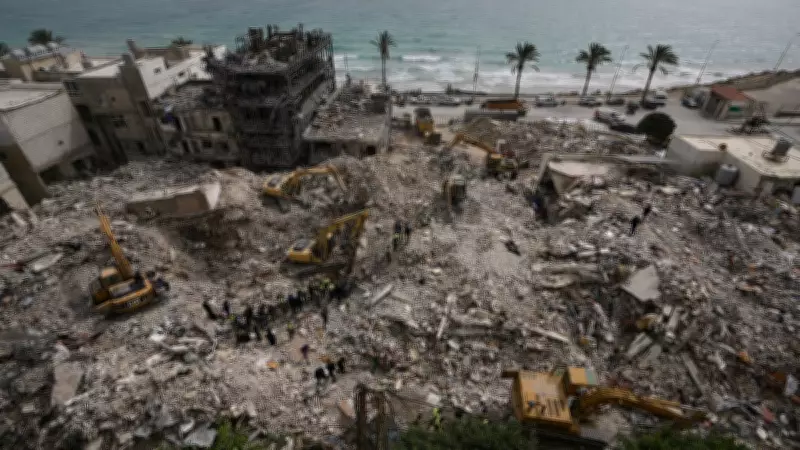
Displaced Lebanese Defy Warnings to Return to Devastated Villages
Determined to see their homes despite official warnings, thousands of displaced Lebanese residents utilized a fragile 10-day ceasefire to journey back to their villages in south Lebanon on Friday. The normally two-hour drive from Beirut stretched to ten hours as vehicles inched along the coastal highway, creating miles-long traffic jams of returning families.
Roads of Rubble and Makeshift Crossings
The Lebanese army worked through the night to repair the Qasmiyeh Bridge into Tyre, which had been bombed by Israel hours before the ceasefire took effect. Cars crossed the temporary structure one by one, navigating rubble-strewn roads and collapsed infrastructure. Some drivers even traversed dirt paths and drove through the Litani River to reach their destinations.
"They told me my house was destroyed. But I wanted to come and see it for myself," said Mohammed Ashour, a 60-year-old who had been displaced for 44 days. He left his family in Beirut to shield them from the destruction awaiting them in Shaqra, his hometown.

Festive Atmosphere Turns Somber
Initially, the return journey carried a celebratory atmosphere with crowds waving Lebanese and Hezbollah flags, cheering on returning residents. Some held up V signs for victory as families packed into cars loaded with mattresses and belongings.
However, the mood turned somber when residents reached their villages. Hassan Najdi, a 28-year-old electrical engineer, returned to find his home in Srifa heavily damaged. "Honestly, everything has changed a lot. The features of the place are completely different. When you first enter the village, you can't even recognise that this is the Srifa it used to be," he said while cleaning debris from his entryway.
Widespread Destruction and Loss
The 44 days of conflict took a heavy toll on Srifa. In the hours before the ceasefire announcement, Israeli air forces carried out approximately a dozen airstrikes on the town. Three-quarters of homes in Najdi's neighborhood had been flattened, with many structures reduced to rubble and scorched remains.
Dr. Wadih Najdeh, a surgeon who worked at Tebnine governmental hospital during the conflict, returned to find both his home and his wife's clinic damaged. Windows were shattered and surgical equipment covered in debris, though he expressed relief at being home despite the destruction.
"Returning brings both joy and pain," Najdeh explained. "The pain comes from losing young people – friends and companions – and also from seeing the destruction on the road and in the village, especially in Srifa, where the damage is very extensive."
Uncertain Future and Temporary Reprieve
Residents faced the bittersweet reality that their return might be temporary. The ceasefire came with warnings from both Israeli and Hezbollah officials that hostilities could resume at any time if either party violated the truce.
"We've come back during these 10 days to see what the situation is with this truce, whether there will actually be commitment from the Israeli side," said Najdi, acknowledging the precarious nature of the peace.
Some residents couldn't even approach their homes, as Israeli troops maintained positions in border villages and met approaching civilians with gunfire. During their month-long occupation, Israeli military forces had flattened entire villages along the border through controlled demolitions and bombings.
Resilience Amid Devastation
Despite the widespread destruction and uncertain future, returning residents expressed determination to rebuild. "Of course, we in the south, we have a saying: We can live in tents, even if we don't have houses," Najdi stated, capturing the resilience of communities facing unimaginable loss.
The war that began on March 2nd when Hezbollah launched rockets at Israel in retaliation for the killing of Iran's supreme leader remains frozen but unresolved. The fundamental issues that ignited the conflict – including Hezbollah's presence in southern Lebanon and continued Israeli military operations – persist despite the temporary ceasefire.