Lebanon's Unwanted War: Hezbollah's Retaliation and Israel's Ceasefire Breaches
No one in Lebanon desires a new war, yet the harsh reality is that the previous conflict against Hezbollah never truly ceased. Israel accuses the militant group of "reopening" the war on their northern border, but airstrikes have been undermining the fragile ceasefire for over a year. As John Sparks, International Correspondent, reported on Monday, 2 March 2026, the situation remains volatile and deeply concerning for all involved.
Hezbollah's Provocative Strike and Lebanese Public Discontent
Hezbollah claimed responsibility for firing rockets and drones at a missile facility in northern Israel, framing it as "retaliation" for the assassination of Iran's supreme leader, Ali Khamenei. However, this move has not garnered support from the Lebanese Shia community, Hezbollah's traditional base. In the streets and cafes of southern Lebanon and Beirut's southern suburbs, frustration and anger are palpable. "It's so stupid," one resident lamented, questioning the purpose of the escalation.
The Lebanese government, which includes Hezbollah as a component, has expressed fury over the attack. Prime Minister Nawaf Salam condemned it as a violation of cabinet decisions and called for banning Hezbollah's military activities while limiting its political role. This internal discord highlights the complex dynamics within Lebanon's political landscape.

Israel's Response and Ongoing Ceasefire Violations
In response to Hezbollah's strike, Israel targeted areas in the Dahieh section of Beirut, the Bekaa Valley, and southern villages, ordering evacuations from 55 towns and villages. Israeli military chief Lt Gen Eyal Zamir blamed Hezbollah for "reopening" the war, but evidence suggests the conflict never fully stopped. Despite an official ceasefire signed in late 2024, Israel has conducted near-daily military operations into Lebanon, including airstrikes and ground incursions, and maintains control over strategic hilltop sites in southern Lebanon.
This ongoing aggression has caused significant damage and loss of life over the past 13 months, with Hezbollah suffering infiltration by Israeli intelligence and assassination of senior leaders. The war has resulted in thousands of civilian and combatant deaths, underscoring the devastating human cost.
Hezbollah's Motivations and Regional Implications
Hezbollah's leadership, under Naim Kassem, may be attempting to align the group with Iran or following orders from Tehran after Khamenei's death. The militia justified its attack by stating Israel could not "continue its aggression without receiving a deterrent response," pointing to 15 months of sustained Israeli operations. This reasoning reflects a broader regional struggle, with Lebanon caught in the crossfire of geopolitical tensions.
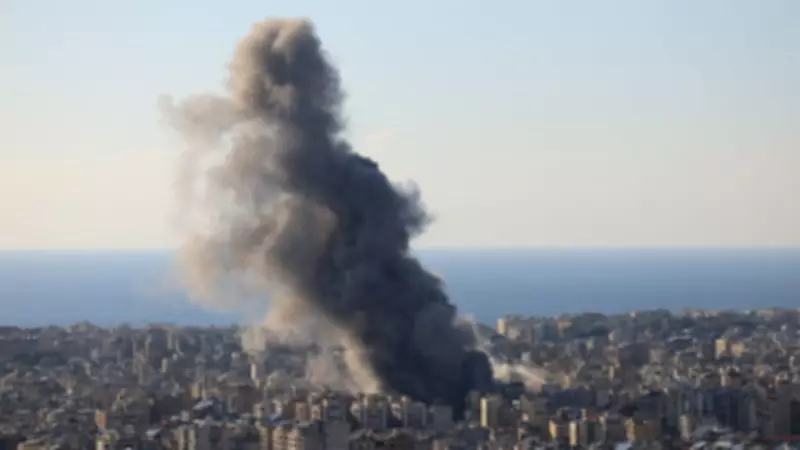
As smoke billows from strike sites and communities mourn, the people of Lebanon are dragged into a conflict they never wanted. The situation remains precarious, with both sides entrenched in a cycle of retaliation that threatens to spiral further out of control.