

The United States has launched a major military operation against Venezuela, capturing its president, Nicolás Maduro, and his wife, Cilia Flores. The action, ordered by Donald Trump, has immediately sparked a fierce debate over its legality under international law.
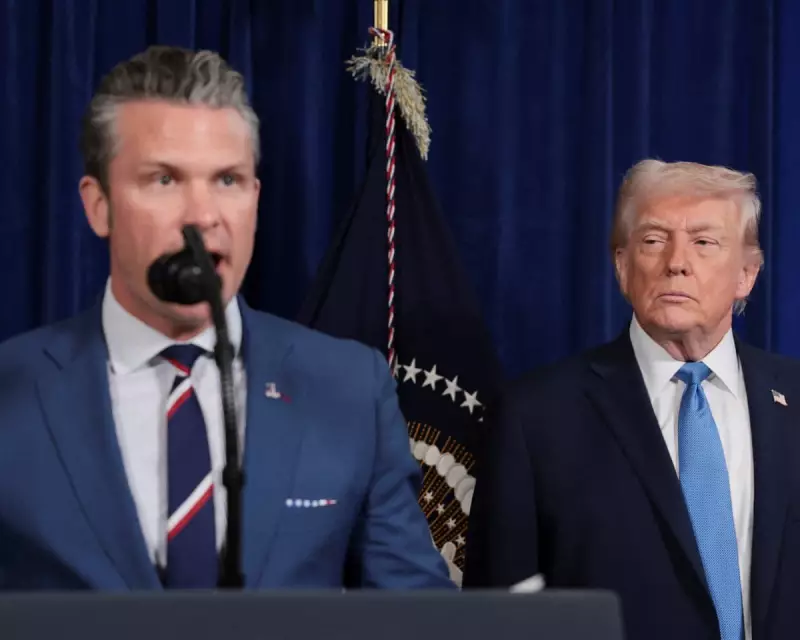
Speaking at a press conference alongside Defence Secretary Pete Hegseth, Trump stated that US forces had executed a "large-scale strike." The Venezuelan leader and his spouse have since been indicted in New York on terrorism and narcotics charges, with Trump accusing Maduro of leading a "narco terrorist organisation."
International Law Experts Unanimous in Condemnation
Leading authorities in international law have told The Guardian that the US operation appears to be a clear violation of the United Nations Charter. This foundational treaty, established in 1945 to prevent future global conflicts, contains a core principle in Article 2(4) which obliges states to refrain from the use of force against the territorial integrity of other nations.

Geoffrey Robertson KC, a former president of the UN war crimes court for Sierra Leone, was unequivocal: "The reality is that America is in breach of the United Nations charter. It has committed the crime of aggression, which the court at Nuremberg described as the supreme crime."
This view is widely shared. Professor Elvira Dominguez Redondo of Kingston University labelled the strike a "crime of aggression and unlawful use of force." Professor Susan Breau of the Institute of Advanced Legal Studies concurred, noting that for the action to be lawful, the US would need a UN Security Council mandate or a valid claim of self-defence. "There is just no evidence whatsoever on either of those fronts," she stated.
The Flawed Self-Defence Argument and a Paralyzed UN
The US administration is expected to justify its actions by claiming self-defence against the alleged threat posed by Maduro's regime. Both international and US domestic law allow for military force in self-defence under specific conditions.
However, experts have dismantled this potential argument. Robertson asserted there is "no conceivable way" the US can legitimately claim self-defence, as there is no suggestion Venezuela was poised to attack the United States militarily. "The idea that [Maduro] is some sort of drug supremo cannot prevail against the rule that invasion for the sake of regime change is unlawful," he added.
Furthermore, any move by the UN Security Council to impose sanctions on the US for its actions is almost certain to be blocked. As one of the five permanent members, the United States holds veto power. "This shows the Security Council is a worthless body," Robertson argued. "A country which breaks international law can avoid condemnation simply by vetoing it."
Global Precedent and the Stance of US Allies
The lack of consequences for the US invasion could have profound and dangerous implications worldwide. Experts warn it may embolden other nations to undertake similar operations in violation of international law.
Robertson pointed to Taiwan as a potential flashpoint, suggesting China might feel bolstered by this precedent to take action. He drew a direct parallel with Russia's invasion of Ukraine, stating, "Trump’s invasion of Venezuela is the crime of aggression, the same crime Putin has committed."
The situation places key US allies, including the United Kingdom, in a difficult diplomatic position. UK Prime Minister Keir Starmer has said he wishes to establish the facts and stressed that Britain was not involved in the operation. He emphasised that "we should all uphold international law."
Robertson contended that the UK, as a guardian of the Nuremberg principles, has a duty to condemn the US action. He suggested a responsibility may soon fall on Starmer to "stand up for the Nuremberg principles, to condemn Trump for his breach of them by committing the crime of aggression and lead the free world in trying to moderate consequences."






