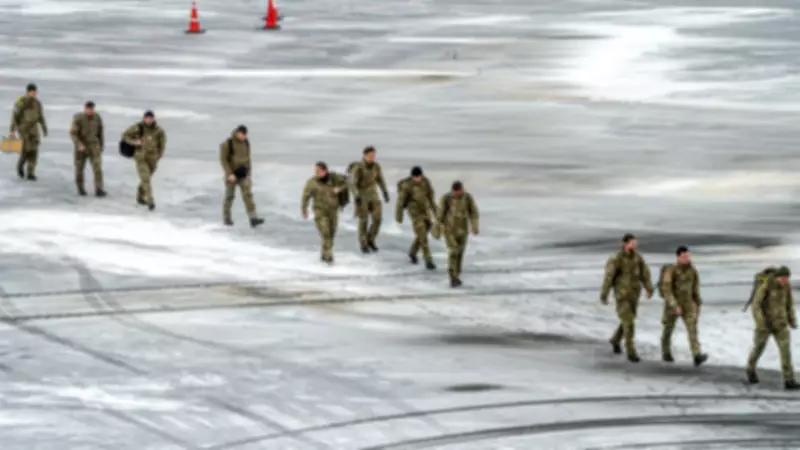
NATO Commences Arctic Sentry Mission to Enhance Arctic Presence
NATO has officially launched a mission to strengthen its military footprint in the Arctic region, a strategic move prompted by former US President Donald Trump's repeated threats to annex Greenland. The mission, named Arctic Sentry, aims to coordinate the growing military activities of NATO allies across this critical and environmentally challenging area.
Background and Strategic Imperative
This development follows Trump's vocal ambitions to acquire Greenland, which he argued was essential for US national security. His statements triggered strong pushback from Denmark and other European NATO members. In response, Trump escalated tensions by suggesting he could not rule out military action and later threatened new tariffs against European nations, including the UK, if obstructed from purchasing Greenland.
In late January, during discussions in Davos, Trump and NATO Secretary General Mark Rutte reached an agreement that the alliance would assume a more significant role in Arctic protection, with further talks planned regarding Greenland's status.

Mission Details and Allied Contributions
Arctic Sentry is designed to underscore NATO's commitment to safeguarding member states and maintaining stability in one of the world's most strategically vital regions. US Air Force General Alexus G. Grynkewich, NATO's Supreme Allied Commander Europe, emphasized that the mission will leverage NATO's collective strength to protect territory and ensure the security of the Arctic and High North.
British forces are set to play a crucial role in this initiative. Defence Minister John Healey announced that the number of British troops deployed to Norway will double from 1,000 to 2,000 personnel over the next three years. This increase is intended to bolster Arctic and High North security in response to escalating threats from Russia.
Broader NATO Activities and International Participation
The Arctic Sentry mission will incorporate various NATO activities, which will be integrated as broader security needs are assessed and national military exercises conclude. France and Germany have confirmed their participation, although specific troop numbers have not yet been disclosed.
Additionally, the UK-led Joint Expeditionary Force (JEF) security alliance is planning major military exercises in the High North. Scheduled for September, these exercises will involve hundreds of troops deployed across Iceland, the Danish Straits, and Norway. The JEF includes Denmark, Estonia, Finland, Iceland, Latvia, Lithuania, the Netherlands, Norway, and Sweden, highlighting the collaborative effort to address regional security challenges.
This coordinated NATO response not only addresses immediate geopolitical tensions but also reinforces the alliance's long-term strategic interests in the Arctic, a region of increasing importance due to its natural resources and shipping routes.