North Korea's Naval Missile Test Reinforces Nuclear Strategy Amid Global Tensions
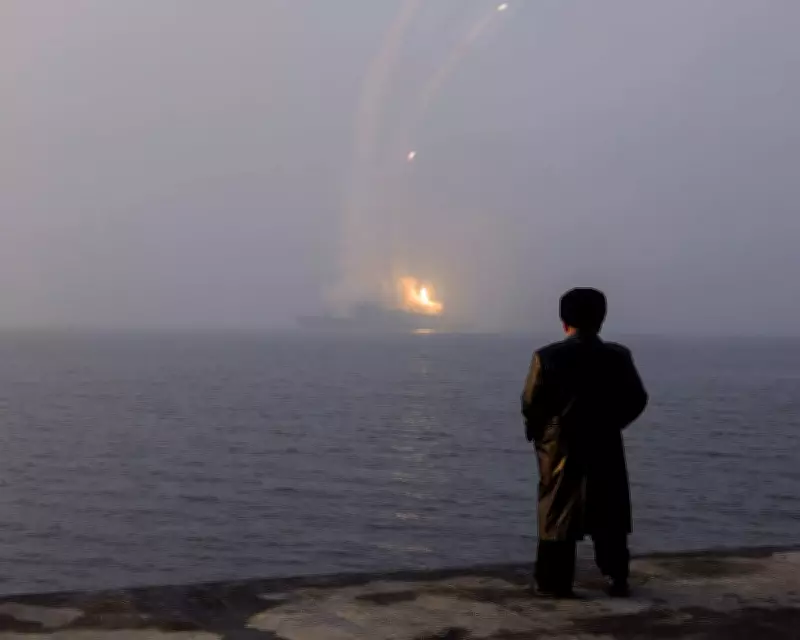
North Korean leader Kim Jong-un recently inspected a sea-to-surface strategic cruise missile test launch conducted from the destroyer Choe Hyon at an undisclosed location. The event, documented by state media, saw Kim declare that arming naval vessels with nuclear weapons was "making satisfactory progress", a statement that analysts believe carries significant geopolitical weight beyond the immediate military demonstration.
Iran Conflict Strengthens Pyongyang's Nuclear Resolve
This missile test occurred against the backdrop of escalating conflict in the Middle East, where U.S. and Israeli airstrikes have targeted Iran. Observers suggest that the existential threat faced by the Iranian regime has likely reinforced North Korea's long-standing view that nuclear weapons are essential for regime survival. Song Seong-jong, a professor at Daejeon University and former South Korean defence ministry official, noted, "Kim must have thought Iran was attacked like that because it didn't have nuclear weapons."
North Korea's nuclear programme, initiated with its first test in 2006 and continuing through its most recent in 2017, has progressed despite international sanctions and diplomatic efforts. According to a 2025 report by the Stockholm International Peace Research Institute, the country has assembled approximately 50 warheads and possesses sufficient fissile material to produce up to 40 more, though questions remain about its ability to miniaturise warheads for long-range missiles.

Diplomatic Nuances and Strategic Calculations
Pyongyang's response to the Iran conflict has been measured. The North Korean foreign ministry condemned the airstrikes as an "illegal act of aggression" but avoided direct criticism of U.S. President Donald Trump, leaving open the possibility of resumed nuclear talks. Kim Jong-un has indicated that improved relations with the United States are possible if Washington respects North Korea's "current status" and abandons its confrontational policy.
However, analysts are divided on whether the Iran situation creates new diplomatic opportunities or pushes North Korea toward greater isolation. Sydney Seiler, a senior adviser at the Center for Strategic and International Studies, argues that Trump's military actions make Kim "nervous and less likely to hastily seek talks". In contrast, others, like Cho Han-bum of the Korea Institute for National Unification, suggest that Kim's desire for long-term security and his reported personal rapport with Trump could draw him back to negotiations, albeit from a position of strength as a nuclear-armed state.
Future Prospects and Regional Implications
Speculation persists about a potential meeting between Kim and Trump, possibly during the U.S. president's upcoming visit to China. Such talks would likely see Kim leveraging his nuclear capabilities to seek concessions, including security guarantees. The overarching lesson from recent global events, as underscored by the Iranian experience, appears to be that possessing nuclear weapons—rather than merely aspiring to them—is increasingly viewed as a critical path to national security in Pyongyang's calculus.