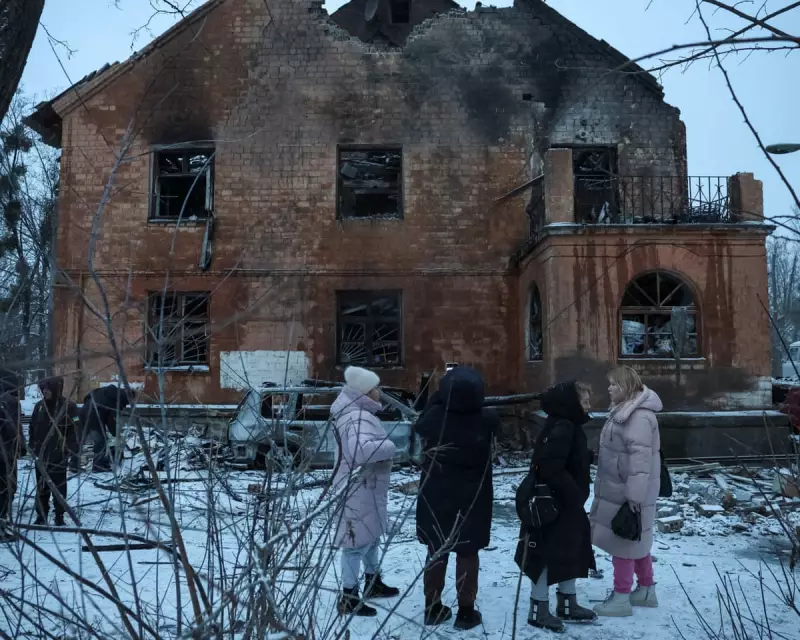
Russia has carried out a major overnight military strike on Ukraine, deploying its advanced hypersonic Oreshnik missile for only the second time since its introduction. The attack, which Moscow claims was retaliation for an alleged attempt on President Vladimir Putin's residence, targeted western regions near the European Union border.
Hypersonic Missile Deployed Near EU Frontier
The Russian military confirmed it launched the intermediate-range ballistic missile, known as the Oreshnik, as part of a widespread assault. Ukrainian authorities reported the strike hit a critical infrastructure facility in the Lviv region, with unverified social media reports suggesting a large underground gas storage site may have been damaged.
Kyiv's foreign minister immediately condemned the use of such a weapon so close to the EU and NATO borders, calling it a "grave threat" to European security. The Ukrainian government dismissed Russia's justification for the attack as "absurd," noting that both Kyiv and Washington have denied any attempted drone strike on Putin's home occurred.

Limited Damage from Symbolic Strike
Initial analysis suggests the Oreshnik missile may have carried inert warheads rather than explosives, indicating the launch was primarily a symbolic demonstration of force. This mirrors its first use in November 2024, when the missile reportedly carried dummy payloads that caused limited damage to a Ukrainian military facility.
President Putin has frequently touted the Oreshnik's capabilities in recent months, claiming it travels at over ten times the speed of sound and carries destructive power comparable to nuclear weapons even with conventional warheads. While some Western analysts remain sceptical of these claims, Ukraine currently possesses no air defence systems capable of intercepting the hypersonic missile.
Kyiv Attacked as Security Talks Advance
The hypersonic strike capped a night of violence that also saw Russian forces target the Ukrainian capital. At least one person was killed in Kyiv after drones struck several districts, according to Tymur Tkachenko, head of the Kyiv City Military Administration. Five rescue workers were injured responding to the attacks.
This escalation comes during a significant week for Ukraine's diplomatic efforts. European allies recently agreed to key elements of postwar security guarantees should a ceasefire with Russia be established. Britain and France stated on Tuesday their willingness to deploy troops to Ukraine following a future peace agreement – a substantial commitment discussed for months.
Russia's foreign ministry rejected this prospect on Thursday, labelling the potential presence of Western troops in Ukraine a "direct threat." This position further complicates the already fragile prospects for negotiated peace, underscoring the deepening divide between Moscow and Western powers supporting Kyiv.