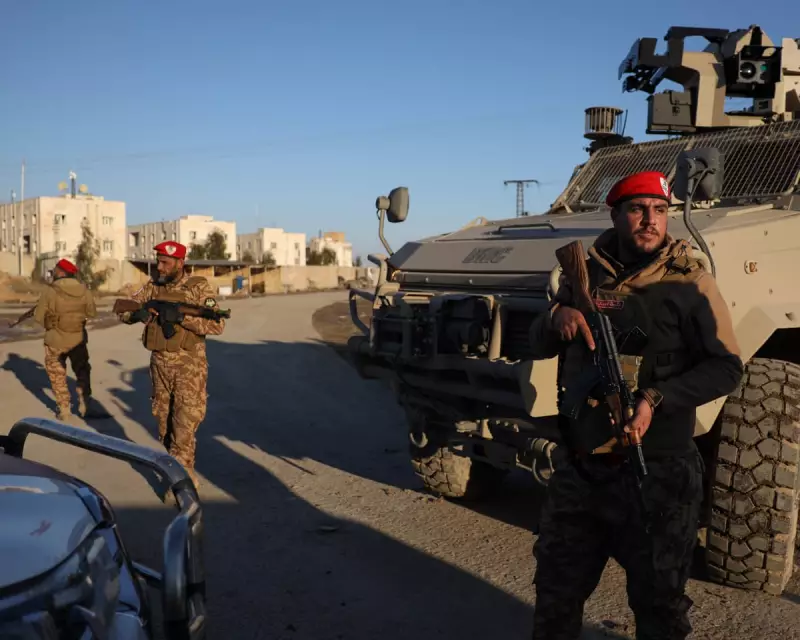
In a dramatic escalation threatening regional stability, Kurdish-led forces have reported intense clashes with the Syrian army near a prison holding Islamic State (IS) detainees on the outskirts of Raqqa. The Syrian Democratic Forces (SDF) labelled the incident an "extremely dangerous development," warning it could unleash chaos and a resurgence of terrorism.
Ceasefire Collapses Amid Prison Standoff
The violence erupted on Monday, less than a day after Syrian President Ahmad al-Sharaa announced a ceasefire agreement with the SDF. The deal was intended to dismantle the Kurdish group's decade-long control over north-eastern Syria and integrate its forces. However, the SDF stated that Syrian government factions attempted to seize control of al-Aqtan prison, leading to direct fighting.
The SDF warned that such actions "could lead to serious security repercussions that threaten stability and open the door to a return of chaos and terrorism." In a subsequent statement via the Sana news agency, the Syrian army reported three of its servicemen were killed and others wounded in two attacks, blaming "terrorist groups" for trying to disrupt the ceasefire.

Fragile Hold on Thousands of IS Detainees
The confrontation casts grave doubt on the security of facilities housing tens of thousands of IS suspects and their families. The SDF, backed by the US, rounded up these individuals after IS's territorial defeat in 2019. With US troops scaling back, responsibility is shifting, but the transition is fraught with peril.
According to the recent deal, the Syrian government is to assume "full legal and security responsibility" for the prisons and camps. However, deep mistrust exists. Many Kurds fear the Damascus government, led by Islamist former rebels once linked to al-Qaida, might deliberately loosen controls on IS networks.
The crisis is immediate. Kurdish sources report that two other prisons in Raqqa city—Taameer and a juvenile detention centre—were emptied by locals after the government's takeover. The bulk of detainees are held further north-east. Al-Hawl camp holds an estimated 26,000 people, mostly women and children, while about 4,500 men are held at the Panorama or Gweiran prison. Among them are an estimated 55 British men, women, and children, including Shamima Begum.
International Repercussions and Calls for Repatriation
The instability has triggered urgent calls for Western nations to repatriate their citizens. The UK-based human rights group Reprieve described the situation as a "reality check" for Britain's policy of refusing repatriations. While the US has brought back 28 citizens, the UK has largely resisted.
Maya Foa, Reprieve's chief executive, argued that "the volatility of the current situation demands an urgent rethink" and that "the only safe thing to do is bring British nationals home and prosecute the adults where there is a case to answer."
The path to this crisis is complex. President al-Sharaa, a jihadist veteran whose career was forged in post-invasion Iraq, has struggled to assert full authority since toppling Bashar al-Assad in December 2024. A previous integration deal in March failed to gain traction. The current clashes near al-Aqtan prison now threaten to unravel the latest ceasefire, posing a severe test for regional security and the enduring threat of the Islamic State.