Trump's Iran Escalation: A Dangerous Pattern of Performative Power
The United States finds itself repeating a tragic historical pattern with President Donald Trump's recent military strikes against Iran. This escalation follows the same troubling logic that characterized the 2003 invasion of Iraq, where military action proceeded without adequate consideration of long-term consequences or strategic necessity.
From Iraq to Iran: The Recurring Pattern of Strategic Neglect
In 2003, the George W. Bush administration launched the Iraq invasion without properly evaluating whether the costs, risks, and likely outcomes justified such a monumental gamble. The result was catastrophic tragedy for Iraq, the broader Middle East region, and America's global standing. Today, Trump's approach to Iran demonstrates an even narrower focus on performative power, where military action serves primarily as spectacle rather than strategic instrument.
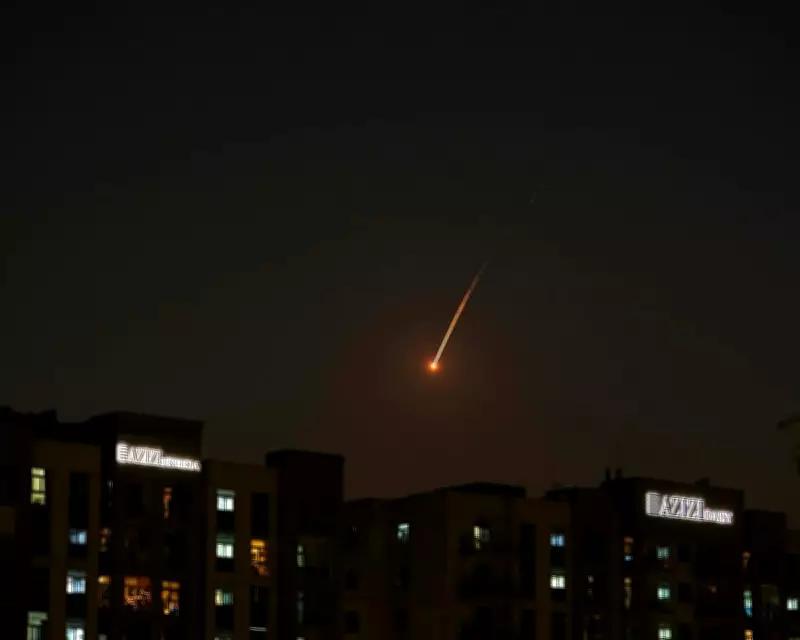
The current administration has torn up the Iran nuclear deal, escalated pressure through sanctions and rhetoric, and now initiated military campaigns explicitly aimed at regime collapse. Yet there has been no serious public reckoning with the profound risks involved, nor any realistic assessment of the political end state supposedly being pursued.

Diversionary Warfare: Distracting from Domestic Scandals
Trump's escalation against Iran coincides with mounting domestic pressures that threaten his political standing. These include renewed scrutiny surrounding the Epstein files, attacks on civil rights in Minneapolis, and the Supreme Court striking down the legal justification for his global tariff policy. In this context, the strikes function as classic "diversionary war" tactics—attempting to hijack the global narrative and drown out domestic scandal with the thunder of cruise missiles.
The president's foreign policy appears driven not by coherent theories of international order, deterrence, or alliance management, but rather by demonstrations of dominance, creation of spectacle, and command of the news cycle. Military force in this framework ceases to be a tool subordinated to strategy—it becomes the strategy itself.
Political Calculations and Domestic Dynamics
Trump effectively rides political currents that have drifted toward confrontation with Iran. Bombing Tehran remains an article of faith for the Republican base, where "maximum pressure" represents the only acceptable approach to Iran policy. Simultaneously, the Iranian regime's own repressive actions against its citizens have softened potential Democratic resistance to escalation.
By framing military action as a response to a uniquely oppressive adversary, Trump has neutralized much of the domestic opposition that might otherwise constrain a rush to war. This political maneuvering allows military action to proceed with minimal domestic constraint.
The Perils of Non-Strategic Military Action
When the objective becomes display rather than durable political effect, long-term consequences become secondary considerations. Whether a stable successor regime in Tehran is feasible, whether regional escalation can be contained, whether alliances are strengthened or weakened—these crucial questions become peripheral to a foreign policy built on showing the world what Trump is capable of doing.
The White House appears to operate on the theory that destabilizing an authoritarian state from the air will cause a more favorable political order to emerge spontaneously. Recent history offers little support for this belief. From Libya to Afghanistan, weakening central authority in divided societies has more often produced fragmentation than freedom.
Broader Strategic Consequences and Global Implications
The risks of non-strategic force employment extend far beyond Iran's borders. A destabilized Iran risks creating a massive humanitarian crisis on Europe's doorstep, potentially triggering refugee flows that could further embolden far-right movements currently fracturing Western democracies.

Escalation could draw in regional actors, threaten vital shipping lanes in the Gulf, and widen into broader confrontation. Iran's oil exports may slow dramatically or collapse entirely, tightening global energy markets. While this might hurt China economically, it would benefit other energy exporters including Russia, Venezuela, and Saudi Arabia.
At a moment when Washington already manages strategic competition in Asia and sustains commitments in Europe, another open-ended Middle Eastern conflict risks stretching American bandwidth dangerously thin and weakening deterrence elsewhere.
Diplomatic Isolation and Alliance Erosion
Unlike in 2003 when the United States assembled a "coalition of the willing" despite deep controversy, European and traditional allies currently stand on the sidelines. This diplomatic isolation is strategically costly for America, deepening divides already created by threats against Greenland, indiscriminate tariffs, and general uncertainty creation in international relations.
Deterrence rests not only on military strength but on credibility, predictability, and alliance cohesion. A foreign policy driven by spectacle erodes all three foundational elements simultaneously.
Long-Term Costs and Historical Lessons
Even if initial military phases appear successful—even if Iranian capabilities are degraded and the regime weakened—the long-term costs for the United States may prove severe. The danger today extends beyond mere absence of deliberation to the active substitution of performance for strategy.
Wars begun primarily for display rarely end on favorable terms. History demonstrates that even conflicts that appear victorious at the outset can leave nations weaker in the long run. The American military represents an extraordinary instrument of force, but it is not designed to construct stable political orders from what it destroys.
The fundamental question remains: will the United States learn from the tragic lessons of Iraq, or will it repeat them with Iran under the guise of performative power and diversionary politics?