

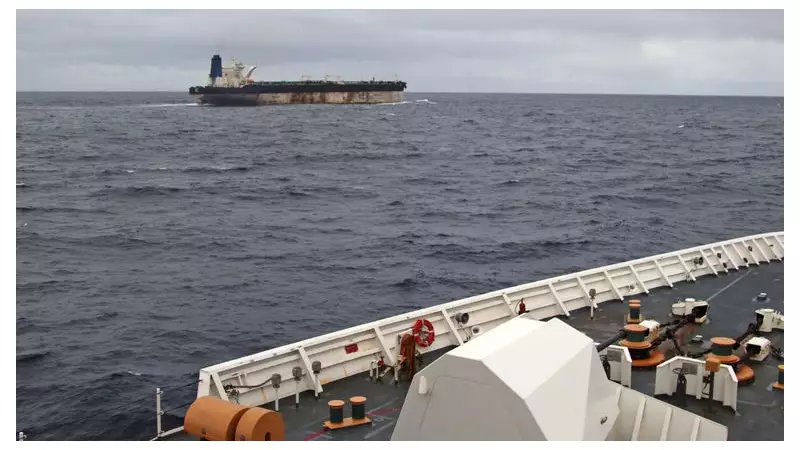
The United Kingdom's military support for a United States operation to seize an oil tanker in the North Atlantic is a move layered with complex geopolitical implications, analysts suggest. The incident, which occurred on Wednesday 7 January 2026, sees Britain walking a diplomatic tightrope amid global friction.
The Operation and the 'Shadow Fleet'
Acting on US intelligence, British forces provided assistance for the seizure of the tanker Marinera. The vessel, part of a so-called "shadow fleet" used to circumvent international sanctions, has documented links to Russia, Iran, and Venezuela. The US had already sanctioned the tanker prior to the operation.
Sky News military analyst Sean Bell highlighted a crucial tactical detail. "What’s most interesting from a military perspective is the change of flag — it was flying a Ghanaian flag before switching to a Russian one," he explained. Such flag-switching is a hallmark of the shadow fleet, making interdiction a priority for allied navies.

A Climate of Heightened Tensions
While UK-US military cooperation is routine, the context of this seizure gives it extra bite. The action is set against a backdrop of ongoing Russia-West tensions stemming from the conflict in Ukraine, with fears it could spill into other regions.
Furthermore, the political climate in Washington adds a layer of uncertainty. President Donald Trump's recent foreign policy moves have generated friction, leading to concerns in Westminster about the nature of future requests for UK military assistance. The core question being asked is: if Britain helps with this, could it be asked to join more controversial operations next?
Downing Street's Delicate Balancing Act
The UK government, led by Prime Minister Sir Keir Starmer, faces a difficult calculation. The former human rights barrister is understood to be uncomfortable with events like the recent raid in Caracas, Venezuela. A Downing Street statement was quick to explicitly deny any UK involvement in that specific operation.
However, the fundamental reality of the UK's need for a strong transatlantic alliance remains. "We still need the US - its military might and its economic might," the analysis notes. The enduring dynamic means that when a request for cooperation comes from the White House, the British response is often one of pragmatic compliance.
The seizure underscores the challenges of navigating a special relationship in a volatile world, where military support must be weighed against broader diplomatic and ethical considerations.






