

Washington appears to have stepped back from its initial threat to directly "run" Venezuela, but has signalled it is prepared for further military action, keeping a substantial force in the region. This comes after a US-led operation on Saturday resulted in the capture of President Nicolás Maduro.
A Defiant Tone Amidst Private Talks
While the shocking abduction of Maduro has shifted the political landscape, the United States is maintaining a 15,000-strong military presence in the Caribbean. Officials stated this force is a contingency, ready for a fresh intervention if Venezuela's new interim president, Delcy Rodríguez, fails to accommodate American objectives.
Rodríguez, 56, publicly condemned Maduro's capture as an "atrocity" and pledged loyalty to the ousted leader. However, the substance of her private conversations with US officials remains unclear. The New York Times reported that Trump administration officials had previously identified the technocrat as a potential successor, partly due to her ties to Wall Street and oil firms.

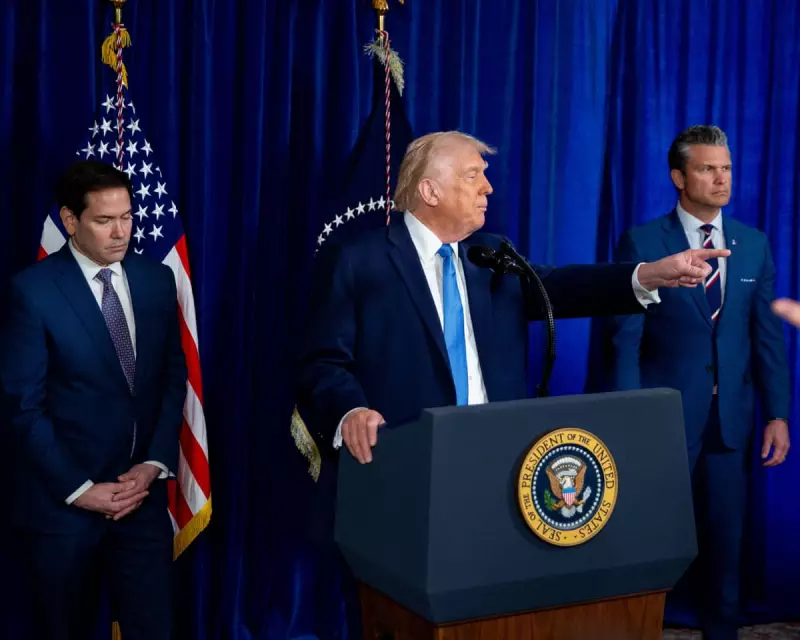
Speaking from his Mar-a-Lago estate in Florida, Donald Trump warned Rodríguez to heed US wishes. "If she doesn't do what's right, she is going to pay a very big price, probably bigger than Maduro," the former president told the Atlantic.
Regime Tweak, Not Regime Change?
In Caracas, senior government and military figures demanded Maduro's return but pledged support for Rodríguez as stand-in leader, calling for a return to normality. Defence Minister Vladimir Padrino López urged citizens to resume economic and educational activities.
The US Secretary of State, Marco Rubio, who was present at Trump's press conference, sought to downplay the scale of the initial operation. He described the two-and-a-half-hour raid in Caracas as a "law enforcement function" targeting narco-terrorism, not an invasion. Rubio stated the US would keep a "quarantine" around Venezuela to block oil tankers, sustaining leverage over the new leadership.
"We are going to make our assessment on the basis of what they do, not what they say publicly," Rubio told NBC, indicating the US has "multiple levers of influence." This apparent focus on influencing the existing structure, rather than installing a wholly new government, has dismayed some Venezuelans who hoped for a swift democratic transition.
Regional Unease and Civilian Anxiety
The US action has sparked significant regional concern. The governments of Spain, Brazil, Chile, Colombia, Mexico, and Uruguay issued a joint statement condemning the move as an "extremely dangerous precedent." In response, Colombian President Gustavo Petro ordered 30,000 troops to the border with Venezuela, fearing potential violence or a refugee influx.
Within Caracas, a nervous semblance of normality returned. Large queues formed at supermarkets as residents, apprehensive about Trump's hint of a possible "second wave" of attacks, rushed to stockpile supplies. "There's so much uncertainty," said one elderly pensioner waiting in line, capturing the mood of a population weary of crisis.
Maduro, now in US custody, was shown in footage handcuffed and walking to a Drug Enforcement Administration office in New York. He faces a four-count indictment for narco-terrorism and conspiracy and is due to be arraigned in a Manhattan federal court. The prosecution is likely to deepen the humiliation for his loyalists and complicate Rodríguez's precarious balancing act.
A Tightrope for the Interim Leader
Rodríguez, who served as vice-president and oil minister, now faces the immense challenge of juggling Washington's demands for oil and security guarantees with the socialist, anti-imperialist legacy of the regime founded by Hugo Chávez. While powerful figures like interior minister Diosdado Cabello have tacitly backed her, the path forward is fraught.
As joggers and cyclists tentatively reappeared on the streets of the capital, the underlying sentiment was one of profound uncertainty. The US has shown its willingness to act unilaterally, and with a significant force remaining nearby, the future of Venezuela hangs in a delicate and volatile balance.






