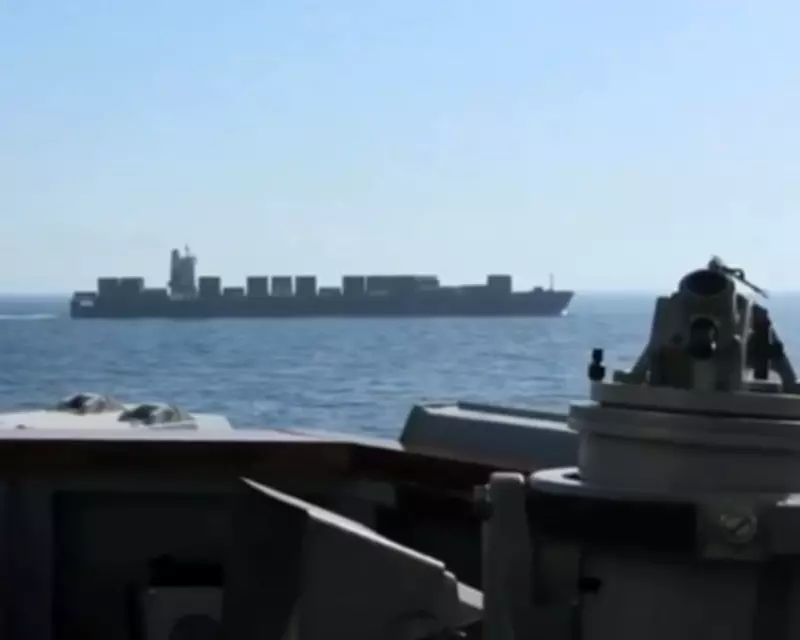
US Navy Intercepts Iranian Cargo Vessel in Arabian Sea Confrontation
United States military forces operating in the Arabian Sea have seized an Iranian-flagged container ship after it attempted to breach an American naval blockade near the strategic Strait of Hormuz. The incident occurred on 19 April, marking a significant escalation in maritime tensions between the two nations.
Trump Announces Military Action Against Iranian Ship
Former President Donald Trump revealed details of the operation in a social media post on Sunday, stating that the Iranian-flagged cargo vessel named TOUSKA tried to get past the US naval blockade "and it did not go well for them." According to Trump, a US Navy guided missile destroyer warned the Touska to stop in the Gulf of Oman, but the vessel continued its course toward an Iranian port.
"[Our] Navy ship stopped them right in their tracks by blowing a hole in the engine room," Trump declared, adding that US Marines now have custody of the vessel. The former president emphasized that the TOUSKA is under US Treasury sanctions due to its prior history of illegal activity, confirming the ship appears on the treasury department's official list of sanctioned vessels.

Dramatic Interception Captured on Video
The US Department of Defense later released video footage showing the dramatic interception of the Iranian container ship. The video includes audio recordings of US sailors warning the vessel's crew that they would face disabling fire if they refused to comply with orders to stop.
In the audio, a US sailor can be heard commanding: "Vacate your engine room. We're prepared to subject you to disabling fire." The footage then shows the USS Spruance firing upon the Touska to disable the vessel's propulsion systems.
Ship's Journey and Current Status
According to marine tracking information from TankerTrackers.com, the Touska had previously departed from Port Klang, a major Malaysian port facility, before attempting to navigate past the US blockade. Marine Traffic data indicates the cargo ship measures more than 900 feet in length and was stopped near Iran's border with Pakistan in the Arabian Sea.
The Iranian government has not yet issued any official comment regarding the seizure of their flagged vessel. This latest military action raises serious questions about the future of ceasefire negotiations between the United States and Iran, particularly as Trump had previously announced that US officials would be traveling to Pakistan on Monday for additional talks with Iranian leaders concerning the ongoing regional conflicts.
Broader Implications for Regional Security
This maritime confrontation represents one of the most direct military engagements between US and Iranian forces in recent months. The Strait of Hormuz remains one of the world's most critical shipping channels, with approximately one-fifth of global oil exports passing through these narrow waters.
The seizure of the Iranian container ship underscores the continuing tensions in the region and highlights the challenges facing diplomatic efforts to de-escalate conflicts between the United States and Iran. As both nations navigate complex geopolitical waters, incidents like this seizure demonstrate how quickly maritime disputes can escalate into direct military confrontations with international implications.