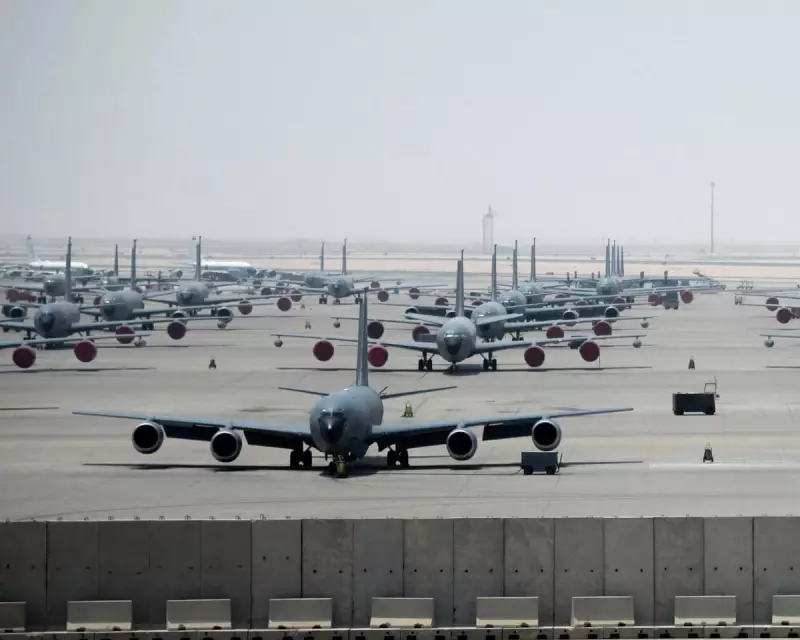
The United States temporarily withdrew key personnel from its strategic Al Udeid airbase in Qatar this week, as a concerted diplomatic push by Gulf states and Turkey persuaded President Donald Trump to hold off on launching military strikes against Iran.
Allied Intervention Prevents Immediate Escalation
Fearing that an American attack would trigger a major and uncontrollable conflict across the Middle East, longstanding US allies launched a last-minute lobbying campaign. Saudi Arabia, Qatar, Turkey, and Oman all urged the US administration against military action. The warnings of regional chaos appear to have been influential, with Trump deciding late on Wednesday to pause any immediate assault.
In a significant move, Saudi Arabia's reluctance was so profound that it denied the United States use of its airspace for any potential attacks. The diplomatic efforts continued into Thursday, with Saudi Foreign Minister Prince Faisal bin Farhan holding phone discussions with his counterparts from Iran, Oman, and Turkey.

A Complex Web of Regional Diplomacy
Despite political divisions, Iran has been actively working to mend fences with Arab capitals. Iranian Foreign Minister Abbas Araghchi has undertaken a series of visits, including to Bahrain and Cairo, aiming to improve strained relations. The Saudi-Iranian relationship, once the region's most fraught, has been on a tentative recovery path for three years.
Araghchi has recently argued to Gulf states that Iran poses less of a risk to global stability than Israel, a point underscored by an Israeli bombing in Doha last September. That strike, which targeted Hamas negotiators and killed five, was not coordinated with the US. Washington later apologised to Qatar's emir and offered new security guarantees for Doha.
Bases of Power and Points of Vulnerability
The withdrawal of personnel from Al Udeid, the largest US airbase in the region, highlights a critical paradox. While these static land and naval bases project American power, they also represent significant vulnerabilities, especially after Tehran's open threats to target them if attacked.
Regional attitudes towards Iran remain deeply ambivalent. Many Gulf states resent Tehran's influence through proxy forces in Lebanon, Iraq, and Yemen. Yet, there is also little appetite for seeing Iran destabilised by popular protests, fearing it could set a precedent for democratic transitions or state fragmentation that might ripple across the region.
As Qatar's foreign ministry spokesperson, Majed al-Ansari, stated on Tuesday, the scale of regional challenges necessitates a return to dialogue. Echoing this, Turkish Foreign Minister Hakan Fidan called for the US and Iran to resolve their issues, whether through mediators or direct talks, emphasising that Turkey is closely monitoring developments.