

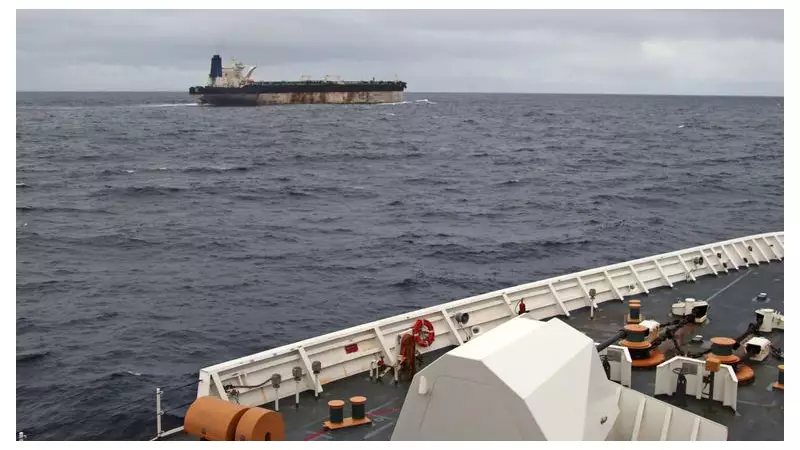
In a significant escalation of international maritime enforcement, the United States has seized two sanctioned oil tankers linked to Venezuela in consecutive operations across the Atlantic Ocean and the Caribbean Sea.
Dramatic Interceptions on the High Seas
The first vessel, the Marinera – originally known as the Bella 1 – was boarded by US forces on Wednesday, 7 January 2026, in the North Atlantic between Iceland and Scotland. The tanker was reportedly heading towards Russia at the time. According to two US officials speaking to Reuters, a Russian submarine and warship were operating close by during the incident.
US Defence Secretary Pete Hegseth declared on social media platform X that "the blockade of sanctioned and illicit Venezuelan oil remains in FULL EFFECT - anywhere in the world."

In a separate but related operation, the US Coast Guard intercepted another Venezuela-linked tanker, the Panama-flagged supertanker M Sophia, near the northeast coast of South America. This vessel, also under sanctions, had recently departed Venezuelan waters as part of a fleet carrying oil to China.
The 'Ghost Fleet' and a Nefarious History
US authorities stated that both seized ships are part of a so-called "ghost fleet" used to transport oil from Russia, Iran, and Venezuela in violation of Western sanctions, with most cargo destined for customers in Asia. US Homeland Security official Kristi Noem highlighted this illicit network.
The Marinera has been pursued for two weeks after it slipped through a US-led blockade around Venezuela. It was sanctioned in 2024 for allegedly smuggling cargo for a company linked to the Lebanese militant group Hezbollah. The US Coast Guard had previously attempted to intercept it last month, but the vessel refused to be boarded.
UK Defence Secretary John Healey described the Marinera as having a "nefarious history" and being "part of a Russian-Iranian axis of sanctions evasion which is fuelling terrorism, conflict, and misery from the Middle East to Ukraine." The ship left the Caribbean flying a Guyanese flag but had since re-registered under a Russian flag.
UK Involvement and Russian Outcry
The United Kingdom played a direct supporting role in the Atlantic interception. The Ministry of Defence confirmed that Britain provided "enabling support", including the use of bases. The Royal Fleet Auxiliary ship Tideforce, often used for refuelling, supported US forces, while the Royal Air Force provided surveillance from the air.
Mr Healey praised UK forces for their "skill and professionalism" and stated the operation was part of global efforts to crack down on sanctions evasion.
The seizures prompted a furious response from Russia. Andrei Klishas, a senior politician from President Putin's party, labelled the action an act of "outright piracy," according to the Russian state news agency TASS. Russia's transport ministry asserted that "no state has the right to use force against vessels duly registered in the jurisdictions of other states" and demanded that Russian citizens on board be allowed to return home.
Broader Political Context
This maritime action follows the dramatic capture of Venezuela's president, Nicolas Maduro, by US special forces in Caracas just days earlier. Mr Maduro was taken to the United States, where he faces accusations of involvement in drug smuggling, which he denies. His deputy has been sworn in, but former President Donald Trump has stated America will oversee Venezuela for the time being.
In a statement on Truth Social following the tanker seizures, Mr Trump commented on NATO alliances, stating, "Russia and China have zero fear of NATO without the United States... We will always be there for NATO, even if they won't be there for us."
The seizure of the Marinera/Bella 1 is the latest move in a long-running campaign by the US to pressure Venezuela and enforce sanctions on its oil exports, a policy intensified under the Trump administration.






