

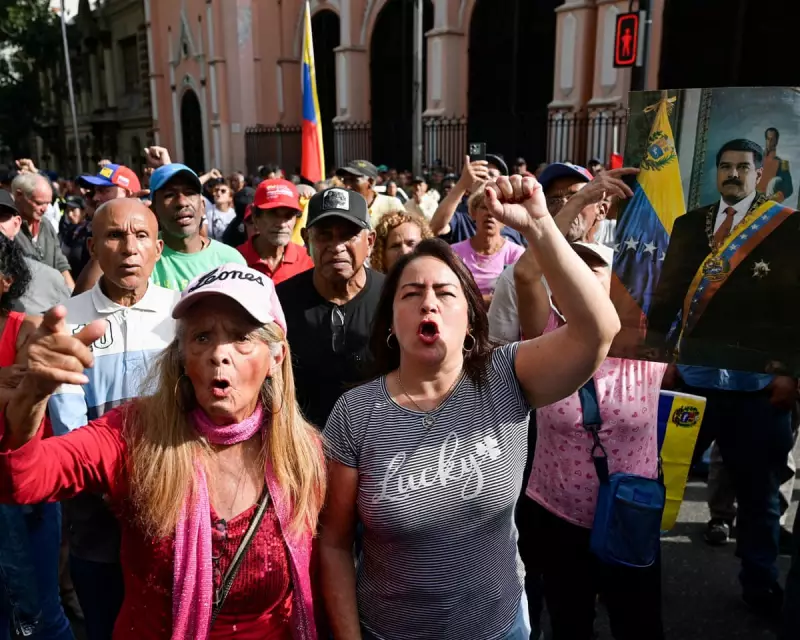
The recent US military intervention in Venezuela and subsequent statements by former President Donald Trump have ignited a fierce debate about international law, with UK observers warning of a dangerous precedent being set.
A Clear Breach of International Law
In letters to a national newspaper, readers from across Britain have condemned the actions, highlighting their illegality. Donald Trump's own description of the US plan – to "run" Venezuela until Washington deems a political transition complete and install US oil companies – outlines conduct that is plainly illegal under international law. The UN charter explicitly prohibits the use or threat of force against another state, except in self-defence or with Security Council authorisation, neither of which apply in this case.
As pointed out by Hannah Walker from Wymondham, Leicestershire, the rule against regime change by invasion or occupation exists to prevent powerful states from imposing political outcomes by force. "Trump’s words amount to an admission of occupation," she writes. Under the Hague regulations and Geneva conventions, an occupying power cannot assume sovereign authority, dictate political outcomes, or exploit natural resources – doing so can constitute the war crime of pillage.

UK Political Response and Global Repercussions
The response from UK Labour leader Sir Keir Starmer has also come under scrutiny. Walker notes that by welcoming the end of Nicolás Maduro's regime while declining to condemn the use of force, he risks treating legality as conditional on political approval. This principle matters far beyond Venezuela, with the case against Russia's invasion of Ukraine resting on the same foundational rule: borders and governments cannot be changed by force. If Venezuela is treated as an exception, that critical principle collapses.
Celia Cashman from Sheffield echoes the sense of anger but questions the practical response. With the UN appearing toothless and the UK unable to confront superpowers alone, she argues for a new alliance. "The only possible route to an effective challenge to Trump et al is surely for Europe, with other nations around the world such as Canada, South Africa and Australia, to get its act together," she writes, calling for a coalition with sufficient defence and trading power to offer real opposition.
Language and the Framing of Conflict
A further letter from Charlie Owen in London challenges the media's terminology regarding Maduro's capture by US troops. Owen argues that terms like "abduction" or "kidnap" would be used if any other country had invaded, killed civilians, and taken a head of state. This highlights the perceived double standards in how US actions are reported compared to those of other nations.
The collective response from these UK correspondents underscores a deep concern that the events in Venezuela represent a pivotal moment. The open disregard for established international law, they argue, threatens the world order that has persisted for 80 years and demands a resolute, unified response from the international community.






