

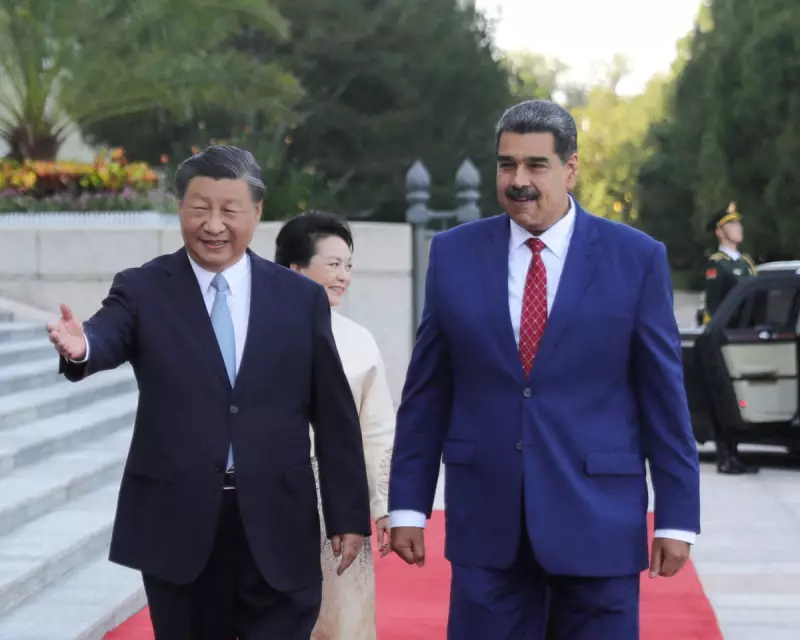
China's substantial financial and strategic interests in Venezuela face severe uncertainty following the dramatic US-led seizure of President Nicolás Maduro. The action has triggered fierce condemnation from Beijing and raised urgent questions over the future of billions in Chinese loans and critical oil-for-debt agreements.
A Fraternal Meeting Before the Storm
Just hours before his capture by US forces, Nicolás Maduro was hosting a Chinese delegation in Caracas. On Friday evening, he took to Telegram to celebrate the meeting with China's special envoy for Latin American affairs, Qiu Xiaoqi, calling it a reaffirmation of the "strong bonds of brotherhood and friendship" between the two nations.
This partnership was formally elevated to an "all-weather" strategic partnership during Maduro's visit to Beijing in 2023, a status now under immense strain. China has led international criticism of the US operation, starkly contrasting with the stance of many European nations.

Beijing's Diplomatic and Financial Stake
Foreign Minister Wang Yi denounced the US action, stating China does not accept any nation acting as "the world's police or judge." The sentiment was echoed online, where Chinese social media platforms saw widespread condemnation of US "colonialism," while pro-US content appeared to be censored.
The concern in Beijing is deeply material. According to research from AidData at William & Mary University, Venezuela is the fourth-largest recipient of Chinese official loans, with commitments totalling around $106bn between 2000 and 2023. Outstanding debt is estimated at approximately $10bn.
China's exposure is so significant that its top financial regulator has reportedly asked major lenders to detail their Venezuelan holdings. The core of this financial relationship is oil; for years, Beijing has extended credit through loan-for-oil deals, making it the largest buyer of Venezuelan crude.
Consequences for Oil and Debt
However, the money owed may now be more crucial than the oil itself, which constitutes only about 4% of China's total imports. The seizure of a tanker carrying Venezuelan oil bound for China by US forces in December 2024 was a stark warning of the escalating risks.
Analysts warn that a new US-influenced government in Caracas could prioritise American creditors over Chinese ones. "Chinese banks may see a significant amount of losses," cautioned Victor Shih, a professor at UC San Diego. He suggested Beijing might leverage tools like rare earth exports to negotiate a settlement protecting its creditors' access to future oil proceeds.
Trump's vow to unlock Venezuela's oil to "rebuild" the country, alongside suggestions from officials like Secretary of State Marco Rubio about using oil exports as leverage, directly threatens these Chinese arrangements. Scholar Shen Dingli noted that if a new Venezuelan government repudiates Maduro-era deals, China would have no choice but international litigation against Venezuela itself.
The unfolding crisis represents a direct challenge to China's growing influence in Latin America, a region where trade with Beijing hit a record $519bn last year. How it navigates the fallout will test its economic statecraft and its ability to protect strategic assets far from its shores.






