

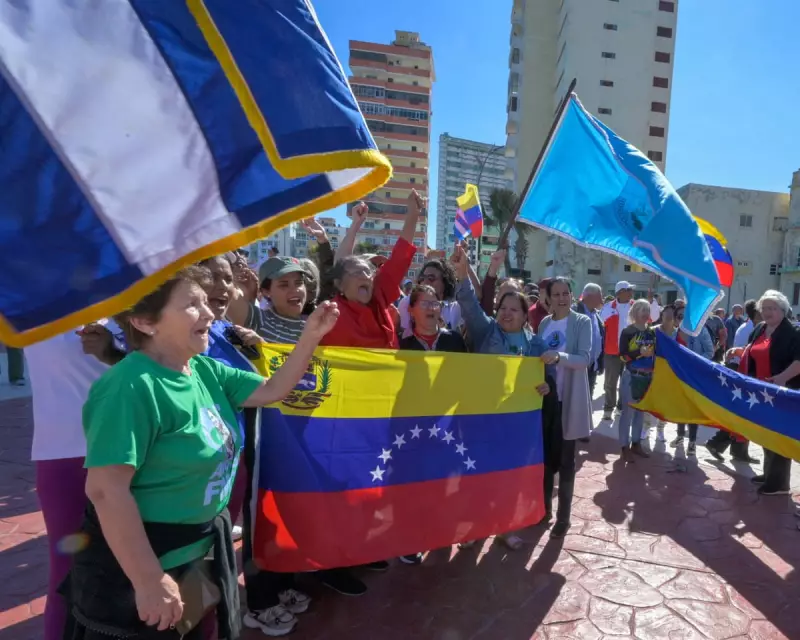
The recent US-led operation to remove Venezuelan President Nicolás Maduro has sent shockwaves through Havana, placing Cuba's vital and decades-long alliance with Caracas under unprecedented strain. With the island already grappling with a severe financial crisis, the potential withdrawal of Venezuelan support poses an existential question for the communist government.
A Bond Forged in Oil and Ideology
On Havana's well-kept Fifth Avenue, a giant billboard outside the Venezuelan embassy features the late Hugo Chávez with the words "Hasta Siempre Comandante." This steadfast declaration of eternal solidarity now faces its greatest test. The partnership, cemented by the late Venezuelan leader, has been a lifeline for Cuba, providing subsidised oil in exchange for Cuba's extensive security and intelligence support.
This support was starkly highlighted by the deaths of 32 Cubans during the US military action in Venezuela. While many social media posts from grieving families were swiftly removed, one aunt mourned her 26-year-old nephew, Fernando Báez Hidalgo, an interior ministry officer, comparing his sacrifice to that of Cuba's 19th-century independence heroes, the mambís.

Surviving Without a Lifeline
The potential severing of Venezuelan aid comes at a critical time for Cuba. The economy is in dire straits, with widespread blackouts—like those that again swept the island this week—and shortages becoming a grim norm. Michael Bustamante, Chair of Cuban and Cuban-American Studies at the University of Miami, notes that while "anything seems possible," key differences exist between Venezuela and Cuba's situations.
Following a failed 2019 attempt to oust Maduro, believed to have been foiled by Cuban intelligence, the Trump administration ramped up sanctions. However, direct action against Havana has been limited. President Trump himself suggested this week that "Cuba is ready to fall" without the need for intervention. A likely condition for peace in Venezuela is the cessation of its support for Cuba, leaving the island's future uncertain.
Cracks in the Facade and Historical Ghosts
Signs of internal strain are emerging. The shocking life sentence of former economy minister Alejandro Gil for corruption and espionage in December revealed cracks. Furthermore, a key five-year party conference has been delayed, reportedly after intervention from 94-year-old Raúl Castro, who cited the poor economic climate.
Yet, the government's will to survive is formidable. "We've been there before in the 1990s and I don't necessarily believe further rapid deterioration of the Cuban economy leads to regime change," Bustamante argues. The historical memory of US intervention is also a powerful unifying force. Cubans vividly recall the 1898 US military arrival after the war of independence from Spain, led by Theodore Roosevelt, which led to a commercial takeover and ultimately Fidel Castro's revolution.
Today, billboards across the island consistently blame the 60-year US embargo for all hardships. Former Cuban ambassador to the EU, Carlos Alzugaray, attended a recent solidarity rally for Venezuela, stating he wanted to "reject the American intervention." He, like many, hopes the crisis will force economic opening, but this is a far cry from welcoming US involvement. As Secretary of State Marco Rubio triumphantly tweeted, "This is our hemisphere," the people of Cuba brace for a new, uncertain chapter where their nation's resilience will be tested once more.






