

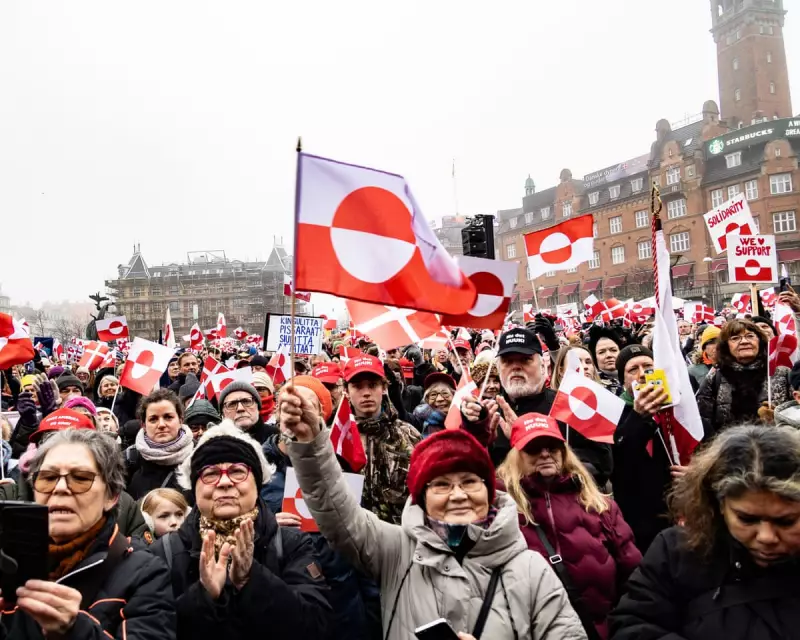
Senior European Union diplomats are set for emergency crisis talks after former US President Donald Trump declared he would impose tariffs on eight European nations, citing their military support for Greenland. The move has sent shockwaves through the transatlantic alliance and thrown a major EU-US trade deal into doubt.
European Leaders Condemn "Blackmail" and Threaten Retaliation
The announcement, made via Trump's Truth Social platform on Saturday, targets Denmark, Norway, Sweden, France, Germany, the United Kingdom, the Netherlands, and Finland. Trump accused these countries of playing "a very dangerous game" after they all deployed troops to Greenland on a short scoping mission in the past week, aimed at bolstering Arctic security.
He stated the nations would face initial tariffs of 10% from 1 February, escalating to 25% from 1 June. Trump declared the measures would remain "until such time as a Deal is reached for the Complete and Total purchase of Greenland", the vast, autonomous Danish territory.

Reaction from European capitals was swift and severe. Italy's Prime Minister, Giorgia Meloni, typically a Trump ally, labelled the proposed tariffs a "mistake". Dutch Foreign Minister David van Weel described the threats as "blackmail".
Most significantly, French President Emmanuel Macron is poised to urge the EU to deploy its powerful, never-used anti-coercion instrument if the US proceeds, according to reports from Agence France-Presse. This law allows the bloc to impose wide-ranging economic countermeasures against a country using coercion to force a policy change.
Existential Crisis for NATO and Trade Deal in Jeopardy
The escalating row over Greenland has cast what one former NATO official called an "existential crisis" over the military alliance. Robert Pszczel, a senior fellow at the Centre for Eastern Studies, stated the threats violate core articles of the North Atlantic Treaty concerning peaceful dispute resolution.
Furthermore, the ratification of a key EU-US trade deal, signed last August, now appears impossible. Manfred Weber, leader of the European Parliament's largest group, confirmed approval was "not possible at this stage", a position echoed by Socialist and Green MEPs. The deal, expected to be ratified by February, would have eliminated some EU tariffs on US goods.
EU leaders Ursula von der Leyen and António Costa, caught off-guard while signing a separate trade pact in South America, warned Trump's tariffs would "undermine transatlantic relations and risk a dangerous downward spiral".
A Unified European Front Emerges
Despite the shock, the crisis has prompted a show of unity. Finnish President Alexander Stubb affirmed European countries stood united behind Denmark and Greenland. Spanish Prime Minister Pedro Sánchez warned a US move on Greenland would "sound the death knell for NATO" and legitimise Russia's war in Ukraine.
EU foreign policy chief Kaja Kallas tweeted that "China and Russia must be having a field day", urging that Greenland's security be addressed within NATO, not through punitive tariffs. Denmark's Foreign Minister, Lars Løkke Rasmussen, expressed surprise, stating recent talks in Washington with Vice-President JD Vance and Secretary of State Marco Rubio had been "constructive". He clarified the troop deployments were solely to enhance Arctic security.
As ambassadors from all 27 member states prepare for their emergency session, the bloc faces the stark challenge of responding to what it sees as economic blackmail, while preventing a catastrophic rupture in Western unity at a time of global instability.






