

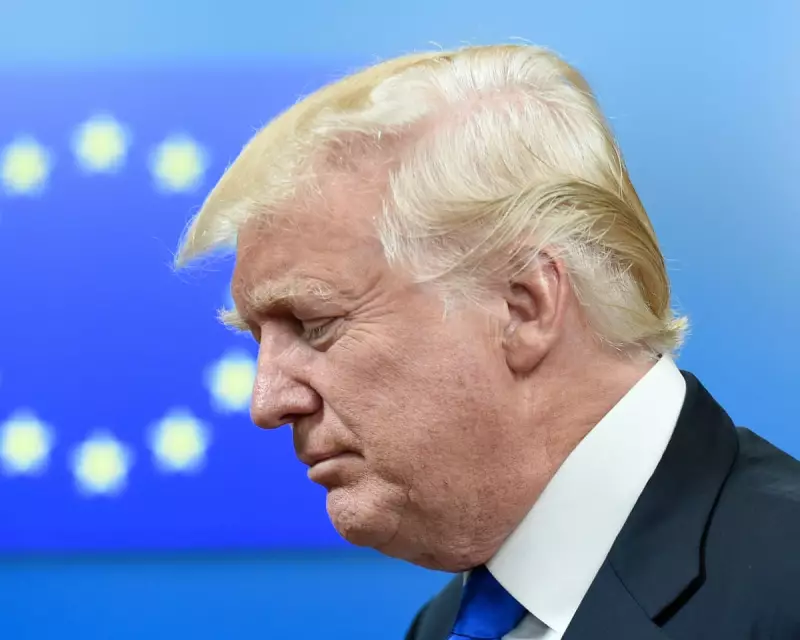
The transatlantic alliance faces its most severe test in decades following former US President Donald Trump's announcement of punitive tariffs targeting nations supporting Greenland. This move has fundamentally challenged Europe's strategy of appeasement and forced a urgent reassessment of its relationship with the United States.
A Strategy of Appeasement in Ruins
The European Commission President, Ursula von der Leyen, last week described the US as one of "our allies, our partners". This reflex was sharply contradicted by Trump's weekend declaration that eight countries would face tariffs unless a deal was struck for the US to purchase Greenland. The list includes six EU member states, plus Norway and the United Kingdom.
For critics, the flawed foundation of the EU's approach was laid bare last July when von der Leyen signed a trade deal with Trump at his Turnberry golf course. The agreement was widely seen as skewed in Washington's favour, with the EU eliminating many tariffs on US goods while accepting 15% duties on numerous products and 50% on steel. Von der Leyen defended it as providing "crucial stability," an argument now left in tatters.

The Unspoken Security Dependence
The primary, often unspoken, reason for accepting such an unequal bargain was Europe's reliance on American security guarantees, particularly regarding Ukraine. As former Latvian Prime Minister Krišjānis Kariņš noted, "Europe still needs the US" for capabilities like intelligence, which the bloc cannot match. This security dependence has made national leaders hesitant to criticise Trump openly, even as his latest actions mock the notion of alliance.
Trump's threats have, however, achieved a rare unity in Europe. From the far-right National Rally's Jordan Bardella, who denounced "commercial blackmail," to the centre-right EPP's Manfred Weber, there are growing calls to suspend ratification of last summer's trade deal. The European Parliament, from radical left to far right, stands united against the agreement.
The 'Big Bazooka' and a Path to Confrontation?
With European leaders lining up to defend Danish and Greenlandic sovereignty, there are escalating demands to deploy the EU's powerful but untested anti-coercion instrument against the United States. Conceived as a response to Chinese economic pressure, this so-called "big bazooka" could allow the bloc to impose sweeping restrictions on US goods and services, or suspend investment and intellectual property protections.
France has been vocal in urging the EU to trigger this mechanism if Trump proceeds with the tariffs. However, the process is neither quick nor simple. While the Commission promises speed, agreeing on specific punitive measures could take around one year, requiring agreement from at least 55% of member states representing 65% of the EU population.
The coming weeks will be decisive. Past divisions among the 27 member states and a desire to shield national industries have previously steered the EU towards appeasement rather than confrontation. As the 80-year-old transatlantic relationship undergoes epoch-defining changes, the bloc must now decide if, this time, its response will be different.






