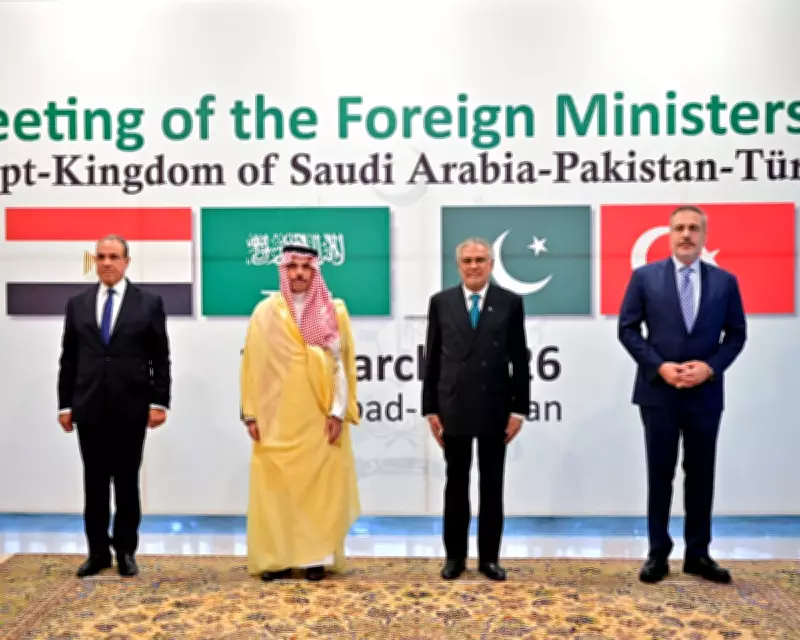
New Diplomatic Quartet Emerges in Middle East Crisis
The foreign ministers of Egypt, Pakistan, Saudi Arabia, and Turkey convened in Islamabad on Sunday, marking the formation of a significant new diplomatic bloc in the Middle East. This unlikely quartet represents a concerted effort to broker a ceasefire in the ongoing regional conflict while simultaneously working to curb the dominance of both Iran and Israel in the post-war landscape.
Official Launch of a Strategic Initiative
Although these four nations have previously engaged in diplomatic discussions, the Islamabad gathering served as the official inauguration of a coordinated initiative that has captured the attention of international observers. The meeting concluded with a tangible achievement: Iran agreed to permit vessels flying the Pakistani flag to transit the strategic Strait of Hormuz, potentially allowing up to two ships daily. This arrangement, while modest, functions as a crucial confidence-building measure amid escalating tensions.
According to Yasmine Farouk, a Gulf specialist at the International Crisis Group, this newly formed group has become increasingly active precisely because the conflict has reached a perilous phase. "This is really a dangerous stage of the war," Farouk emphasized. "We've already seen Israel damage nuclear plants inside Iran and the potential deployment of troops. This is the nightmare scenario that could make some Gulf countries realize the situation is spiraling out of control."

Complex Regional Dynamics and Strategic Goals
The primary objective of this diplomatic quartet is to persuade all involved parties to halt further escalation and agree to a sustainable ceasefire. The group has established itself as a primary interlocutor with Iran, thereby maintaining indirect communication channels between Tehran and the United States. Iran maintains that this represents the only reliable diplomatic pathway, dismissing former President Donald Trump's proposals for direct talks as a strategic fiction designed to manipulate oil prices.
Immediately following the Islamabad meeting, Pakistan's Foreign Minister Ishaq Dar traveled to China to brief Beijing on the developing crisis. This move suggests a potential future role for China as a guarantor of any eventual agreement—a prospect that would likely be met with disapproval from Washington.
Surprising Alliances and Strategic Calculations
The composition of this diplomatic bloc may appear surprising at first glance. Saudi Arabia's active participation is particularly noteworthy, given previous reports suggesting Riyadh privately encouraged the United States to take decisive action against Iran. This involvement indicates that Saudi leadership is keeping multiple strategic options open while navigating complex regional calculations.
"All the options for the Gulf states are costly," Farouk explained. "They want to see Iran pay a price for its attacks while simultaneously fearing that American intervention might create lasting chaos without achieving definitive resolution."
Turkey has emerged as perhaps the most committed member of this diplomatic initiative, having invested substantial political capital in its success. Ankara has consistently advocated for regional approaches to addressing Iran's ballistic missile program and support for proxy groups, rather than relying exclusively on bilateral negotiations between Tehran and Washington.
Broader Regional Implications and Warnings
Turkish Foreign Minister Hakan Fidan and intelligence director İbrahim Kalın have both issued stark warnings about the conflict's potential to reshape regional dynamics for decades. In a television interview, Fidan argued that Israel's strategic objective involves sowing discord among Islamic nations to broaden the anti-Iran coalition. "Unfortunately, the region is being drawn step by step into a game scripted by Israel," Fidan stated. "Gulf countries should not fall for Israel's game."
Kalın offered an even more ominous assessment, suggesting the conflict could lay groundwork for prolonged civil strife among the region's foundational ethnic and national groups. "It would pave the way for a prolonged civil war and blood feuds," he cautioned, while simultaneously condemning Iranian attacks on Gulf nations as unacceptable.

This emerging diplomatic bloc represents a significant development in Middle Eastern geopolitics, offering both challenges and opportunities for regional stability. As the quartet prepares for more frequent meetings, the international community will be watching closely to see whether this unlikely alliance can translate diplomatic engagement into tangible progress toward peace.