

In a striking display of European concern, the presidents of France and Germany have delivered powerful, separate critiques of the United States' foreign policy direction under the leadership of Donald Trump. They warned that the post-war international order is under severe threat.
Uncoordinated Warnings from Europe's Heavyweights
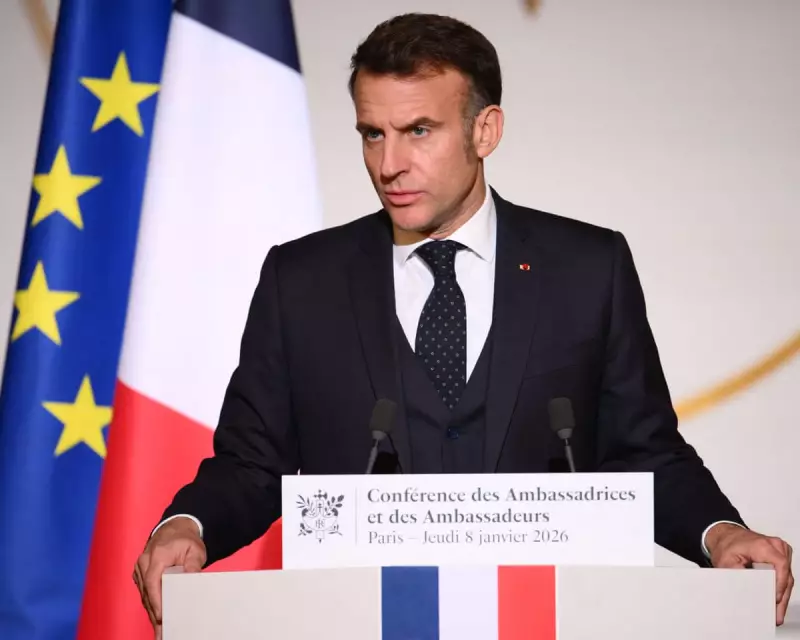
Speaking at the annual ambassadors' conference at the Élysée Palace in Paris on Thursday, French President Emmanuel Macron declared that the United States is "breaking free from the very international rules it once promoted." He described a world increasingly dominated by great powers, where multilateral institutions are failing.
"We are living in a world of great powers, with a real temptation to divide up the world," Macron stated. He positioned France as rejecting both "new colonialism and new imperialism" as well as "vassalage and defeatism." He championed the pursuit of greater strategic autonomy for Europe to reduce dependency on both the US and China.

A World at Risk of Becoming a "Robber's Den"
The German President, Frank-Walter Steinmeier, echoed these grave concerns in a speech at a Berlin symposium on Wednesday. The former foreign minister identified a dual crisis: Russia's invasion of Ukraine and a subsequent "breakdown of values by our most important partner, the US."
Steinmeier argued that this second "epochal rupture" risks allowing the world to descend into a "robber's den, where the most unscrupulous take whatever they want." He warned that smaller states could become defenceless and regions treated as the property of great powers.
While neither leader named specific incidents, their remarks were widely interpreted as references to recent US actions, including the attempted capture of Venezuelan leader Nicolás Maduro and President Trump's expressed interest in acquiring Greenland.
Implications for European Security and Digital Sovereignty
Both presidents called for a robust European response. Steinmeier emphasised that Germany must be "taken seriously, also militarily" to play a meaningful role in this new landscape. The comments highlight the acute dilemma facing EU leaders, who must balance defending international law with maintaining a vital partnership with Washington, particularly regarding support for Ukraine.
President Macron also linked the geopolitical struggle to the digital realm. He stressed the need for a "controlled information space" and vowed to defend the EU's Digital Markets Act and Digital Services Act against US accusations of coercion. This underscores a broader European push for technological sovereignty alongside its strategic autonomy.
The unusually forthright language from the leaders of the EU's two most powerful nations signals a profound anxiety in European capitals about the future of the rules-based international order and the continent's place within it.






