

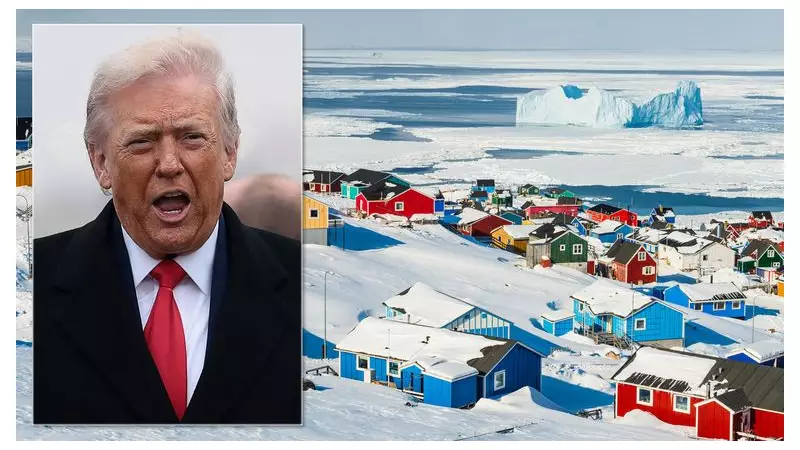
Prime Minister Keir Starmer's domestic agenda has been abruptly sidelined by what officials are calling the most serious crisis in transatlantic relations for decades. The source of the upheaval is a dramatic tariff threat from former US President Donald Trump, targeting the UK and several European allies over the long-simmering issue of Greenland.
A Weekend of Crisis Talks in Downing Street
Instead of focusing on his planned "cost of living tour", the Prime Minister and his team spent the weekend of 18-19 January 2026 locked in emergency discussions. The urgent talks, held both in Downing Street and with European partners, were a direct response to President Trump's audacious move. He has threatened to impose an additional 10% tariff on goods from the UK, France, Germany, the Netherlands, Norway, Sweden, and Finland, effective from 1 February.
This escalation has left allies both astonished and angered. One official described the situation as "through the looking glass", expressing deep uncertainty over whether Trump would back down. The Prime Minister publicly condemned the decision on Saturday, stating it was "completely wrong" and reiterating the UK's firm position that Greenland's future is "a matter for the Greenlanders and the Danes".

The Spark: A Misunderstood NATO Exercise?
The immediate trigger for the tariff threat appears to be a recent NATO reconnaissance mission to Greenland, conducted by the eight European nations now facing penalties. Italian Prime Minister Giorgia Meloni, who spoke to Trump on Sunday morning, suggested a catastrophic misunderstanding may be at play. She indicated the White House might have mistakenly viewed the exercise, named Arctic Endurance, as anti-American rather than directed at strategic competitors like Russia and China.
In a joint statement issued on Sunday, the affected European allies urgently sought to clarify this point. They stressed their commitment to "strengthening Arctic security as a shared transatlantic interest" and insisted the pre-coordinated exercise "poses no threat to anyone". Their stated goal is to collaborate with the US on High North security, a message Keir Starmer is expected to reinforce in his address on the crisis this week.
A Pattern of Unilateral Action and a Red Line for the UK
However, the core issue runs deeper than a single military exercise. Analysts see a clear pattern of President Trump turning away from multilateral institutions. His longstanding desire to annex Greenland, coupled with recent moves to withdraw the US from dozens of international forums and to create alternative bodies like a proposed "Board of Peace" for Gaza, signals a fundamental shift. The US, traditionally the cornerstone of the Western alliance, is being viewed as an increasingly unreliable partner.
For the UK, the sovereignty of Denmark over Greenland is a non-negotiable principle. While Prime Minister Starmer will attempt to negotiate with Trump to remove the tariff threat, he will not back down on this fundamental point. His approach is expected to be less confrontational than that of some European leaders, focusing on arguing that the tariffs are not in the interests of either the UK or the US. He will also likely connect stable international engagement to his domestic cost-of-living agenda, arguing that global stability helps drive down household bills.
Nevertheless, the political pressure is mounting. Liberal Democrat leader Ed Davey declared the PM's "US policy lies in tatters" as allies are "punished" for upholding NATO commitments. The government is still assessing the potential impact of the 10% tariff, with details remaining scarce. While the threat could dissipate—as similar levies have in the past—the potential for further escalation is causing profound concern. Scenarios ranging from a full-scale trade war and the disintegration of NATO support for Ukraine to an unthinkable military confrontation over Greenland are now being discussed in diplomatic circles.

This crisis over a remote Arctic territory has rapidly become a defining test for the Western alliance. The UK's strategy is clear: de-escalate where possible, but stand firm on the principle of sovereignty. The coming days will reveal whether diplomacy can repair what has become the most severe fracture in transatlantic relations in a generation.





