

The dramatic ousting and imprisonment of Venezuelan President Nicolás Maduro by the Trump administration in early 2026 has sent geopolitical shockwaves across the globe. While Western governments grapple with the legal implications, for nations in the Caribbean, the event triggers profound political fear, uncertainty, and threatens to fracture long-standing regional unity.
A Strategic Foothold: Military Buildup in Tobago
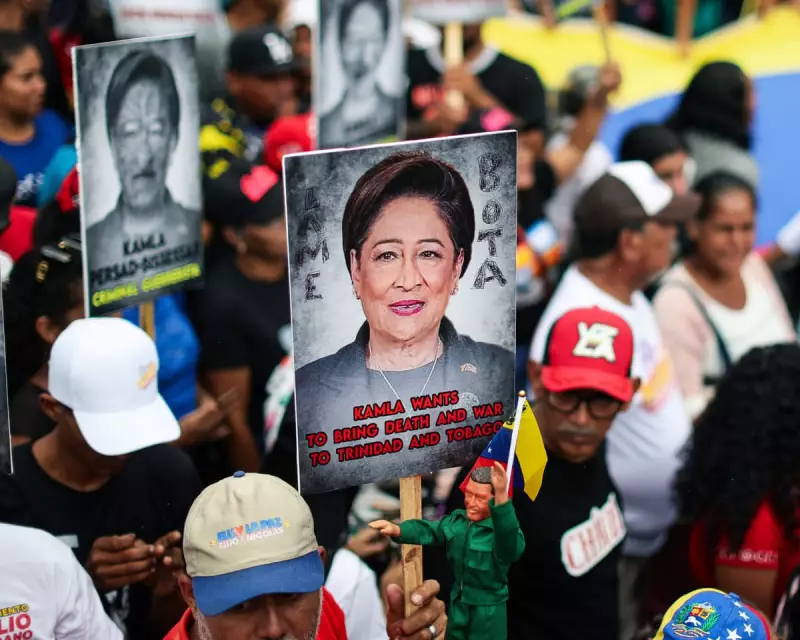
One of the most remarkable aspects leading to the Venezuela operation was the open alignment of Trinidad and Tobago's Prime Minister, Kamla Persad-Bissessar, with US strategy. According to Dr Jacqueline Laguardia Martinez of The University of the West Indies, the twin-island state, a founding Caricom member, has "openly endorsed US actions under the pretext of combating transnational crime."
This support manifested in tangible military cooperation. On 28 November, a sophisticated US Marine Corps radar system, the G/ATOR, was deployed in a coastal area of Tobago, merely 7 miles from the Venezuelan coast. This was accompanied by the arrival of US troops and military aircraft. Since September, the US has conducted at least 21 airstrikes on suspected drug smuggling routes in the region, resulting in over 80 fatalities, including some Trinidadian citizens.

Persad-Bissessar, who has long voiced support for strikes on Venezuelan vessels, allowed the US to transit military aircraft through Trinidadian airports in December, citing logistical needs. This escalation in partnership is now viewed as having laid the essential groundwork for the subsequent raid on Venezuela.
Diverging from Caricom: A Calculated Economic Bet
Trinidad's stance marks a sharp departure from Caribbean norms. "Caricom has historically distinguished itself through a relatively cohesive foreign policy voice... anchored in... the defence of Latin America and the Caribbean as a 'Zone of Peace,'" Laguardia Martinez noted. Peter Wickham, director of Caribbean Development Research Services, confirmed Trinidad is now an outlier, providing at least intelligence cooperation where neighbours like Grenada and Antigua refused.
The motivation appears deeply economic. "She and Trump have something in common, in that they both want resources from Venezuela. Trump wants oil, she wants gas," Wickham explained. Persad-Bissessar is seen to have abandoned negotiations with Maduro's government over the vast Dragon Field gas reserves (holding roughly 4.2 trillion cubic feet) near Tobago, opting instead to bet on a partnership with Donald Trump.
This high-stakes gamble carries significant risk. Wickham suggests the Prime Minister speaks "loosely" and "off the cuff," having even criticised Caricom—a major trading partner. Furthermore, by facilitating actions that could be deemed extra-judicial, Trinidad and Tobago, a member of the International Criminal Court (ICC), may face serious legal repercussions.
Regional Reckoning: Fear, Aid, and an Uncertain Future
The US move has put the entire Caribbean in a difficult position. Venezuela, under Hugo Chávez and later Maduro, was a pivotal regional partner through initiatives like the Petrocaribe oil programme and the Alba alliance, providing aid, building infrastructure like an airport in Saint Vincent, and assisting after disasters like Hurricane Maria.
Now, Caricom finds itself taking "the path of least resistance," withholding a joint condemnation of the US operation. Wickham attributes this to fear, exacerbated by the US indictment of Maduro which implicitly threatens other leaders who supported him. "There is this fear of speaking out and the consequences," he said.
The proximity to a historically interventionist power is reshaping politics. With elections due in several islands, leaders are reportedly questioning if alignment with the US could place them on a "hitlist." The event has fundamentally altered the regional landscape, leaving nations to nervously ponder what unprecedented action might come next.






