

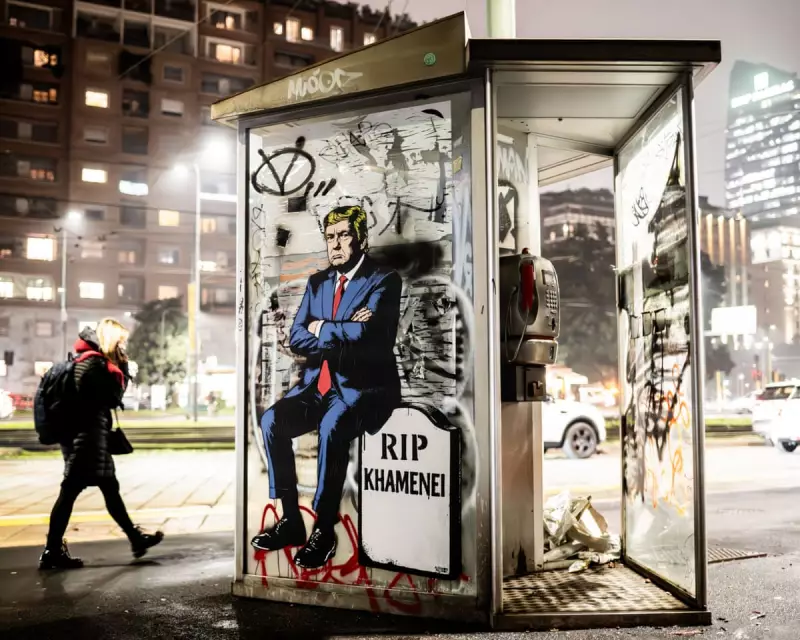
In Milan, Italy, a stark piece of graffiti near the US consulate general captured a complex sentiment: Miga – Make Iran Great Again. This slogan, echoing a former American president's mantra, symbolises a profound and painful moment for many Iranians who placed their faith in external salvation, only to be left feeling abandoned.
A Promise of Rescue and a Fatal Hope
The recent wave of protests in Iran was met with an unprecedented declaration from the White House. When Donald Trump stated he would "rescue" demonstrators if Iranian authorities opened fire, his words were taken as a lifeline by people like Siavash Shirzad, a 38-year-old father. Having witnessed previous uprisings crushed, Shirzad saw this as the first time a US president had pledged direct support. Ignoring his family's pleas, he joined the crowds on the streets of Tehran.
The rescue never materialised. On 8 January, amid a nationwide internet blackout, Shirzad was shot at a protest. He died from his wounds hours later, leaving behind a 12-year-old son. "Siavash hoped until the very end that Trump's help would arrive," his cousin revealed anonymously. The family's warnings had been met with his firm belief: "Trump said he supports us, I'm going."

The Abrupt About-Face and Deepening Crisis
The situation escalated rapidly. On Tuesday, Trump urged Iranians to continue and to "take over your institutions," assuring them "help is on its way" amid growing speculation of an imminent US strike. Yet, in a dramatic reversal just a day later, the president walked back from military intervention. He told reporters he had received assurances that Iran would not execute protesters, effectively putting plans on hold, at least temporarily.
Inside Iran, the despair was palpable. Despite Trump's earlier reassurances, the crackdown intensified. Tehran's streets, once filled with tens of thousands, were left empty but for patrols of armed security forces. Protests persisted in provinces, but a comprehensive communications blackout made assessing their scale nearly impossible. Mass arrests were reported widely.
"As soon as Trump's attention moves elsewhere, the executions will start," a Tehran resident warned in messages forwarded to the Guardian. Iranian state television aired footage of forced confessions, and the chief justice personally interrogated detainees, prompting over 30 human rights groups to issue a joint letter expressing grave concerns over unfair trials and the risk of torture.
Diaspora Anger and a Regime Emboldened
The sense of betrayal resonated powerfully among the Iranian diaspora, who had watched the brutal crackdown unfold from afar. For many, Trump's promises had been a crucial lifeline. "As someone living in the diaspora, this feels like a slap in the face," said Elham, an Iranian based in Sydney. "This time, there was a sense it was going to be different."
To these observers, Trump's pivot felt like a victory for the Iranian regime. Instead of supporting the protesters' demands for change, he appeared open to negotiation. Comments by Foreign Minister Abbas Araghchi on Fox News, urging US diplomacy, only deepened these fears. "If Trump gives the regime a lifeline, it will be such a profound betrayal from which ordinary Iranians won't recover," Elham added.
Analysts noted that while the protests were nationwide and historic, they did not immediately threaten the state's stability, which is backed by well-armed security forces. A US strike risked triggering retaliation against Israel and American assets without necessarily protecting protesters, and could fuel regime narratives that the unrest was foreign-instigated.
Nevertheless, the hope for international action persisted, however vague. Azam Jangravi, an Iranian in Canada whose friend was killed in Isfahan, stated: "The people of Iran believed him... If he fails to act, that trust will be broken."

As the US redeployed military assets, including an aircraft carrier to the Middle East, the possibility of a strike remained. Yet in Iran, protesters found themselves in a desperate limbo—cut off from the world and under the state's heavy boot, unsure if they should risk the streets again. "The protests have come to a pause," said Alborz, a Tehran resident. "People are waiting to see what Trump will do."





