

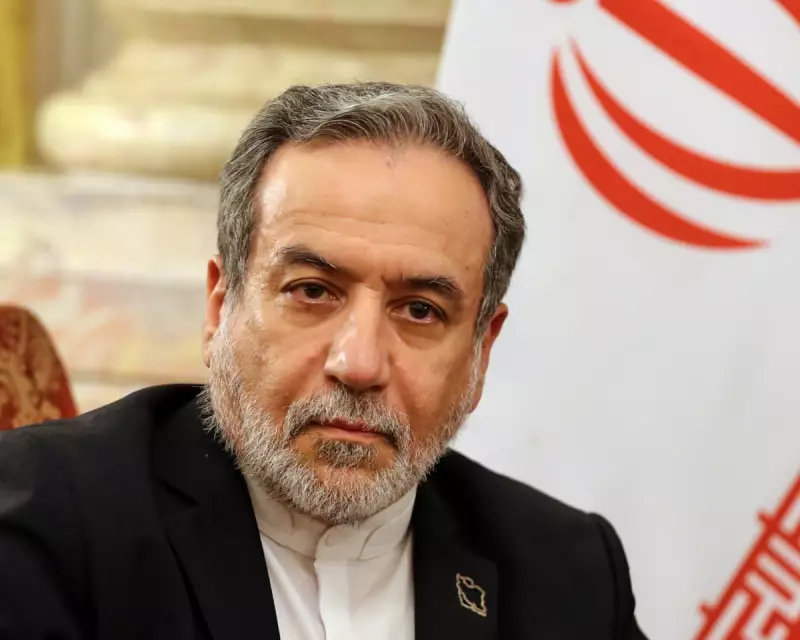
Iran's foreign minister has issued a direct appeal to Donald Trump, urging the US president to ignore Israeli warnings and seize a rare opportunity to restart negotiations over Tehran's nuclear programme.
A Direct Appeal to Washington
In a significant diplomatic overture, Seyed Abbas Araghchi claimed there is now "an unprecedented willingness amongst mutual friends of Iran and the US to facilitate dialogue". Writing in The Guardian, he suggested that Gulf states and other regional actors are prepared to underwrite any future deal, creating a more favourable context for talks than existed previously.
Araghchi's article was published just a day after Israeli Prime Minister Benjamin Netanyahu held discussions with President Trump in the United States. Those talks reportedly covered Israel's calls for potential new attacks on Iranian targets, alongside the US administration's peace plan for Gaza.

Regional Shifts and a 'Window of Opportunity'
The Iranian minister argued that the strategic landscape has shifted since joint Israeli-US assaults on Iran's key nuclear sites in June. He contends these events demonstrated Iran's "strategic depth to resist Israel" and altered diplomatic alliances across the Middle East.
"The shifts in our region can enable implementation of understandings in a whole new way," Araghchi wrote. "For those willing to go where no one has gone before, there is a brief window of opportunity." He added that Trump's Arab allies have reportedly begun to view Israel's recklessness as "a threat to us all".
Despite facing severe economic pressure, including a plunging currency and rising inflation that sparked protests in Tehran's bazaar, Iran's leadership believes it emerged psychologically stronger from the June conflict. Araghchi insisted that the US policy of "maximum pressure" has yielded only "maximum resistance".
The Sticking Points and Political Calculus
Araghchi gave no indication that Iran is prepared to relinquish its right to enrich uranium for civilian purposes, a long-standing point of contention. He reiterated that all signatories to the nuclear non-proliferation treaty hold this right.
He made a pointed political argument directed at Trump, claiming the president's Republican base desires a diplomatic agreement and wishes to avoid "further unnecessary wars". The minister framed the choice starkly: "The US administration now faces a dilemma: it can continue writing blank cheques for Israel with American taxpayer dollars and credibility, or be part of a tectonic change for the better."
This appeal comes amid continued Israeli warnings. Netanyahu has claimed Iran may be seeking to rebuild its nuclear programme and has expressed growing concern over Iran's missile capabilities. Following his meeting with Netanyahu, President Trump issued a blunt warning, stating, "I hope they're not trying to build up again because, if they are, we're going to have no choice but very quickly to eradicate that buildup."
Whether this public plea from Tehran marks a genuine turning point or merely a rhetorical manoeuvre remains to be seen. The coming weeks will reveal if the "brief window" Araghchi describes is opened, or slammed shut by escalating tensions.






