

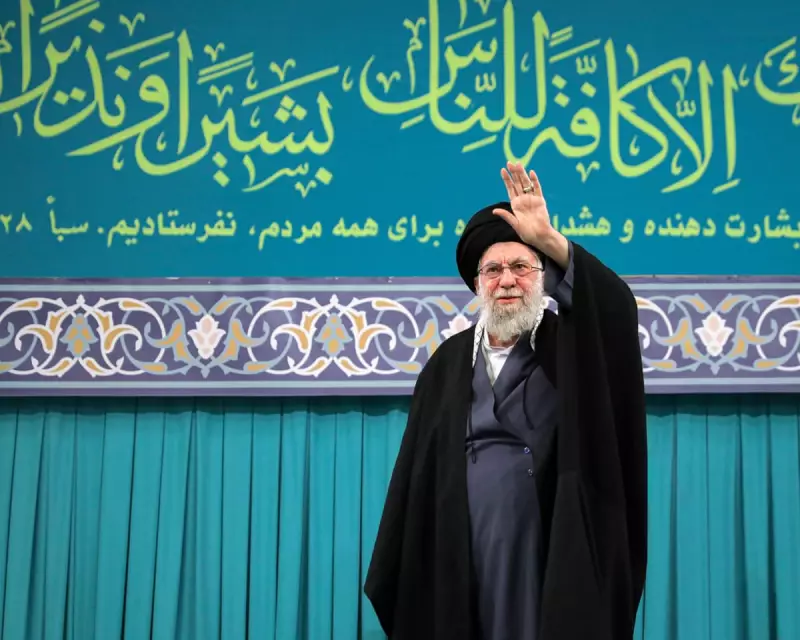
Iran's president has issued a stark warning that any assault on the country's supreme leader would be considered an act of war, escalating already fraught tensions with the United States.
A Stark Warning from Tehran
In an apparent response to speculation that former US President Donald Trump is contemplating an attempt to assassinate or remove Ayatollah Ali Khamenei, President Masoud Pezeshkian stated unequivocally that "an attack on the great leader of our country is tantamount to a full-scale war with the Iranian nation." He made the declaration in a post on the social media platform X on Sunday.
Pezeshkian also pointed the finger at Washington for the domestic unrest that has shaken Iran, claiming US hostility and sanctions are a primary cause of hardship for its people. His comments signal that the deep-seated animosity between the two nations remains intensely alive.

Trump's Provocation and Averted Strikes
The Iranian president's warning follows provocative remarks from Donald Trump. In a Saturday interview with Politico, Trump called for an end to Khamenei's nearly four-decade rule, labelling him "a sick man who should run his country properly and stop killing people."
The situation reached a critical point last week when the United States came perilously close to launching military strikes on Iran. According to reports, the order was ultimately paused amid mounting diplomatic pressure. The US news site Axios reported that Israeli Prime Minister Benjamin Netanyahu cautioned Trump that Israel was unprepared for Iranian retaliation, while Saudi Arabia's Crown Prince Mohammed bin Salman urged restraint due to risks to regional stability.
"It was really close," a US official told Axios, confirming the strike order was never finalised.
Unrest, Crackdown, and a Glimmer of Hope
The backdrop to this international crisis is severe domestic turmoil within Iran. A new wave of protests erupted on 28 December, driven by anger over soaring inflation, a collapsing currency, and economic hardship. What began as demonstrations over living costs rapidly transformed into broad anti-government protests.
Authorities responded with a severe crackdown. On 8 January, they imposed a near-total internet and phone blackout to suppress communication and obscure the scale of the unrest. An Iranian official, speaking anonymously, stated on Sunday that at least 5,000 people have been killed in the protests, including about 500 security personnel. The Human Rights Activists news agency reported that 24,348 protesters have been arrested.
In a rare acknowledgement, Supreme Leader Khamenei stated on Thursday that thousands had been killed, some "in an inhuman, savage manner," while blaming the US for the death toll.
Amid the grim reports, a minor reprieve emerged over the weekend. Erfan Soltani, a 26-year-old clothing shop employee who was the first protester sentenced to death during the current unrest, was confirmed to be alive after a family visit. His cousin, speaking from Germany, expressed relief but grave concern over his alleged torture and lack of medical care.
Furthermore, internet monitoring group Netblocks reported a partial restoration of online access in Iran on Sunday, with some services like Google becoming available again, albeit under heavy filtering.
While the streets have returned to an uneasy calm, dissent continues. Witnesses reported that on Saturday night, anti-Khamenei chants echoed from residential windows in neighbourhoods across Tehran, Shiraz, and Isfahan, a potent symbol of the enduring discontent beneath the surface.






