JD Vance's Controversial Claims About EU and Hungary Put Under the Microscope
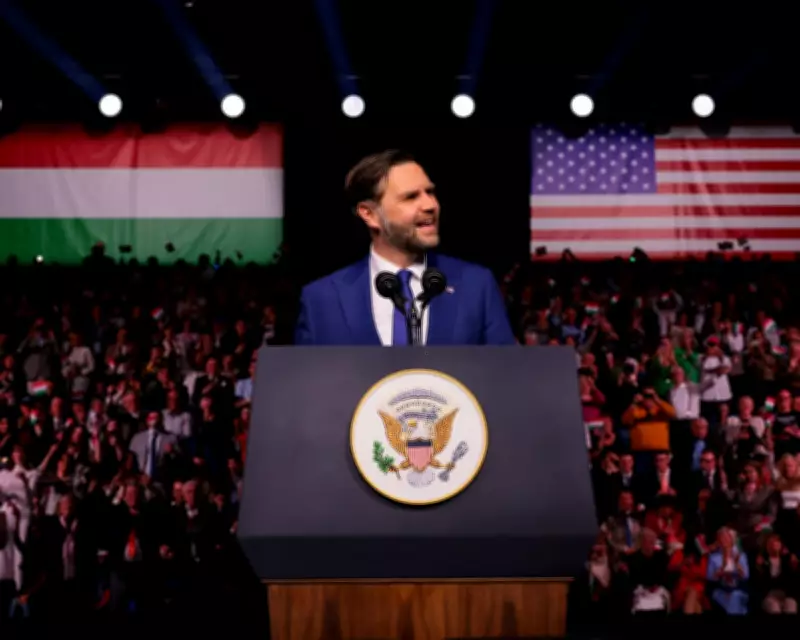
During a high-profile visit to Budapest this week, US Vice-President JD Vance made a series of incendiary allegations against the European Union, claiming that "bureaucrats in Brussels" were attempting to undermine Hungary's sovereignty and economy. Standing alongside Hungarian Prime Minister Viktor Orbán just days before a crucial national election, Vance painted a dramatic picture of EU interference that demands closer examination.
The Brussels Bureaucrats Allegation
Vance repeatedly invoked the phrase "bureaucrats in Brussels" throughout his Budapest appearance, suggesting shadowy EU officials were orchestrating a campaign against Hungary. This terminology represents a classic Eurosceptic trope that obscures the actual structure of EU governance. The European Commission, which Vance likely referenced, operates under authority granted by the 27 member states, with significant oversight from the European Parliament.
"The bureaucrats in Brussels have tried to destroy the economy of Hungary," Vance declared to his Hungarian audience. "They have tried to make Hungary less energy-independent. They have tried to drive up costs for Hungarian consumers."

Digital Censorship Claims Examined
One of Vance's most specific allegations centered on digital censorship. He asserted that EU officials were "telling" social media companies what information to provide Hungarian voters, thereby interfering in the democratic process. However, this characterization misrepresents existing EU legislation and enforcement actions.
The Digital Services Act, which governs online platforms across the EU, has indeed prompted investigations into companies like Meta, TikTok, and X. Yet these inquiries follow established legal procedures and focus on platform accountability rather than dictating specific content for Hungarian voters. EU leaders have notably avoided commentary that could be interpreted as favoring any particular outcome in Hungary's upcoming election.
Economic Reality Versus Political Rhetoric
Vance's claim that the EU has attempted to "destroy" Hungary's economy stands in stark contrast to economic data. Since joining the European Union during the 2004 enlargement, Hungary has experienced significant economic growth and development. The US International Trade Administration notes Hungary's strategic European location and access to EU markets as key factors attracting major American corporations including Coca-Cola and Microsoft.
Perhaps most tellingly, Hungary remains a net recipient of EU funds, with European financial support historically accounting for more than 80% of public investment. Approximately €18 billion in EU funds have been temporarily frozen due to concerns about judicial independence, LGBTQ+ rights, academic freedom, and asylum policies—standards that apply uniformly across all EU member states.
Energy Independence and Consumer Costs
The assertion that EU policies have made Hungary less energy-independent and driven up consumer bills requires context. Energy prices have risen across Europe following Russia's invasion of Ukraine and subsequent geopolitical tensions. While the Orbán government has blamed EU sanctions on Russian fossil fuels, EU officials counter that Russia demonstrated unreliability as an energy supplier through previous supply disruptions in 2006, 2009, and 2014.
Ironically, Hungary benefits from some of Europe's lowest electricity prices thanks to substantial solar energy development—a renewable energy source the Trump administration has generally opposed. The EU granted Hungary a special exemption in 2022 to continue importing Russian oil, suggesting more accommodation than hostility toward Orbán's energy policies.
Motivation and Malice Questioned
Perhaps Vance's most revealing comment suggested the EU's actions stem from personal animosity: "They've done it all because they hate this guy." While EU leaders have expressed frustration with Orbán—particularly after Hungary withdrew support for Ukraine aid and leaked audio suggested cooperation with Russia—the historical record shows considerable EU patience with the Hungarian government.

Some critics argue the EU has been too slow to address democratic backsliding in Hungary, with one senior legal expert criticizing the recent release of €10 billion in previously frozen funds to Budapest. The evidence suggests institutional processes rather than personal vendettas guide EU decision-making regarding member states.
As Hungary approaches a pivotal election, Vance's statements have injected American political perspectives into European affairs, raising questions about transatlantic alliances and the factual basis of international political discourse.