

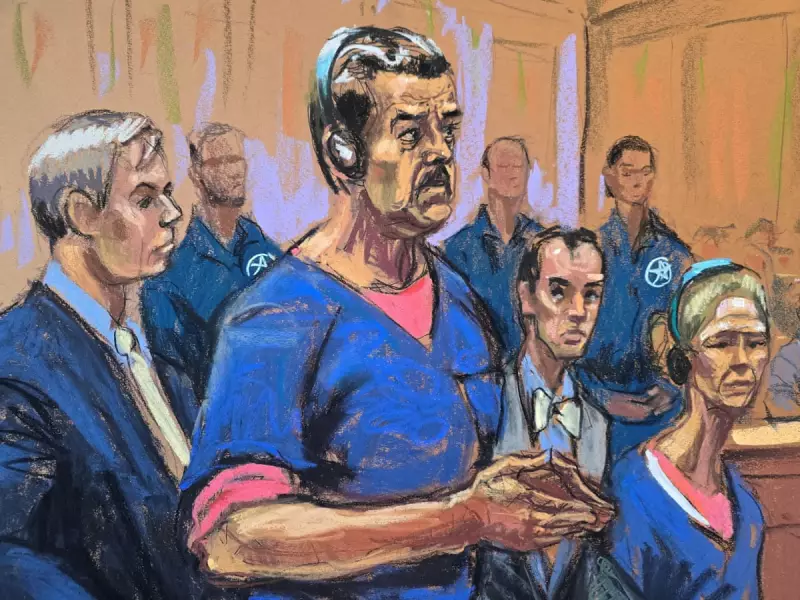
The deposed Venezuelan leader, Nicolás Maduro, has entered a plea of not guilty in a New York federal court to serious drugs and weapons charges, just days after his dramatic capture by United States special forces in Caracas. The operation, ordered by former President Donald Trump, has ignited a fierce international debate over sovereignty and international law.
Courtroom Drama and International Outcry
During a brief but historic arraignment hearing in Manhattan on Monday, the 63-year-old Maduro, partially shackled and dressed in a blue shirt over a neon orange prison scrub, insisted he remained the legitimate president of Venezuela. He told Judge Alvin Hellerstein he had been illegally "captured" at his home and was a "prisoner of war." His wife, Cilia Flores, who appeared with visible injuries and bandages, also pleaded not guilty to related charges.
While Maduro addressed the court, the United Nations Security Council convened an emergency meeting a few miles away. Secretary-General António Guterres expressed deep concern that the rules of international law had not been respected, a sentiment echoed by a dozen nations who condemned the US action as a "crime of aggression."

The Charges and the Raid
Maduro faces four federal criminal counts, including conspiracy to commit narco-terrorism and cocaine importation conspiracy, each carrying a potential life sentence. He was first indicted in 2020 alongside members of his inner circle.
The pre-dawn raid on Saturday that led to his capture resulted in at least 40 fatalities, including civilians and Venezuelan and Cuban security personnel. US Attorney General Pam Bondi stated the intervention was necessary to combat drug trafficking into America, alleging Maduro conspired with violent narco-terrorists.
However, defence lawyer Barry Pollack referred to his client's detention as a "military abduction" and indicated he would file motions challenging the circumstances of Maduro's appearance in US jurisdiction.
Regional Fallout and Global Implications
The operation has sent shockwaves across Latin America and beyond, raising fears of a return to US military interventionism in the region. In Venezuela, Maduro's deputy, Delcy Rodríguez, was sworn in as his successor, initially offering a more conciliatory tone towards Washington.
Tensions escalated further when Colombian President Gustavo Petro stated his country would "take up arms" if the US acted on threats of military action there. Analysts warn the move sets a dangerous precedent and could destabilise the region, with Trump having also justified the action as a means for the US to seize control of Venezuela's vast oil reserves.
The surreal image of a foreign head of state in a US courtroom has drawn comparisons to the trials of Manuel Noriega and Saddam Hussein, marking a profound moment in international relations with consequences yet to fully unfold.






