

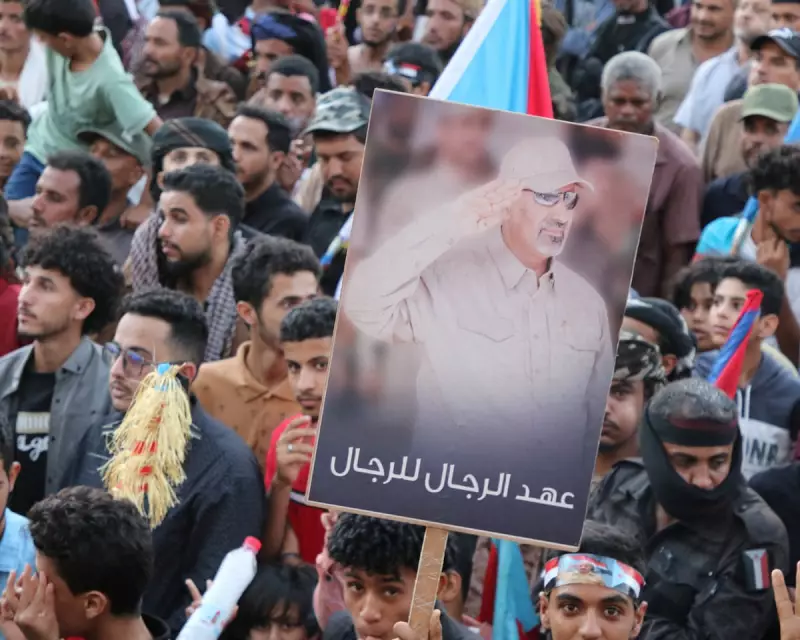
Saudi Arabia has levelled a serious formal accusation against its strategic partner, the United Arab Emirates, alleging it facilitated the escape of a prominent Yemeni separatist leader from Saudi custody. This dramatic development threatens to fracture the Gulf coalition involved in Yemen's long-running conflict and exposes deep-seated rivalries.
The Accusation and the Escape
The Saudi government alleges that Emirati officials actively helped Aidarous al-Zubaidi, the president of the Southern Transitional Council (STC), leave Saudi Arabia for Oman. Al-Zubaidi had been residing in the Saudi capital, Riyadh, under a form of political house arrest following the signing of the Riyadh Agreement in 2019. This deal, brokered by the Saudis, aimed to unify factions opposing the Houthi rebels in Yemen's complex civil war.
The incident is said to have occurred in late 2025, marking a significant and public deterioration in relations between the two powerful Gulf states. Saudi authorities claim the operation involved coordinated efforts, implying a direct challenge to Saudi authority and its leadership of the anti-Houthi coalition.

Deepening Rifts in a Fragile Alliance
This accusation is not an isolated diplomatic spat but the culmination of growing friction. While both nations are nominal allies within the Saudi-led coalition fighting the Iran-backed Houthis, their long-term objectives in Yemen have frequently diverged.
The UAE, which scaled back its direct military presence in Yemen in 2019, has maintained strong influence through its support for the STC and other southern separatist groups. The STC's goal is an independent southern Yemen, a vision that often clashes with Saudi Arabia's preference for a unified Yemeni government friendly to Riyadh.
Analysts interpret the UAE's alleged actions as a clear signal of its diminishing confidence in Saudi Arabia's strategy in Yemen. By enabling al-Zubaidi's move to Oman—a country that has historically mediated in the conflict—the UAE may be seeking to empower the STC as an independent political force, outside of Saudi-controlled negotiations.
Regional Repercussions and Future Stakes
The fallout from this accusation extends beyond bilateral relations. It introduces new volatility into an already precarious peace process in Yemen and could empower the Houthi rebels by highlighting divisions within their opposition.
Oman's role as a neutral host for al-Zubaidi adds another layer of regional diplomacy. The situation places increased pressure on international stakeholders, including the United Kingdom and the United States, which have relied on Gulf unity to manage security in the region.
The public nature of the Saudi accusation suggests a deliberate move to pressure the UAE and could lead to a wider recalibration of alliances. The stability of the Riyadh Agreement, a cornerstone of Saudi policy in Yemen, is now under severe threat, with the leader of a key signatory no longer under Saudi influence.
This episode underscores that the war in Yemen is not simply a binary conflict but a multi-layered struggle where regional powers pursue competing interests, often at the expense of a coherent path to peace for the Yemeni people.






