

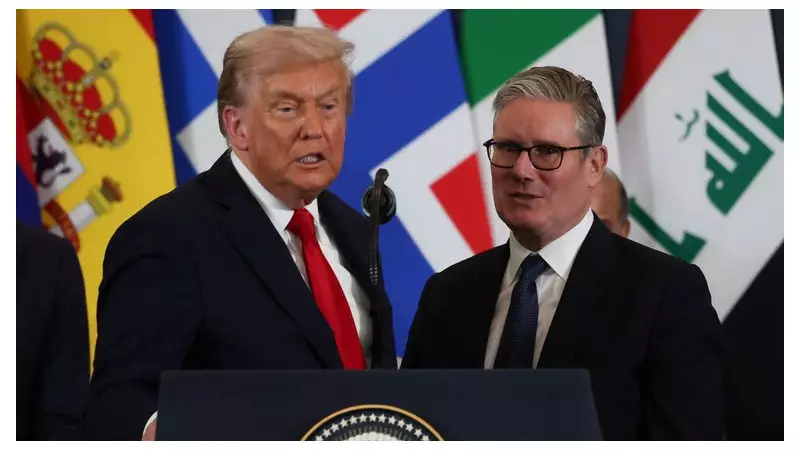
Prime Minister Sir Keir Starmer has initiated a significant pushback against former US President Donald Trump, who has threatened to impose punitive tariffs on the United Kingdom and other European nations. The dispute centres on NATO allies' activities in Greenland, which Trump has labelled a "dangerous game".
A Strained Special Relationship
Sunday 18 January 2026 marked a pivotal moment as Sir Keir publicly declared Trump's stance "completely wrong". The Prime Minister criticised the threat to levy tariffs on allies for actions taken to bolster NATO's collective security. This represents a notable shift in tone from a leader who has invested considerable political capital in cultivating a personal rapport with the mercurial former president.
Starmer's efforts to strengthen the UK-US bond, particularly regarding support for Ukraine, have been viewed as a relative success in his premiership. However, that relationship is now under severe strain. Trump has accused the UK and Europe of sending personnel to Greenland for "purposes unknown", a move he claims jeopardises US interests.

The Greenland Flashpoint
The immediate catalyst is a modest NATO reconnaissance mission. The UK deployed a single military officer to Greenland, alongside a small contingent from other allied nations, to prepare for a future joint exercise. Downing Street has framed this as an act of solidarity with Denmark and Greenland, and a direct response to Trump's own expressed concerns about Arctic security and the Russian threat.
In a statement, the PM emphasised he had made it "clear that Arctic Security matters for the whole of NATO and allies should all do more together". This topic has been a recurring theme in his recent calls with Trump and European leaders. Despite these assurances, Trump remains fixated on his long-stated ambition to acquire Greenland, potentially as a 51st US state.
Cross-Party Support and Domestic Pressure
In a rare show of unity, Starmer's key political opponents have backed his position. Conservative leader Kemi Badenoch agreed with the PM, also calling Trump's approach "completely wrong". Nigel Farage stated that Reform UK "certainly don't" agree with the US government. Liberal Democrat leader Ed Davey urged Starmer to "stand firm against the bully in the White House".
Backbench reactions have been more forceful. Conservative MP Simon Hoare branded Trump a "gangster pirate", while former Lib Dem leader Tim Farron questioned the value of "shamelessly appeasing this wombat". Tory MP Ben Obese-Jecty challenged the US commitment, asking why American troop numbers in Greenland had been slashed from thousands to around 150 if its security was so vital.
The most pointed critique came from Conservative Alicia Kearns, who asked: "what has all Labour's sycophantic fawning achieved in the national interest?"
Navigating an Economic and Diplomatic Crisis
The looming threat of additional tariffs of 10% and 25% – potentially on top of existing levies – presents a severe risk to the UK's fragile economy. Downing Street is now strategising a response that balances principle with pragmatism.
Options under consideration include a potential emergency diplomatic mission to Washington, similar to last summer's show of support for Ukraine. There is also speculation about whether allies like Italian Prime Minister Georgia Meloni, who is not currently on Trump's "hit list", could mediate. The fundamental question remains: can European leaders uphold NATO solidarity and Greenland's sovereignty without triggering a damaging trade war?
While Trump's position is unequivocal, the path forward for Sir Keir Starmer and his European counterparts is fraught with complexity, testing the limits of the special relationship at its most contentious point in years.






