

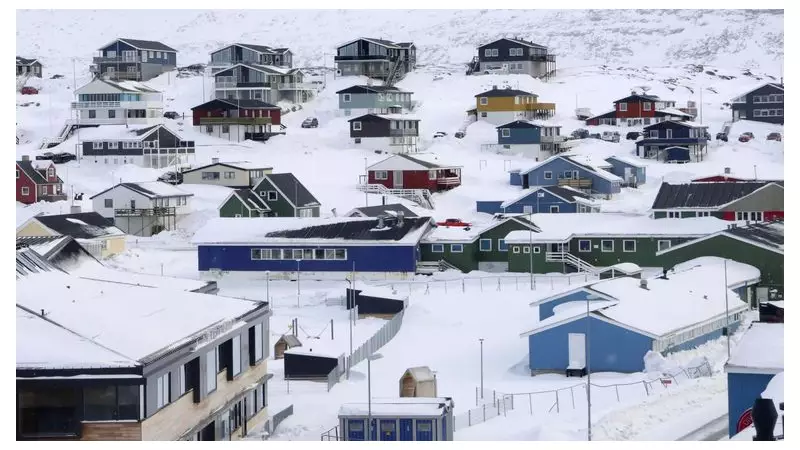
Prime Minister Sir Keir Starmer has firmly aligned the UK with Denmark following controversial statements from former US President Donald Trump about acquiring Greenland. The remarks have triggered a significant diplomatic row, with Danish leader Mette Frederiksen warning that a US attack on the Danish territory would mean the end of NATO cooperation.
Starmer's Clear Stance on Greenland's Future
Speaking to Sky News on Monday, 5 January 2026, Sir Keir left no room for ambiguity regarding the semi-autonomous Danish territory. "Let me be really clear about Greenland - the future for Greenland is for Greenland, the Kingdom of Denmark," he stated. He emphasised Denmark's status as a close European and NATO ally, concluding that the future "has to be for Greenland, for the Kingdom of Denmark, and only for Greenland and the Kingdom of Denmark."
His comments were a direct response to Mr Trump, who had asserted the previous day that the United States "does need Greenland." This came just after US forces captured Venezuelan President Nicolas Maduro and his wife during military strikes on Venezuela on Saturday, 3 January.

A Stark Warning from Denmark's Prime Minister
The Danish response was swift and severe. Prime Minister Mette Frederiksen stated she would "strongly urge the US to stop the threats against a historically close ally." She added a grave warning regarding the NATO alliance, of which both the US and Denmark are members.
"If the United States chooses to attack another NATO country militarily, then everything stops," Ms Frederiksen declared. "That is, including our NATO and thus the security that has been provided since the end of the Second World War." She called on the US government to recognise the "significant European support" Denmark was receiving.
Sir Keir explicitly backed the Danish leader's position, telling Sky News: "I stand with her. She's right about the future of Greenland." This solidarity was later echoed in the House of Commons by Foreign Secretary Yvette Cooper, who reiterated that Greenland's future was a matter solely for Greenlanders and Danes.
Contrasting Responses to Venezuela Action
While the UK government's position on Greenland was unequivocal, its response to the US intervention in Venezuela was more measured. When pressed on whether the US had broken international law by attacking Venezuela and capturing President Maduro, Sir Keir and his ministers were less direct.
Sir Keir told Sky News he was "an advocate for international law" and that it was the framework that applied, but said it was "for the US to set out that justification." This was a slightly stronger stance than his initial reaction on Saturday, where he said he was waiting to establish all the facts.
Earlier, Home Office minister Mike Tapp repeatedly declined to warn Mr Trump against military action over Greenland in an interview, calling it a "hypothetical" and stating NATO was the forum for such discussions. He noted Greenland was different to Venezuela.
The US action in Venezuela has drawn widespread international condemnation. The UN Secretary-General Antonio Guterres expressed deep concern that "the rules of international law have not been respected." All EU nations except Hungary, alongside Canada and Norway, called for international law to be upheld. Mr Trump has stated the US will "run" Venezuela until a proper transition can take place.
The situation presents a complex diplomatic challenge for the new UK government, balancing support for a key NATO ally against the actions of another, while navigating the precarious principles of international law.






